

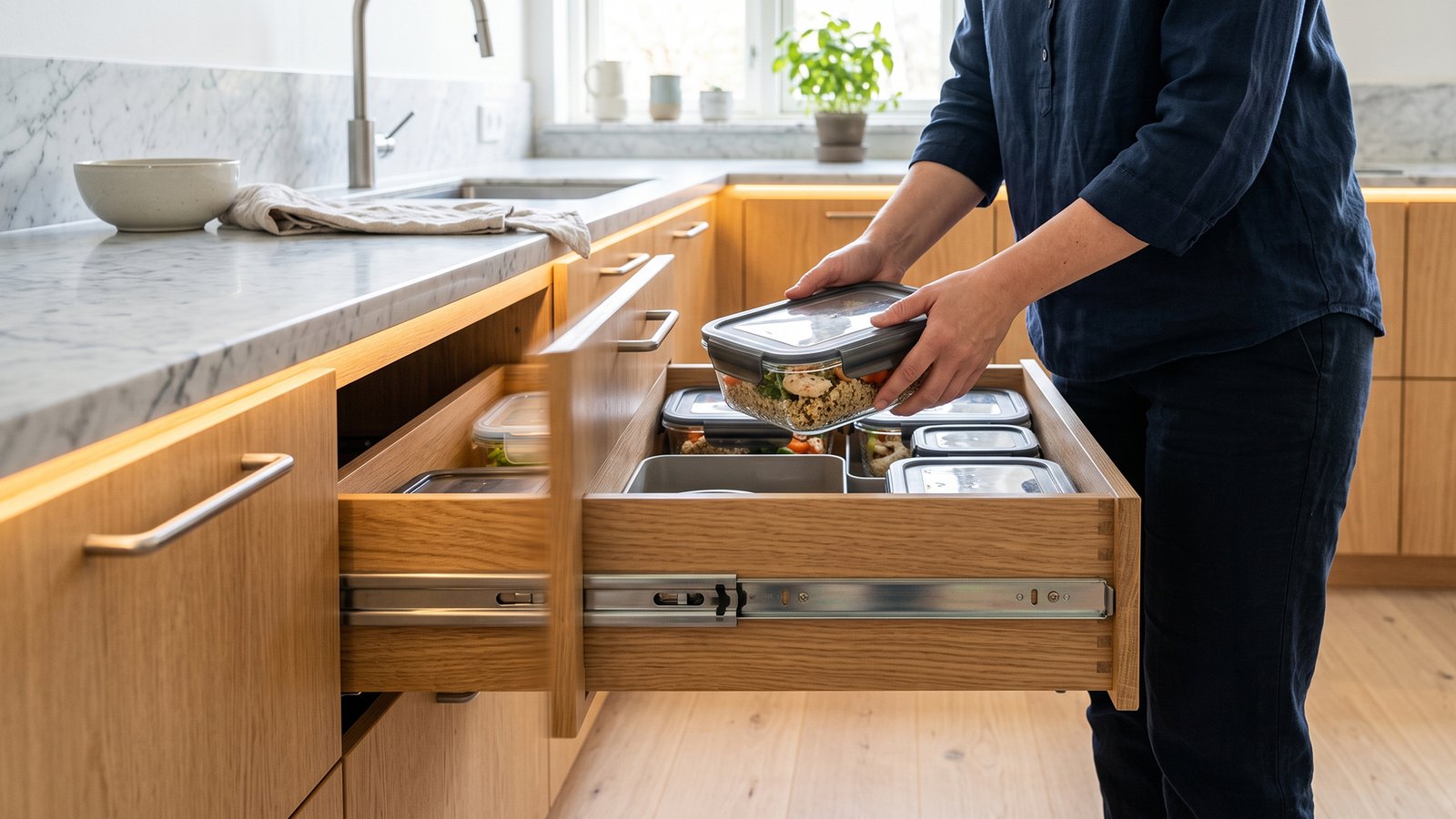
Proper physical posture during daily meal preparation depends entirely on smart cabinetry planning. Implementing structured kitchen drawer food container storage eliminates constant bending and awkward overhead reaching during meal prep.
Modern layout planning prioritizes direct line-of-sight visibility so you can grab items without moving surrounding clutter.
Table of Contents
Applying physical ergonomic standards directly improves your daily kitchen workflow optimization. When storage hardware supports natural body mechanics, daily cooking becomes smoother and significantly less physically exhausting. Utilizing deep base drawers instead of traditional upper cabinets protects your posture and prevents long-term joint strain.
The physical space situated between your waist and knees represents the prime structural zone for heavy items. Placing your food storage containers within this specific waist-to-knee zone minimizes excessive spinal bending during food packing. This placement keeps your heaviest glassware at a comfortable height for safe lifting.
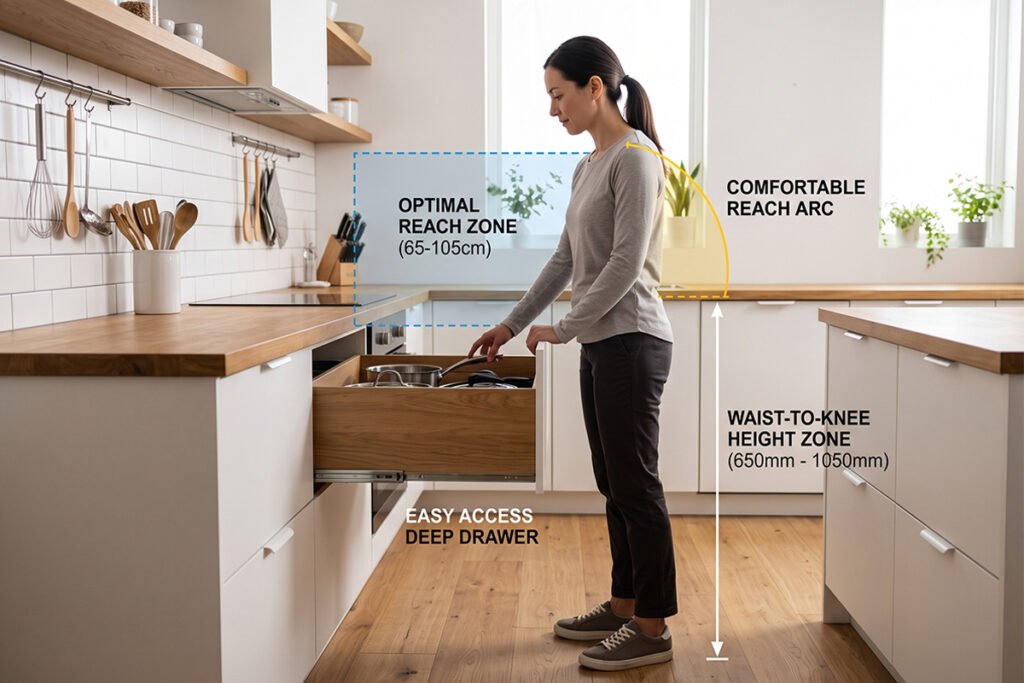
Storing high-frequency containers outside this ideal physical vertical range creates unnecessary body exertion over time. Utilizing deep kitchen drawers inside this targeted height zone streamlines routine kitchen cleanup tasks. This simple physical adjustment turns chaotic container storage into an intuitive, seamless motion.
Standard cabinet drawers often lose valuable storage capacity toward the dark back wall. Upgrading your cabinet hardware to high-capacity full-extension slides brings the back of the drawer fully into view. This structural upgrade ensures that every container remains fully visible and easily reachable without blind reaching.
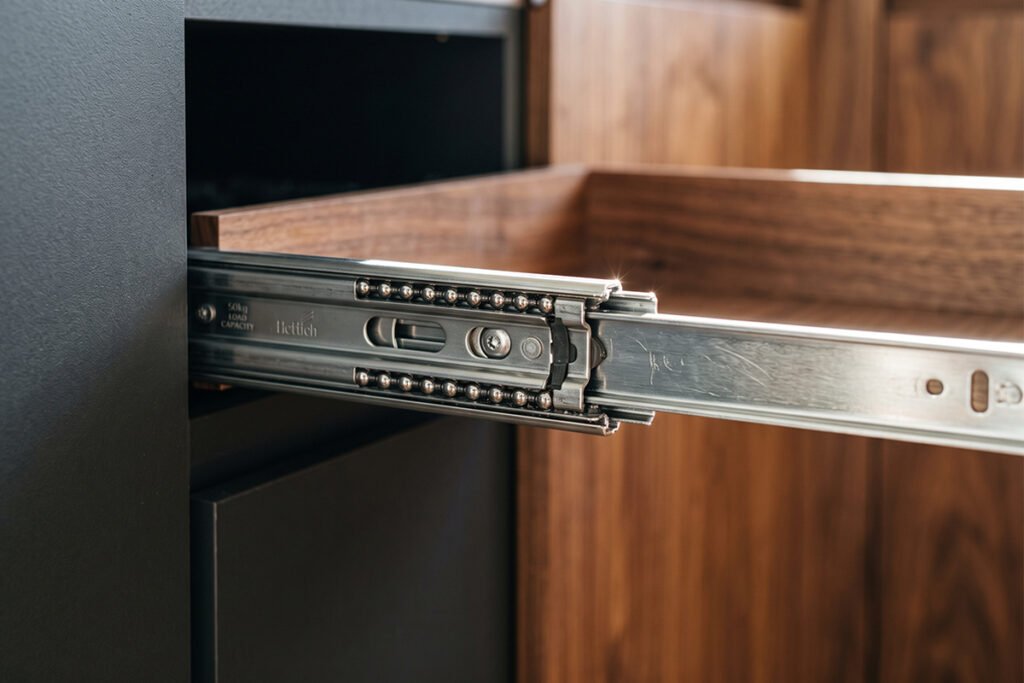
Smooth glides prevent heavy plastic and glass container stacks from tipping over whenever the drawer opens. Investing in quality hardware prevents frequent operational jams and reduces physical frustration in the kitchen. Smooth glide mechanics form the foundation of a truly functional, user-friendly kitchen setup.
Implementing Vertical Lid Separation for Fast Retrieval
Stacking food container lids flat on top of each other creates instant drawer chaos and wastes precious time. Utilizing dedicated vertical lid separation racks keeps every single lid upright, organized, and visible at a glance. This layout prevents you from digging through unstable piles whenever you pack leftovers.
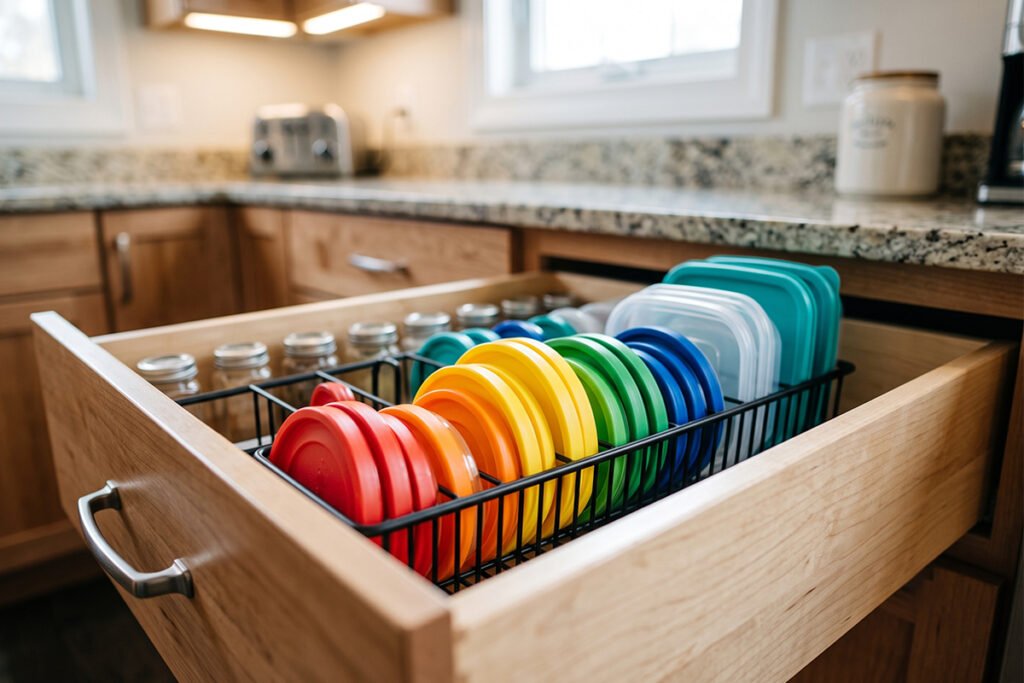
Organizing lids vertically optimizes available height and drastically reduces clutter inside deep drawers. Grouping your lids by size or color alongside upright storage dividers guarantees seamless daily routine efficiency. This simple physical arrangement transforms messy drawers into streamlined storage zones.
Best Practices for Organization and Micro-Zoning
Dividing your large base drawers into smaller physical sections is the most effective approach to drawer layout design. Implementing micro-zoning strategies allows you to assign specific locations for small, medium, and large containers. This clean structural separation keeps different container sizes from drifting into mixed piles.
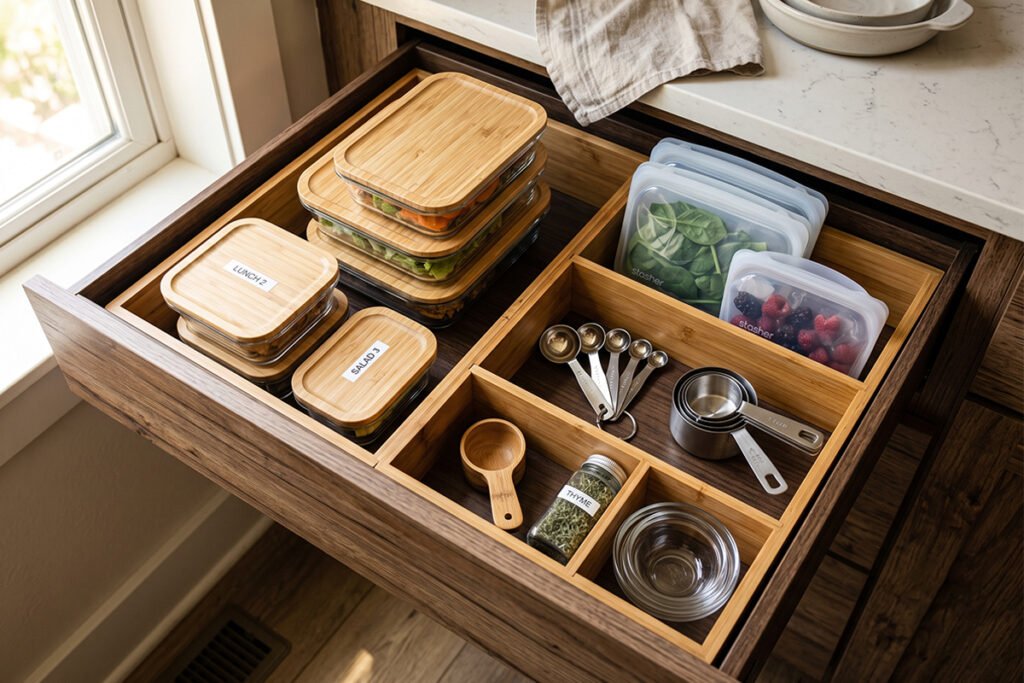
Customizable drawer dividers help maintain fixed boundaries as your container collection changes over time. Keeping dedicated zones for daily lunchboxes and glass meal prep dishes speeds up packing routines. Structured spatial zoning keeps every meal prep item neatly in its proper place.
Mastering Lid-Base Pairing Strategies
Storing containers with their matching lids attached wastes massive amounts of deep drawer volume. Adopting smart lid-base pairing methods allows you to nest identical container bases together tightly while organizing matching lids right beside them. This method doubles your available capacity without causing physical clutter.
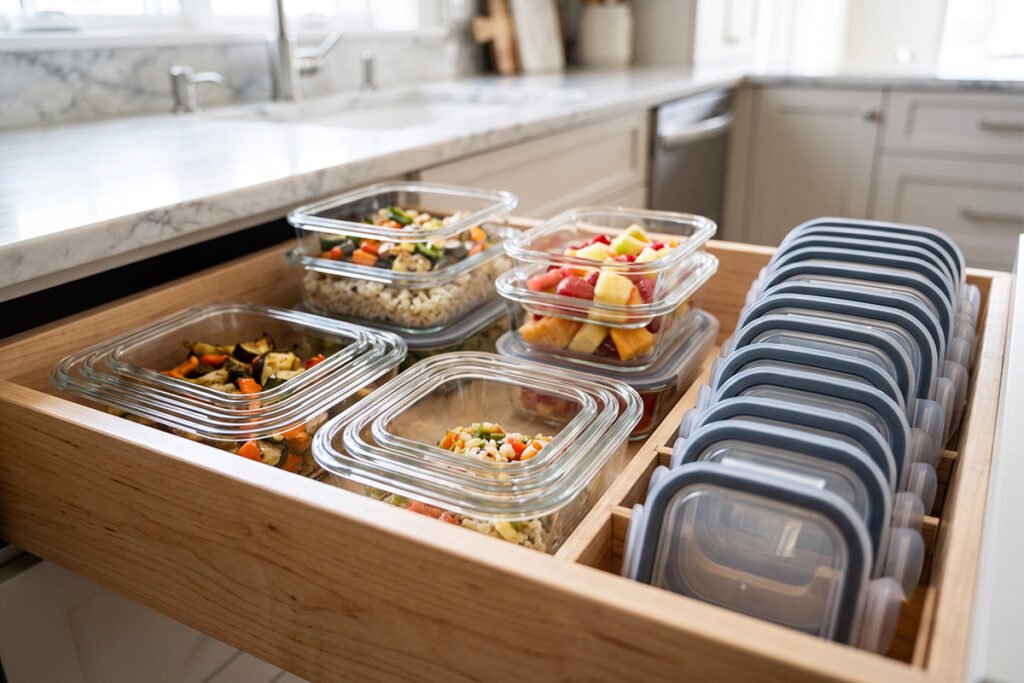
Positioning lid organizers directly adjacent to corresponding nested container stacks ensures effortless meal preparation. You can instantly grab the exact base size and matching lid in one fluid motion without hassle. This spatial strategy maintains neat order even during heavy cooking sessions.
Evaluating the User Consensus on Drawer Storage Solutions
Homeowners and professional organizers strongly favor deep drawer configurations over traditional deep base cabinets. Gathering real-world user consensus highlights that drawers eliminate uncomfortable kneeling and digging through dark shelves. Most users report significant timesavings and far less daily frustration after switching to drawers.
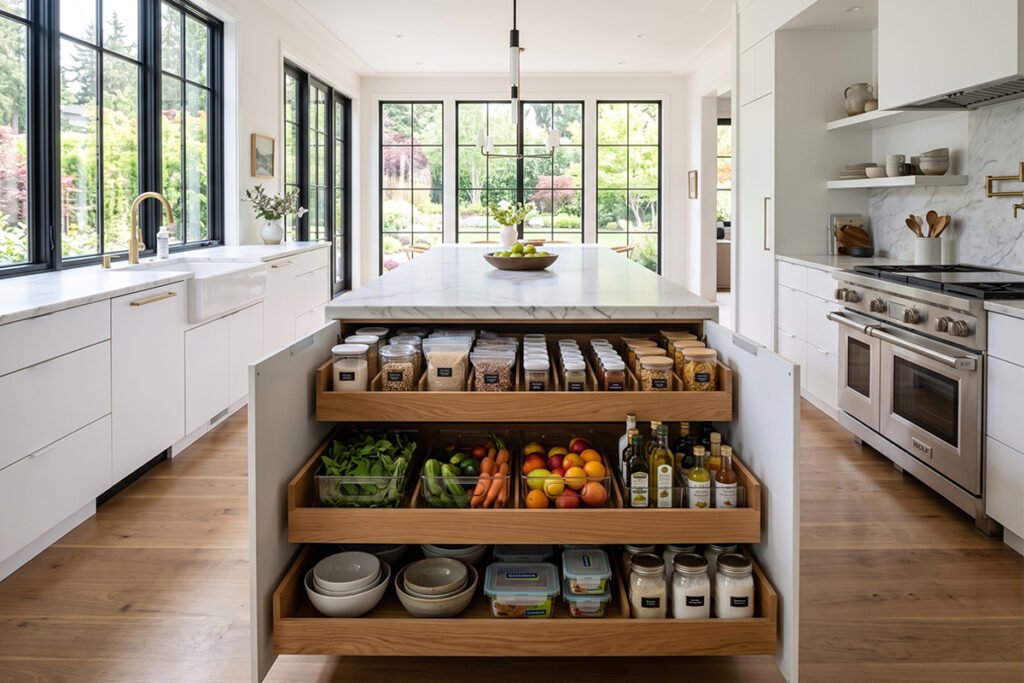
Feedback consistently proves that adjustable dividers and modular inserts provide long-term storage success. Investing in sturdy organizational hardware prevents containers from shifting during rapid drawer movements. Transitioning to dedicated drawer storage remains one of the highest-rated kitchen upgrades among home cooks.
What are some common problems with kitchen drawer organizers?
Fixed-size organizational inserts often fail to accommodate varying container dimensions and unique brand shapes. Static partitions create awkward dead space when container collections change or expand over time. Low-quality plastic organizers also shift around violently whenever drawers are opened or closed quickly.
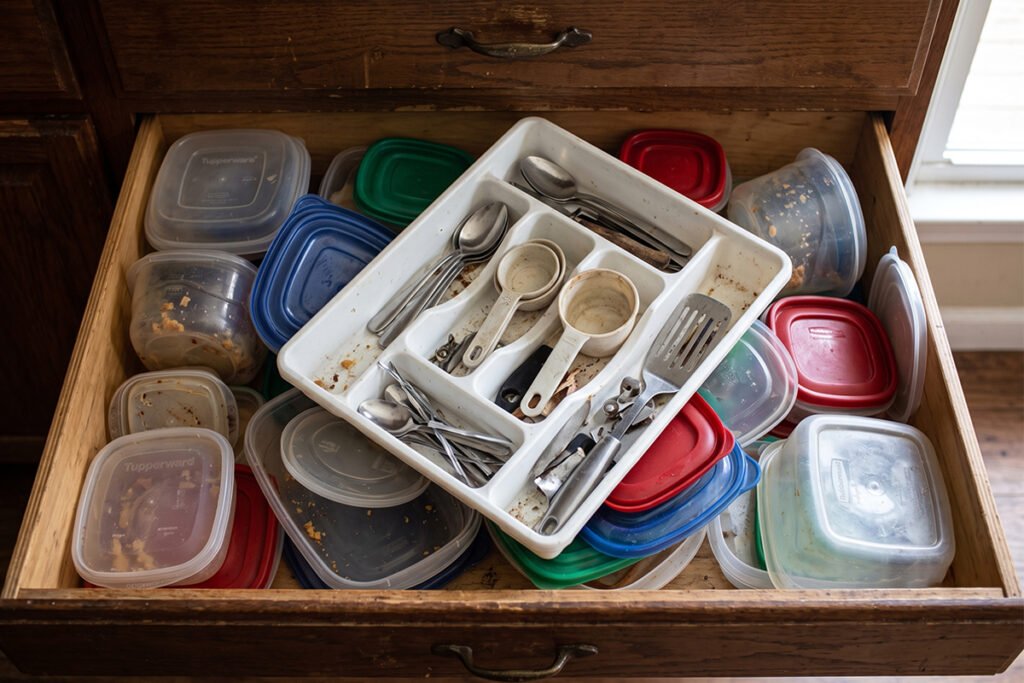
Choosing rigid organizers limits flexible spatial planning for non-standard container shapes. Unsecured dividers frequently slide backward, causing lids to collapse into unsorted piles behind the insert. Selecting fully adjustable, non-slip modular dividers easily solves these common structural storage headaches.
What is the best kitchen drawer organizer?
The ideal organizational setup relies on fully customizable deep bamboo or heavy-duty metal tension dividers. Adjustable inserts allow you to tailor internal drawer dimensions to match your exact container collection perfectly. Modular pegboard systems also rank exceptionally high for securing heavy glass containers safely in place.
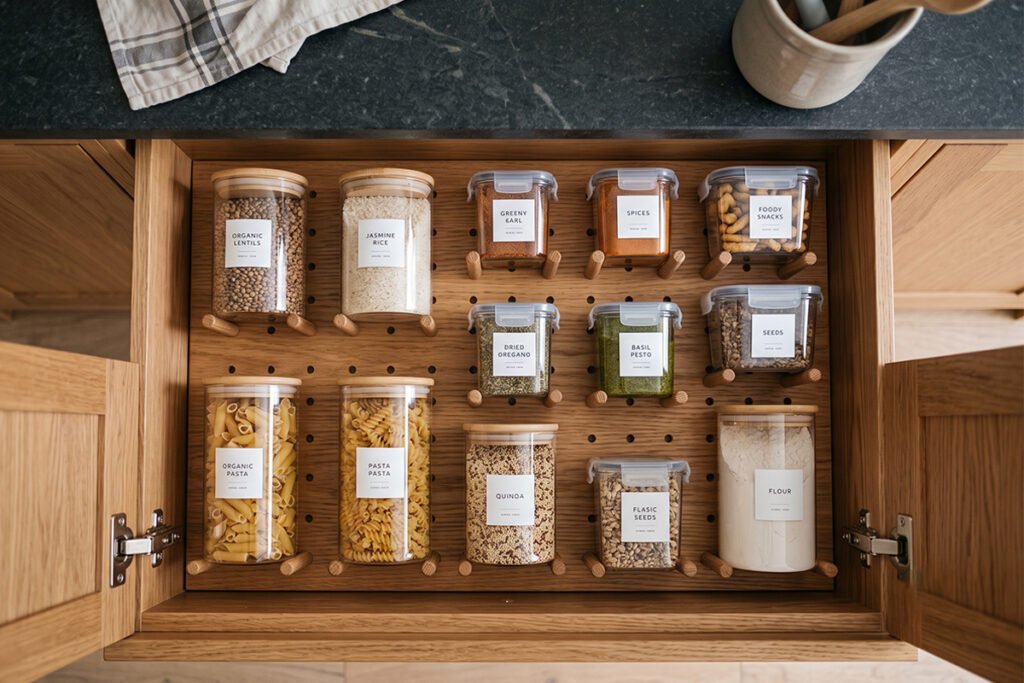
Selecting organizers built with rubberized non-slip feet ensures stability during heavy daily drawer usage. High-walled expandable dividers offer maximum flexibility for changing storage requirements over time. Tailoring your layout hardware guarantees a perfectly optimized kitchen drawer food container storage system.
What are common drawer design mistakes?
Installing shallow drawers for deep container collections is a widespread structural design mistake. Shallow depths force you to stack containers horizontally, leading to unstable piles that jam drawer slides easily. Ignoring weight ratings for heavy glassware leads to sagging drawer bottoms and broken mechanical glides.
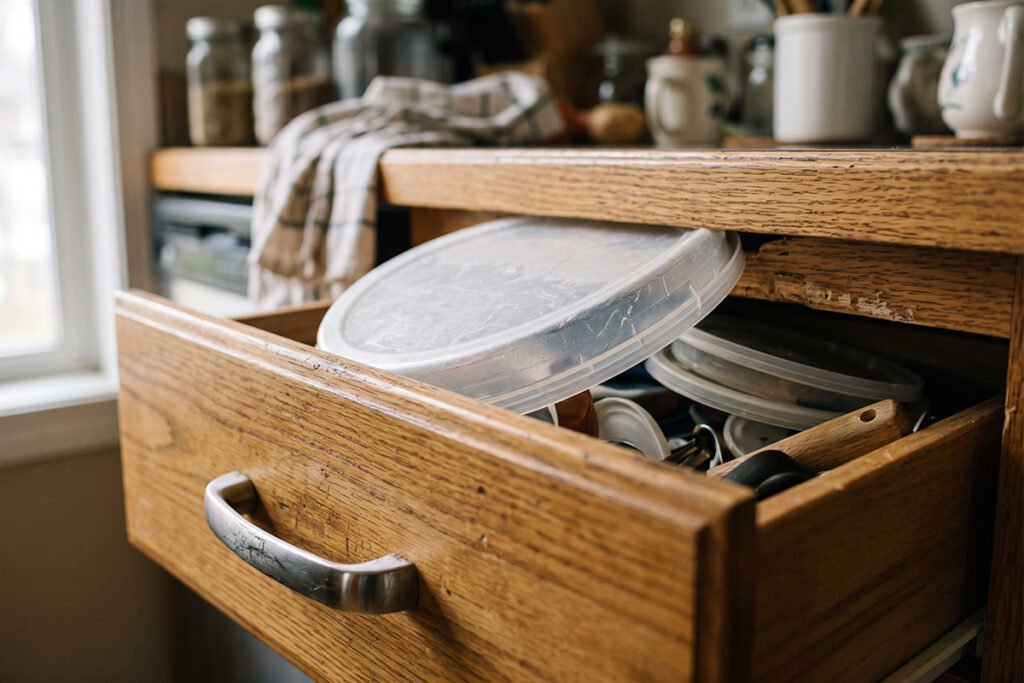
Failing to install soft-close mechanisms causes containers to slam together and tumble out of order. Overlooking these vital architectural details destroys internal drawer organization very quickly. Choosing deep drawers with high weight capacities ensures smooth, long-lasting performance.
What items should I avoid storing in kitchen cabinets and why?
Storing bulky, high-use food containers inside deep lower cabinets causes severe back strain over time. Standard lower shelves lack clear visibility, forcing you to unstack front items just to reach back containers. Overcrowded upper cabinets also present safety hazards when heavy glass containers tumble from high shelves.

Fragile glass cookware and complex plastic containers belong in accessible deep lower drawers rather than dark cabinets. Relocating these high-frequency items into deep drawers improves physical safety and daily accessibility. Eliminating cabinet clutter dramatically improves overall kitchen functionality.
What is the best kitchen drawer organizer for large utensils?
Managing oversized spatulas, ladles, and tongs requires extra-wide diagonal or expandable linear drawer trays. Diagonal layout trays maximize internal surface area, allowing long cooking utensils to lie completely flat. This prevents tall tool heads from catching against cabinet frames during drawer opening.
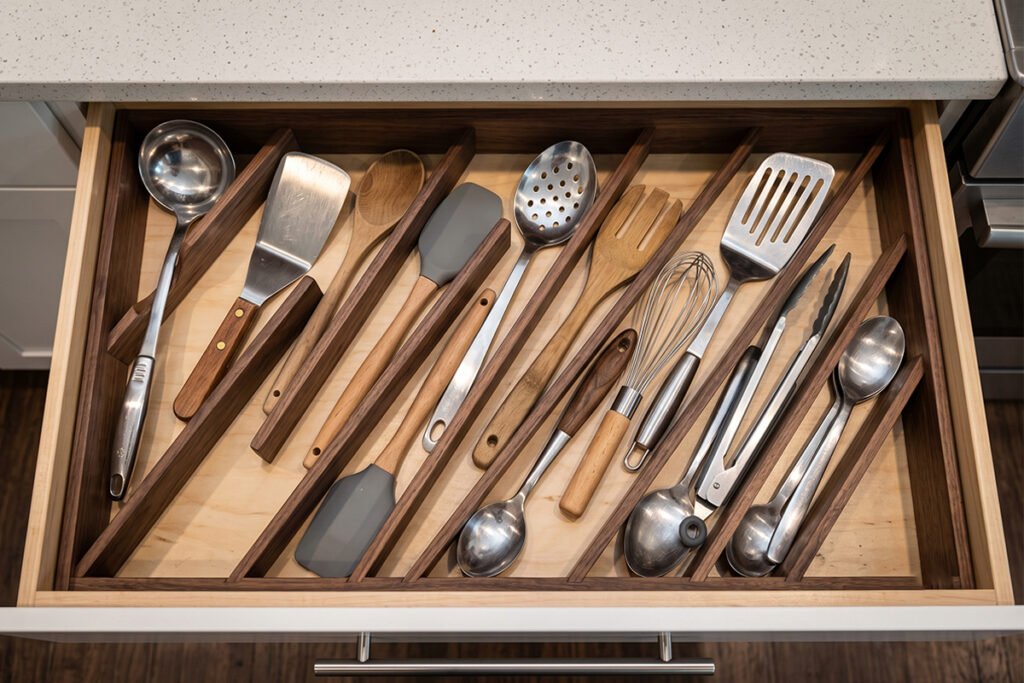
Utilizing deep dividers with adjustable wall slots keeps bulky tools neatly segregated by functional type. Placing soft rubber lining beneath heavy metal utensils dampens movement and reduces drawer noise significantly. Structured tool layouts keep your essential prep utensils instantly reachable during cooking.
Why put aluminum foil in kitchen drawers?
Lining drawer bottoms with clean aluminum foil or protective foil liners shields wood surfaces from scratches and moisture. Foil acts as an effective barrier against residue from improperly washed plastic containers or damp lids. It provides an easily wipeable, moisture-resistant layer that keeps internal cabinet surfaces completely clean.
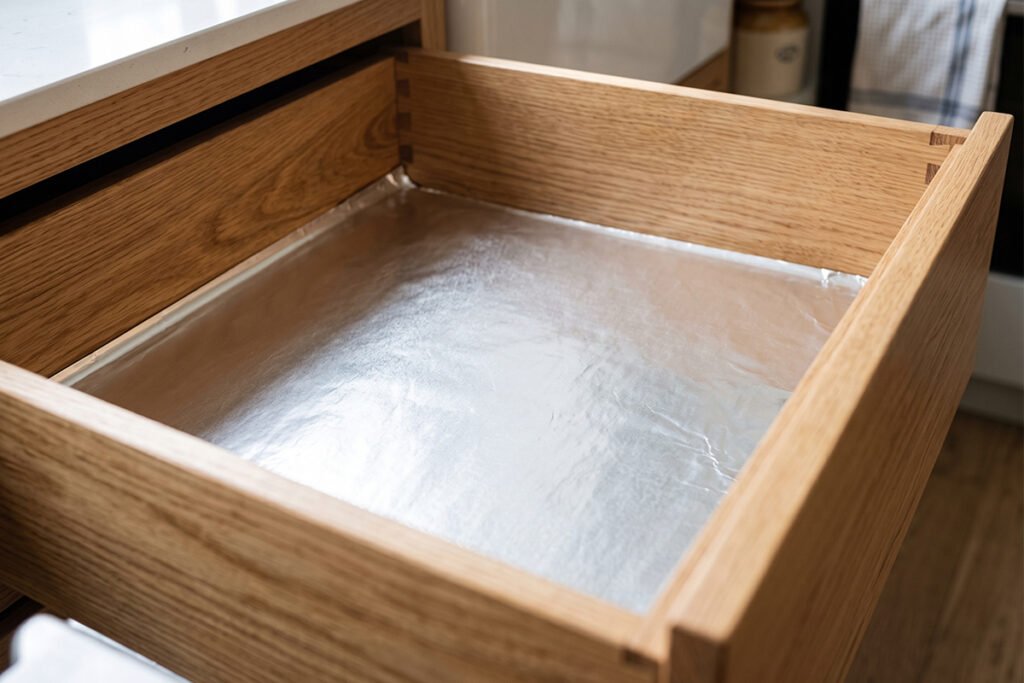
Reflective foil surfaces also improve interior lighting visibility inside deep, dark drawer cavities. Replacing dirty foil sheets takes seconds, saving time compared to scrubbing permanent wooden drawer bottoms. This inexpensive maintenance trick protects custom kitchen cabinetry investment over time.
What are alternatives to drawer organizers?
If custom drawer dividers are unavailable, clear acrylic storage bins offer fantastic modular container management. Hanging wire baskets mounted on cabinet doors provide instant vertical space for storing lightweight lids. Tension curtain rods installed inside deep drawers create simple, inexpensive vertical separation channels.
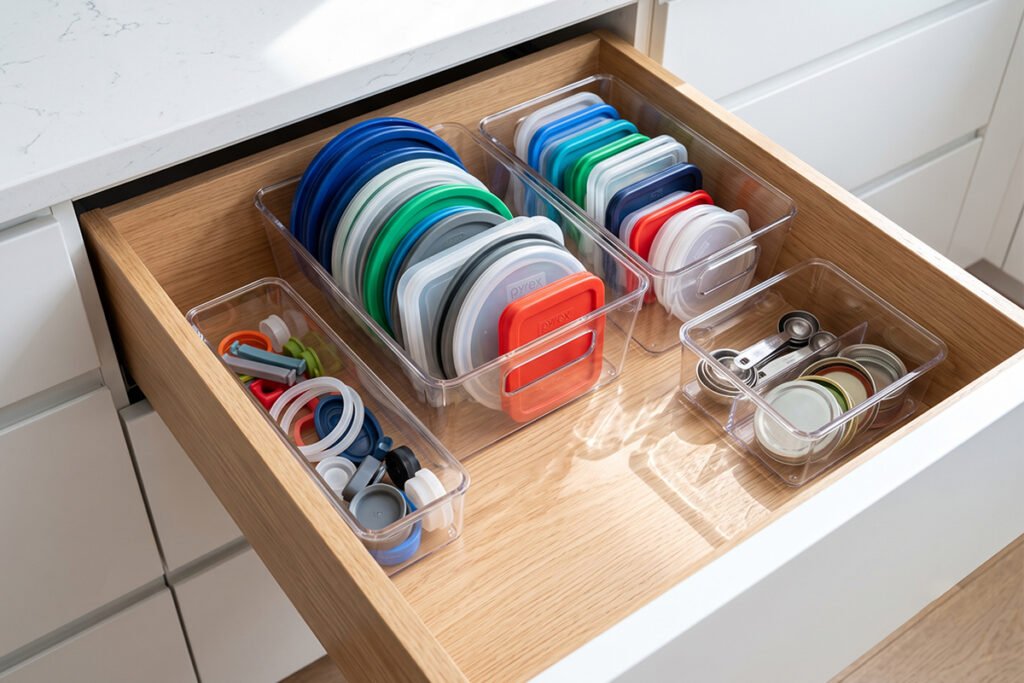
Utilizing stackable mesh baskets inside deep base cabinets mimics the accessibility benefits of actual pull-out drawers. Nesting containers inside open silicone tubs keeps loose lids grouped together neatly on open shelving. These budget-friendly options deliver strong organization without requiring permanent custom carpentry.
How do people organize kitchen drawers?
Successful kitchen drawer organization begins with emptying drawers completely and decluttering mismatched containers without lids.
Homeowners group remaining containers by size material before designating precise physical zones within drawers. Installing non-slip drawer liners prevents items from sliding out of alignment during quick movements.
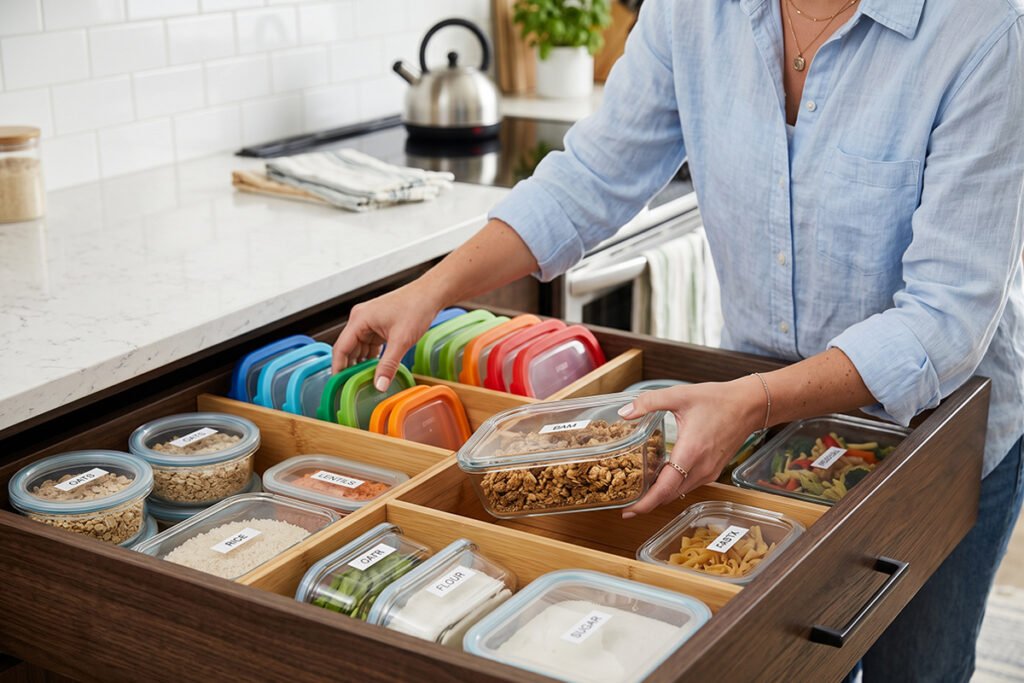
Placing frequently used containers toward the front maximizes physical convenience during busy morning routines. Nesting bases systematically while securing lids vertically keeps entire collections compact and functional. Maintaining simple daily habit loops keeps organized storage systems running smoothly permanently.
Are organizer drawers worth buying?
Investing in specialized organizer drawers dramatically improves home organization and overall kitchen workflow efficiency.
Deep pull-out drawers eliminate physical physical strain, allowing full access to stored items without uncomfortable bending. Homeowners consistently report reduced prep stress and faster kitchen cleanups after upgrading.
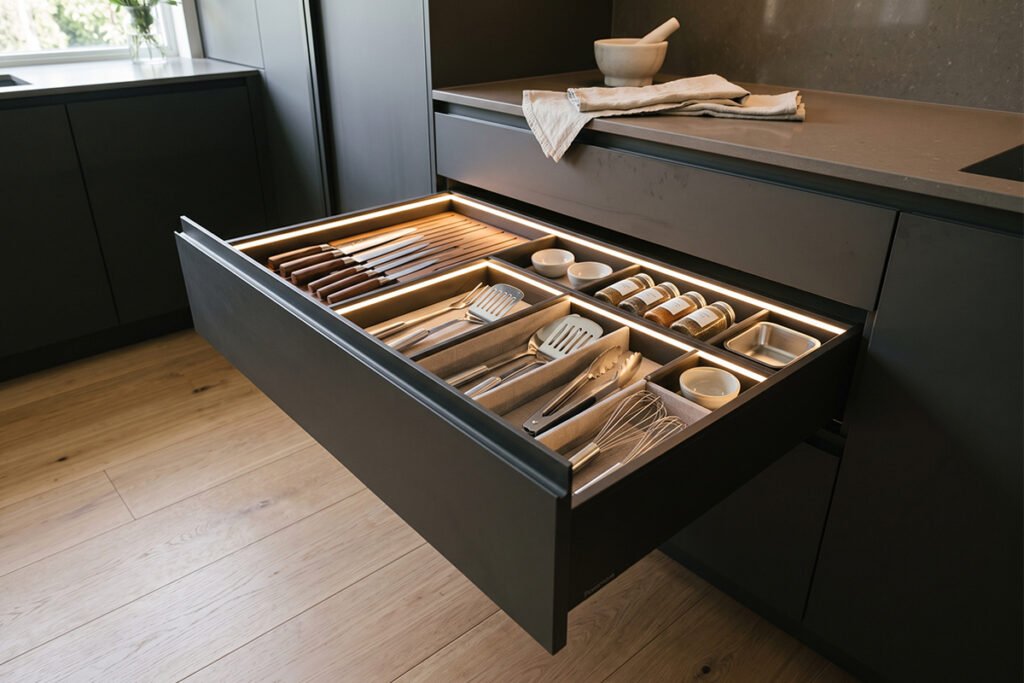
Custom storage solutions also protect expensive container sets from physical wear and premature damage. Maximizing available cabinet footprint increases overall storage density across small kitchen spaces effortlessly. The combined ergonomic benefits and daily time savings easily justify the initial upgrade investment.
Why put foil on doorknob at night?
Wrapping aluminum foil around exterior doorknobs is a popular viral household security hack. The foil acts as a simple visual tamper alert and creates noise if anyone touches the handle overnight. It provides quick peace of mind for home security without requiring electrical installation.
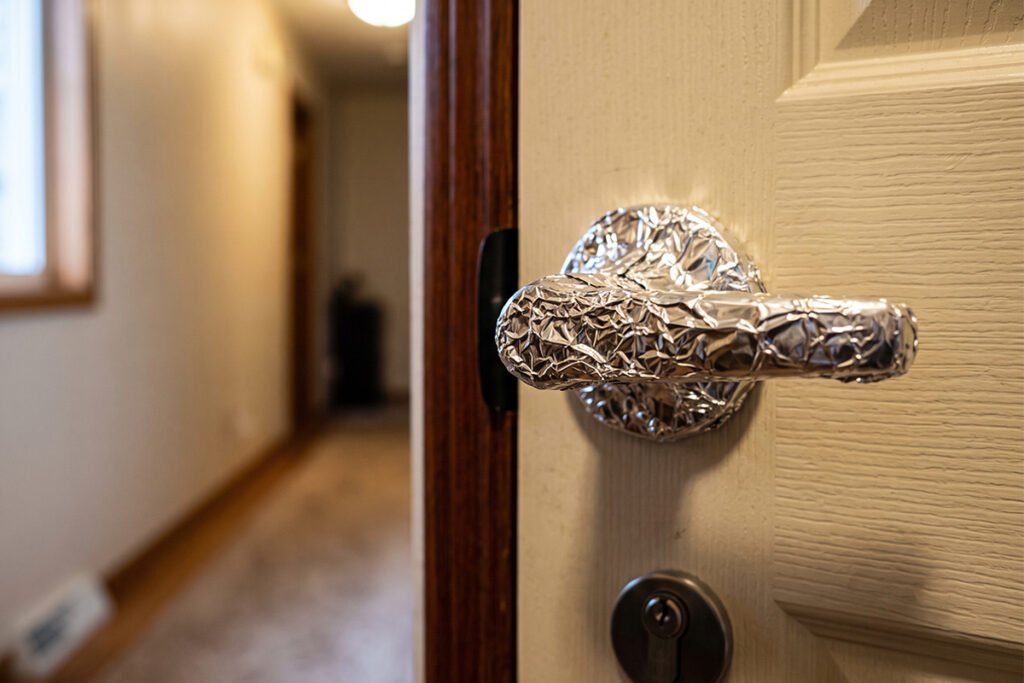
Foil also protects painted hardware from wet paint damage during home renovation projects. While completely unrelated to container storage mechanics, this clever material application demonstrates versatile household problem-solving tactics. Simple everyday items often provide surprisingly effective home maintenance solutions.
What foods should not touch aluminum foil?
Highly acidic foods like tomatoes, citrus fruits, and vinegar-heavy dishes should never come into direct contact with aluminum foil. Acidic compounds leach small trace amounts of aluminum metal into stored food items over time. This interaction causes unpleasant metallic tastes and ruins food surface presentation during storage.
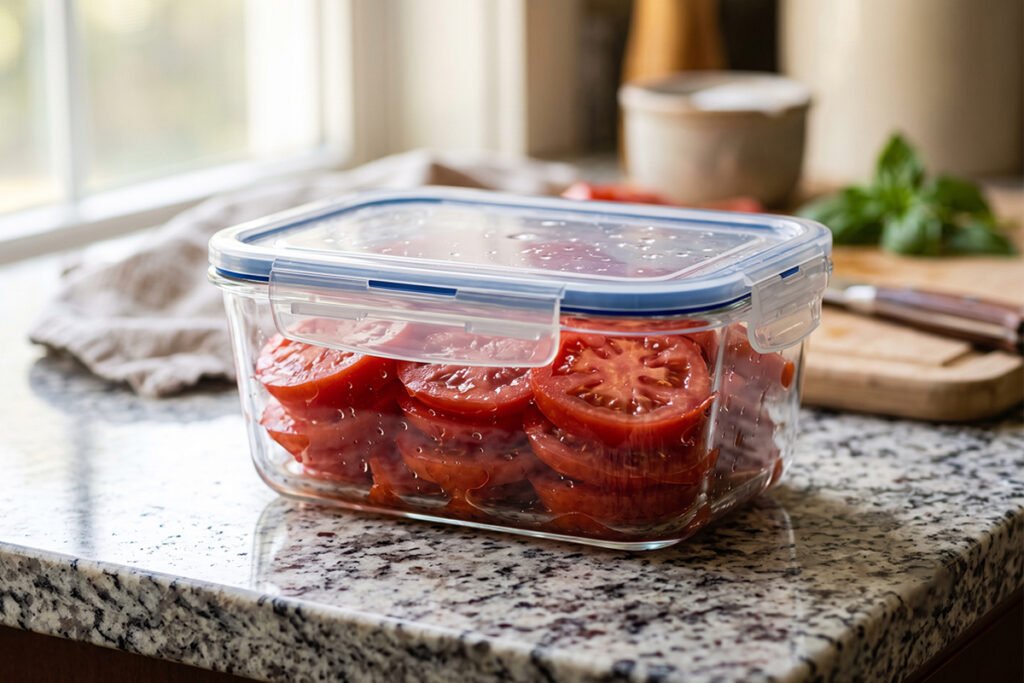
Salty dishes and heavy spice mixtures also degrade aluminum foil integrity during extended refrigerator storage. Storing acidic leftovers inside high-quality glass containers with airtight plastic lids prevents unwanted chemical reactions. Choosing appropriate storage materials ensures meal safety and maintains optimal food flavor quality.
Why put aluminum foil balls in a toilet tank?
Placing a loosely rolled ball of aluminum foil inside a toilet tank helps reduce mineral deposit buildup over time. The aluminum reacts mildly with dissolved minerals, helping prevent hard water rings along internal tank components. This simple trick minimizes frequent manual scrubbing inside plumbing fixtures.
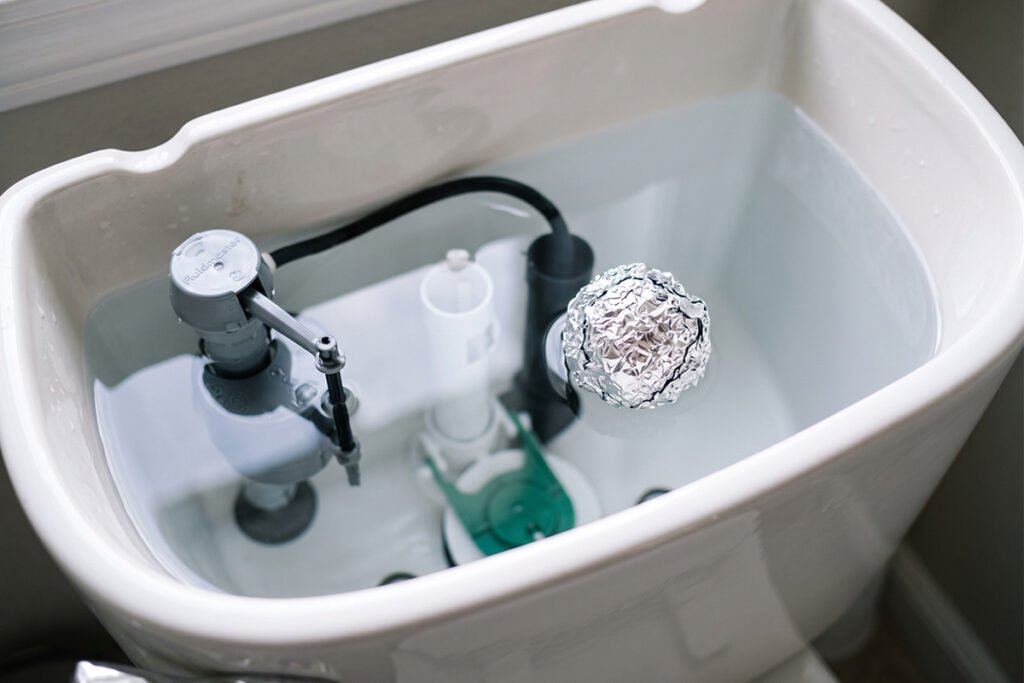
While unconventional, this material reaction helps soften heavy scale buildup across internal porcelain surfaces. It keeps flush valves working smoothly without requiring harsh chemical cleaning agents inside plumbing systems. Simple physical hacks frequently offer easy maintenance alternatives for common home issues.
Are You Accidentally Spoiling Your Favorite Seasonings?
Moisture and heat quietly ruin flavor profiles long before expiration dates, but a few quick adjustments will fix it instantly.
Why put cut up soap in the toilet before bed?
Dropping small pieces of bar soap into the toilet bowl overnight allows gentle cleaning agents to dissolve slowly. As the soap sits in standing water, it breaks down organic stains and neutralizes unpleasant bathroom odors. Flushing the bowl in the morning leaves the porcelain fresh and clean effortlessly.
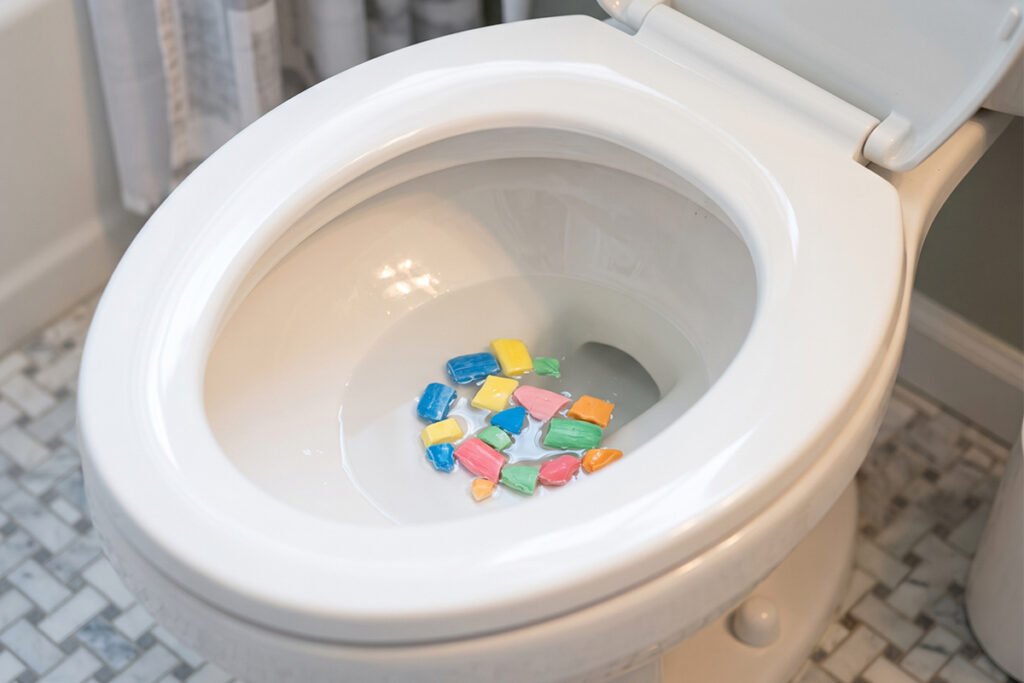
This low-effort maintenance routine reduces the need for aggressive scrubbing with abrasive chemical toilet bowl cleaners. The dissolved soap creates a smooth protective barrier that prevents waste from adhering easily to porcelain surfaces. Simple overnight hacks keep bathroom fixtures clean with minimal manual effort.
Why do people put a ball of tin foil in the dishwasher?
Tossing a crumpled ball of aluminum foil into the dishwasher silverware basket leaves metal cutlery sparkling bright. The aluminum reacts chemically with dishwasher detergent and silver tarnishing compounds during hot wash cycles.
This electrochemical reaction restores shine to dull stainless steel and silverware without manual polishing.
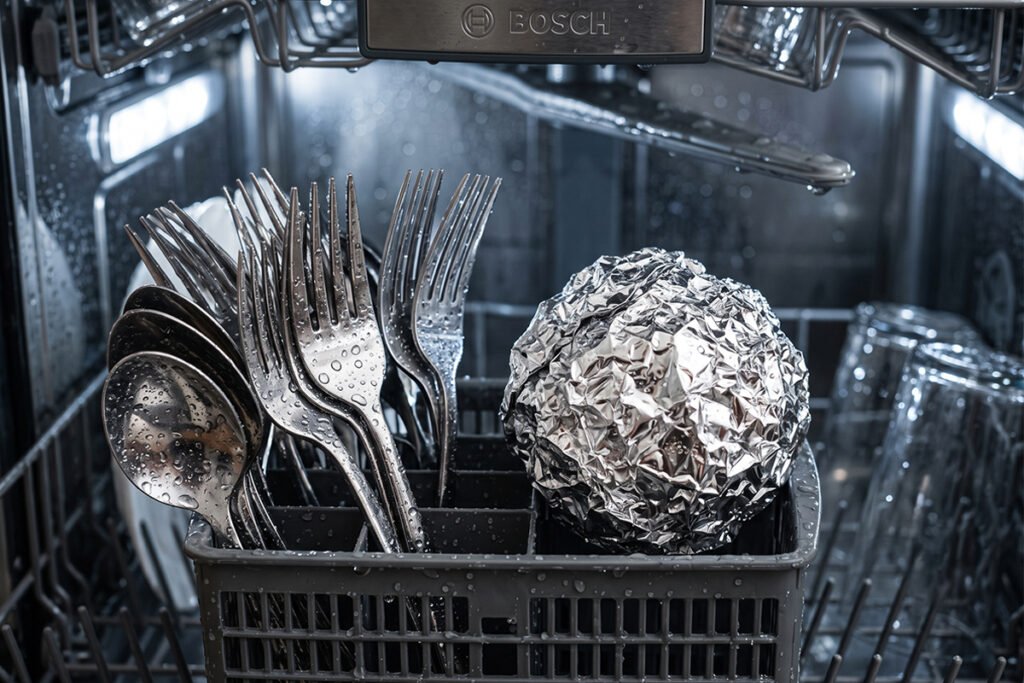
This simple reaction removes stubborn water spots and oxide layers from metal eating utensils effortlessly. It turns routine dishwashing cycles into an automatic polishing treatment for household cutlery collections. Utilizing basic chemistry hacks saves time while delivering professional-level cleaning results at home.
What does putting Dawn dish soap in the toilet do?
Pouring dish soap into a clogged toilet bowl lubricates blocked plumbing lines and breaks down dense organic matter. The concentrated soap slips past blockages, loosening debris along internal porcelain drain walls effectively. Adding warm water after letting the soap sit creates gentle pressure that clears minor clogs naturally.
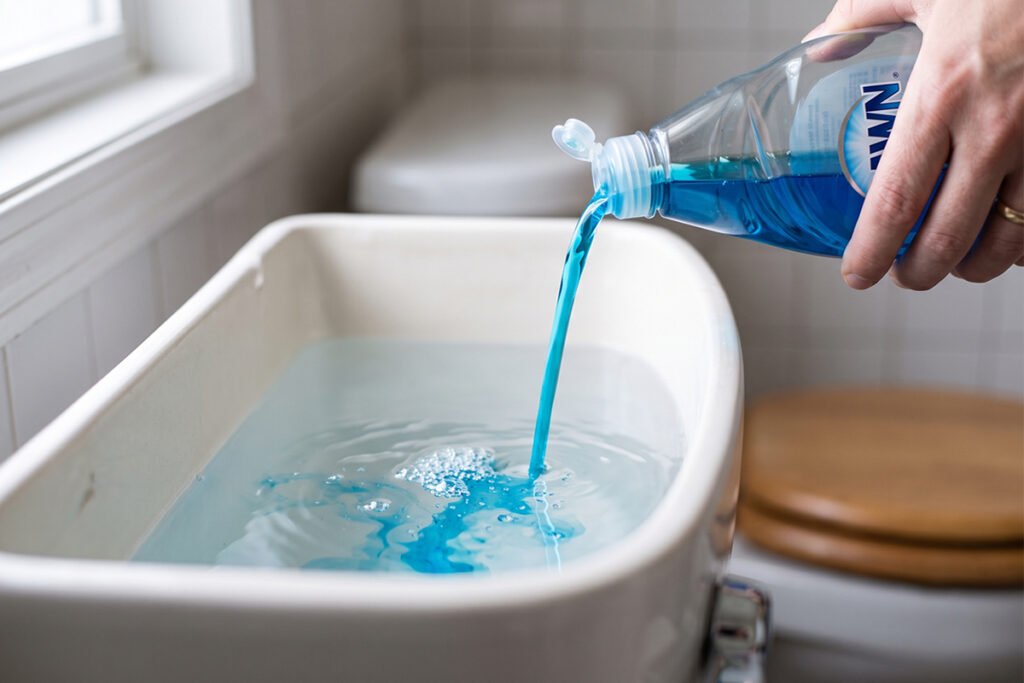
This non-destructive plumbing trick solves minor drain clogs without requiring harsh chemical drain cleaners or heavy plunging. The soap reduces friction along pipe walls, allowing water pressure to clear obstructions smoothly. Keeping dish soap handy offers a quick, safe solution for emergency bathroom blockages.
Top Recommended Kitchen Drawer Food Container Storage Products to Buy
- Bamboo Deep Drawer Dividers: Fully adjustable spring-loaded wooden partitions designed to customize deep drawer layouts instantly for any container collection.
- Expandable Vertical Lid Organizer Rack: Heavy-duty steel wire frame rack built to support food container lids in clean upright rows for fast access.
- Heavy-Duty Full-Extension Drawer Slides: Ball-bearing mechanical glides supporting high weight capacities to ensure smooth opening for heavy glass container drawers.
- Modular Drawer Pegboard System: Customizable wooden pegboard insert with movable wooden pegs to hold glass bases and containers firmly in place.
- Non-Slip Cushioned Drawer Liners: Durable protective gripping mat that prevents containers, lids, and organizational trays from sliding around during movement.
Conclusion
Upgrading your kitchen drawer food container storage completely transforms daily meal preparation from chaotic to effortlessly efficient. Implementing key ergonomic layout rules like vertical lid separation and micro-zoning eliminates physical strain while maximizing storage density.
Combining full-extension slides with customizable dividers creates a clean, functional workspace that stands up to heavy daily kitchen use. Modernizing your kitchen storage setup ultimately saves time, protects your cookware investment, and makes home cooking truly enjoyable.
Leave a Reply