

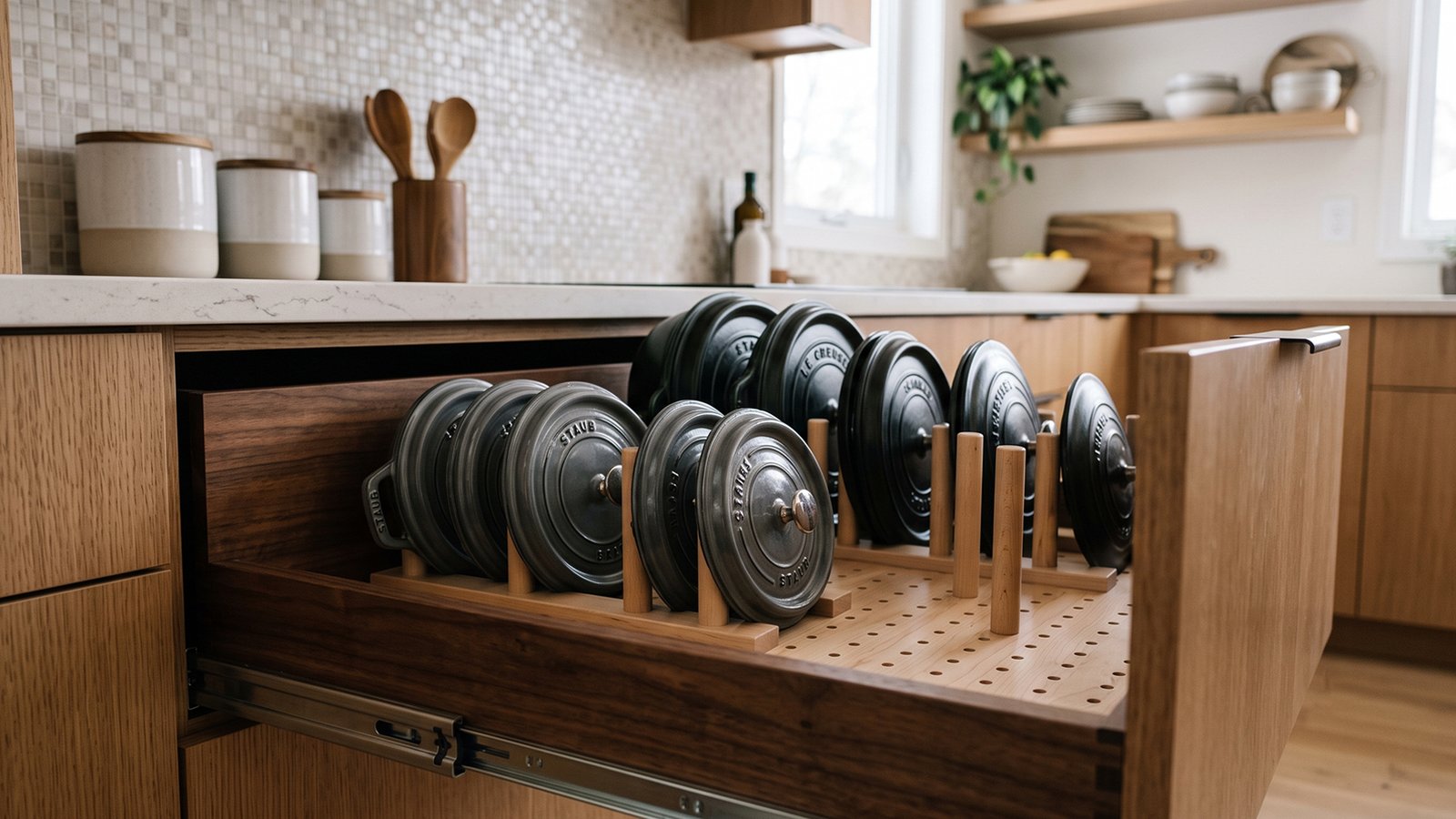
Upgrading to vertical lid storage for kitchen drawers completely eliminates the frustration of searching through cluttered cookware stacks. Storing covers upright allows you to view every piece simultaneously without disturbing neighboring pots or pans.
Table of Contents
Utilizing dedicated deep drawer dividers keeps metal, glass, and plastic tops separated by size and frequency of use. This simple layout shift optimizes vertical height that usually goes to waste in modern deep drawer units.
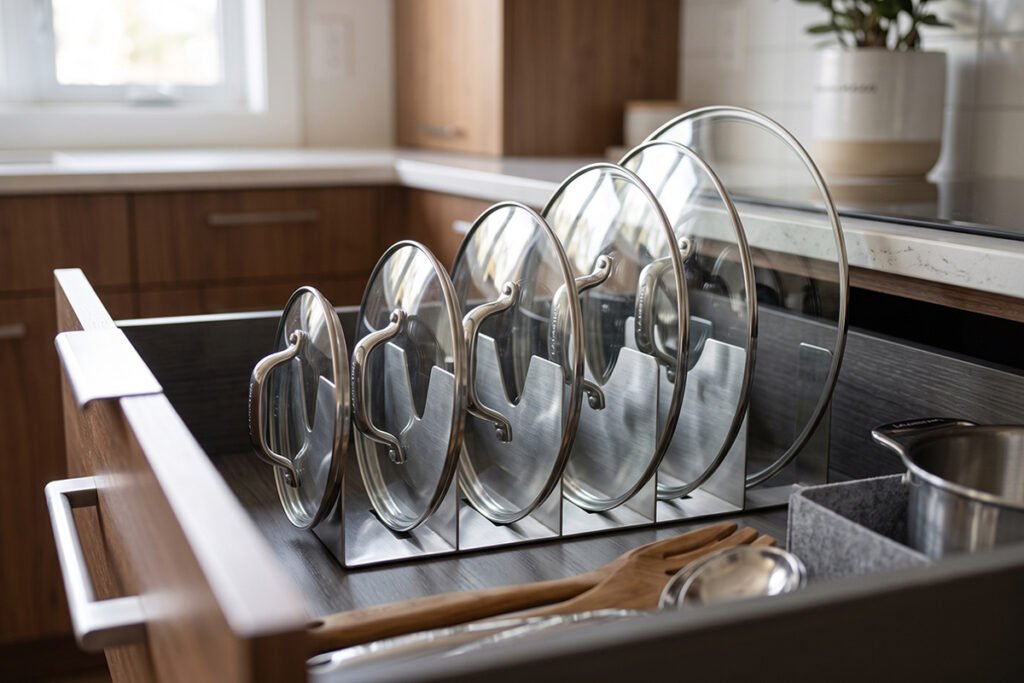
Implementing a robust saucepan lid organizer prevents scratching delicate non-stick finishes or chipping glass rims. By giving every item an individual slot, your entire kitchen setup feels instantly customized and effortlessly functional.
Choosing the absolute best kitchen drawer organizer depends on your specific collection of cookware and available cabinet space. Expandable wooden inserts and heavy-duty steel wire racks consistently score highest among homeowners seeking durable customization.
Look for modular options featuring movable dividers to accommodate bulky lid knobs and curved handles. Pairing adjustable frames with a non-slip drawer liner guarantees your items stay locked in place even during rapid drawer movements.
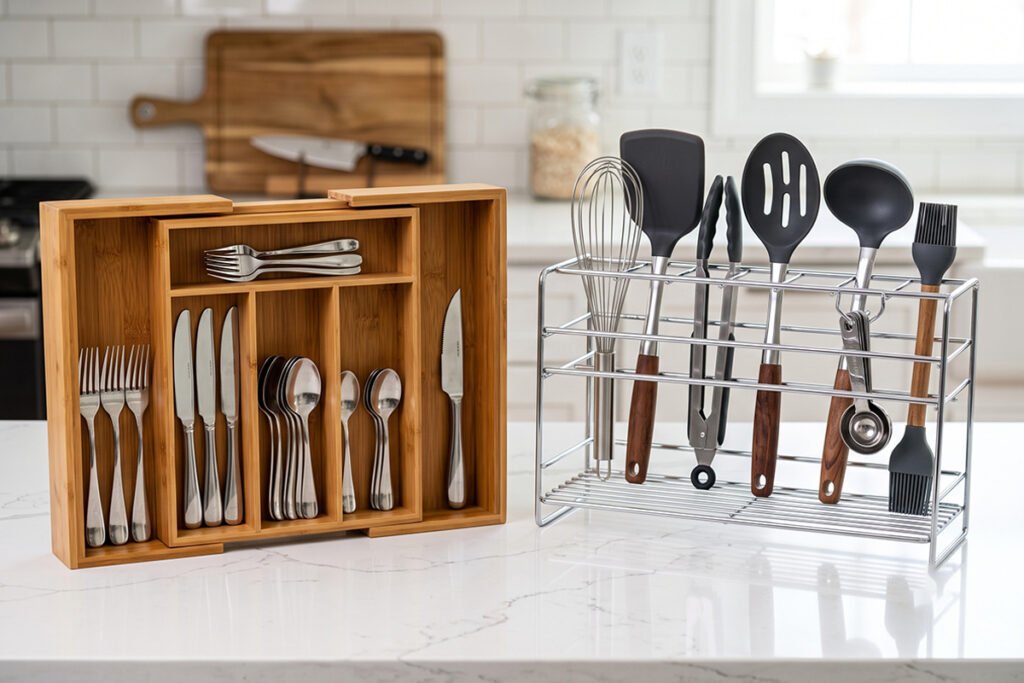
For maximum durability, metal wire slots paired with custom wood trim offer the best blend of structural support and visual charm. Investing in quality materials prevents bending under the weight of heavy cast-iron or tempered glass tops.
Storing lids inside traditional cabinets often leads to unstable stacks that easily tumble over. Utilizing specialized pot lid storage ideas—such as side-mounted rails or slide-out tray inserts—converts empty cabinet corners into active storage space.
If you lack deep drawers, tension rods mounted across the interior of your cabinet frame create cheap, effective vertical slots. This strategy elevates your lids off the cabinet floor, reserving bottom shelves for heavy stockpots.
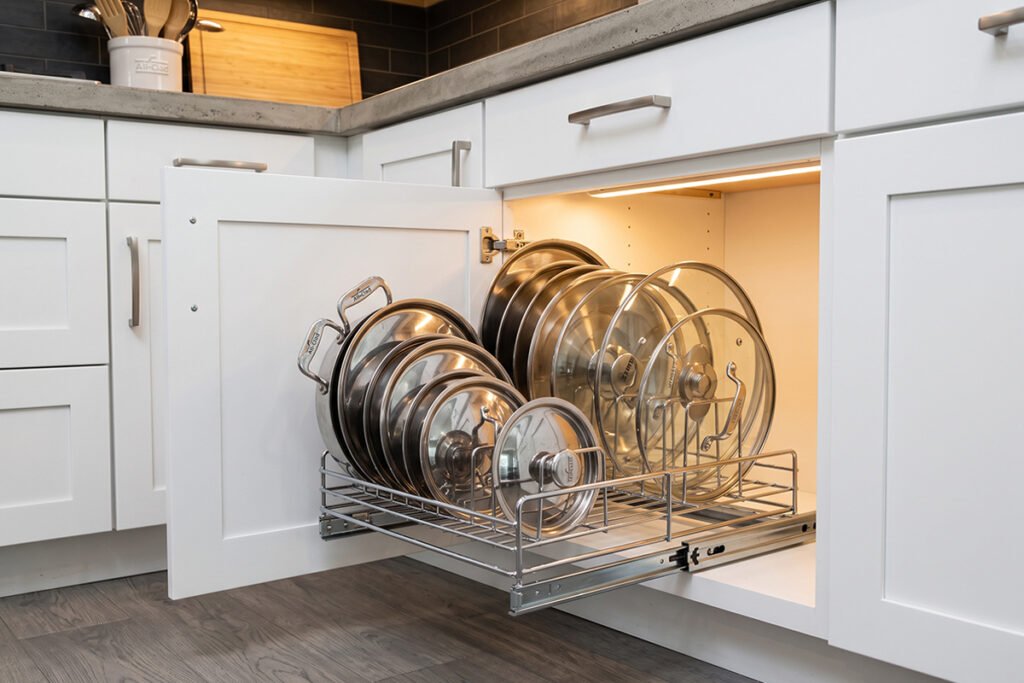
For seamless accessibility, install slide-out wire baskets inside lower cabinet bases so lids roll toward you automatically. This setup minimizes bending and reaching, making everyday cooking and cleanup significantly faster.
What Are Some Unique Drawer Organizer Ideas?
Repurposing unexpected household tools offers clever ways to organize lids on a budget. Office desktop file sorters fits remarkably well inside deep drawers to hold thin pot covers upright.
Customizing diagonal wooden dividers creates slanted channels that allow larger lids to slide in effortlessly. This angled approach saves valuable height while serving as effective small kitchen storage hacks.
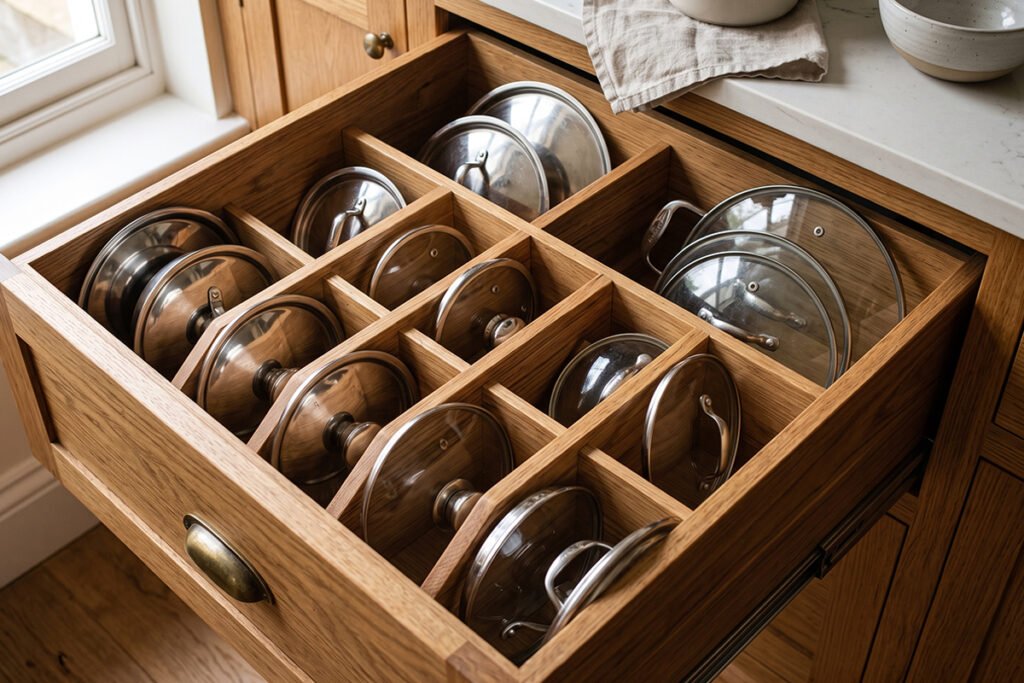
Installing vertical tension curtain rods across the front or back of the drawer creates instant partitions. This quick hack keeps lids standing straight without taking up central drawer real estate.
What Are Some Common Problems with Kitchen Drawer Organizers?
Poorly fitted organizers often slide around whenever you open or close a heavy kitchen drawer. This constant shifting causes glass lids to clatter together, potentially scratching surfaces or chipping delicate edges.
Fixed slot sizes present another major drawback when dealing with varying lid depths and oversized handles. Fixed slots force you to store bulky covers elsewhere, defeating the purpose of a unified system.
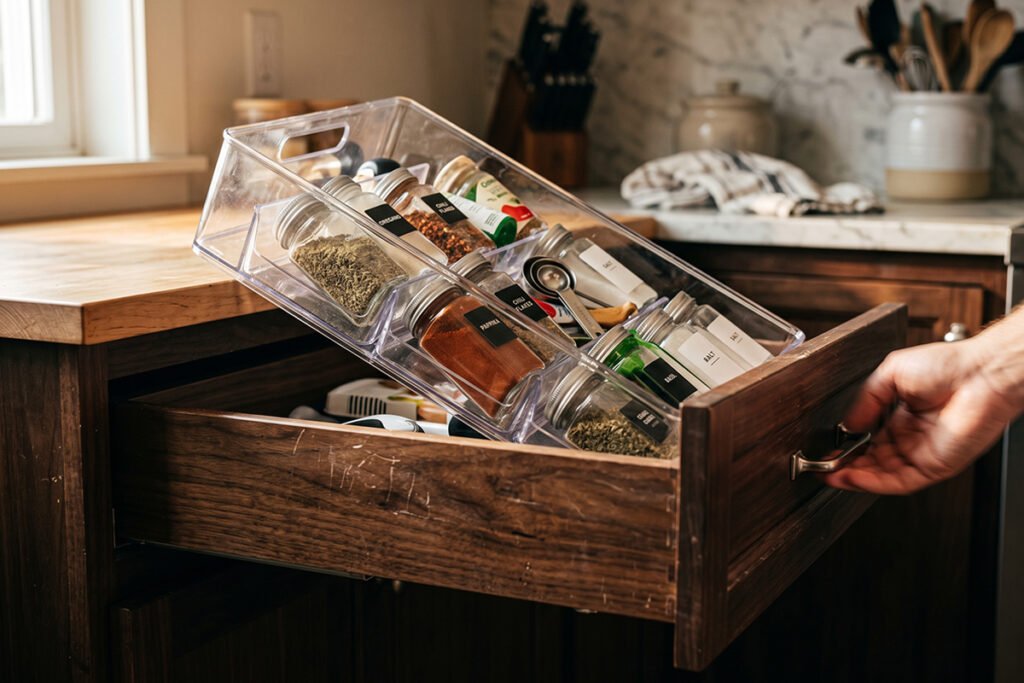
Excessive dust and food crumbs can quickly gather in hard-to-reach tracks of intricate drawer racks. Selecting removable trays makes routine cleaning simple while preserving your cabinetry interior.
How Do People Organize Kitchen Drawers?
Most organized home cooks rely on zone-based layouts to keep high-frequency items within arm’s reach. Grouping saucepans directly under stove cooktops alongside their respective lids drastically speeds up meal preparation.
Using modular plastic inserts allows you to group small items while dedicating deep sections for large cookware. This flexible layout ensures every utensil and accessory maintains a designated spot.
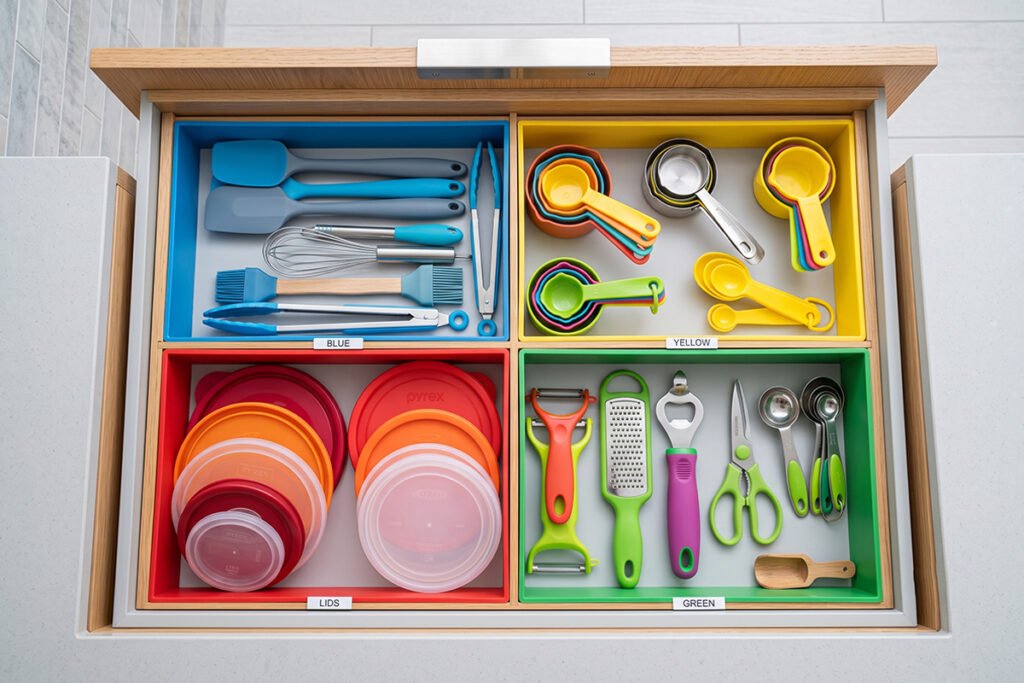
Layering sliding trays over deeper lower bins effectively doubles your available surface area. Top layers hold small tools, while lower sections accommodate upright storage systems.
What Are Alternatives to Drawer Organizers?
Wall-mounted stainless steel rails provide an excellent alternative if drawer space is strictly limited. Hanging lids along backsplashes or cabinet doors keeps countertops completely clear for prep work.
Over-the-door wire baskets turn unused pantry or cabinet interiors into accessible storage zones. This vertical solution keeps lids organized without requiring permanent kitchen modifications or costly hardware installations.
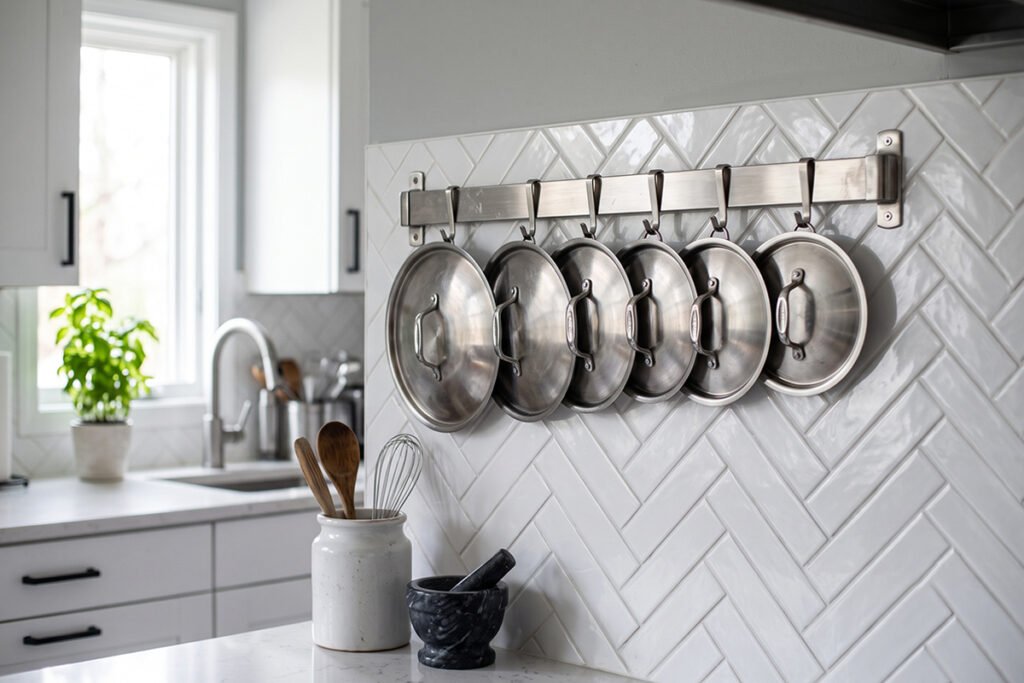
Ceiling-mounted pot racks equipped with lid perches offer a charming, commercial-style aesthetic. Suspended storage preserves lower cabinetry space specifically for heavy appliances and bakeware.
What Are the Best Lid Storage Solutions for a Small Kitchen?
Compact kitchens benefit most from ultra-slim expandable racks that adjust to precise drawer dimensions. These flexible systems maximize narrow drawer spaces without wasting valuable side margins.
Adhesive door hooks mounted on cabinet interiors offer instant vertical holding power without tools. These individual mounts hold single lids securely, making them ideal for tiny apartments.
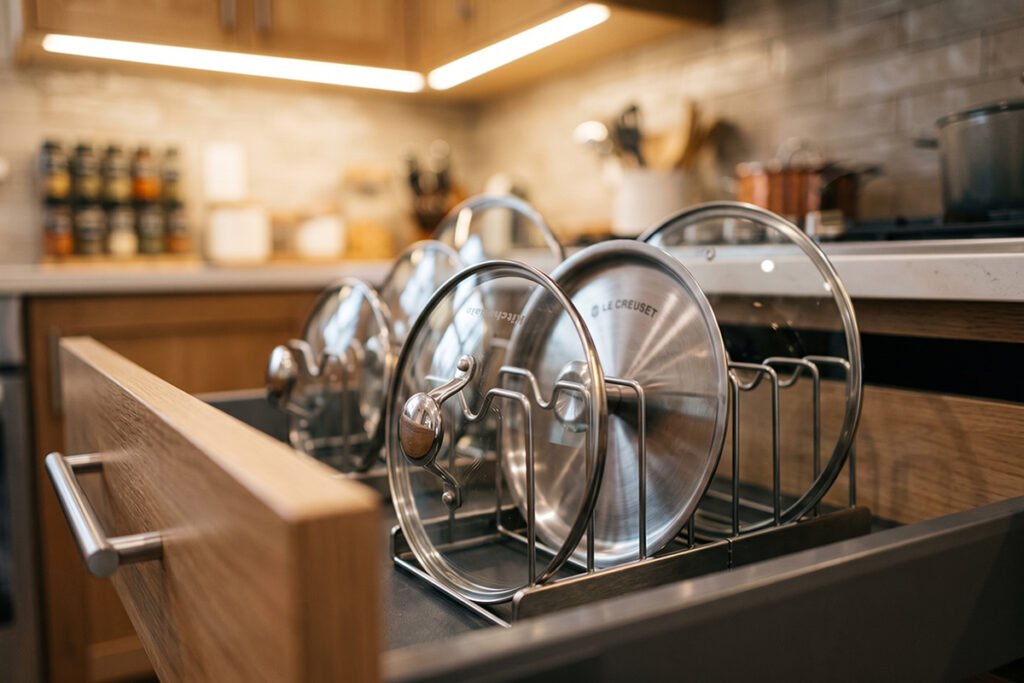
Utilizing stackable, nested food containers paired with a dedicated tupperware lid holder saves major shelf real estate. Keeping containers flat and covers upright optimizes tiny kitchen layouts.
What Are Some Creative Ways to Organize Container Lids?
Dividing plastic container tops by shape using small fabric bins prevents chaotic pileups. Grouping round, square, and rectangular lids into designated bins makes finding matching pairs effortless.
Upcycling wire CD racks or dish drying racks creates perfect slot channels for lightweight plastic lids. These sturdy frameworks fit seamlessly into deep drawers or upper cabinet shelves.
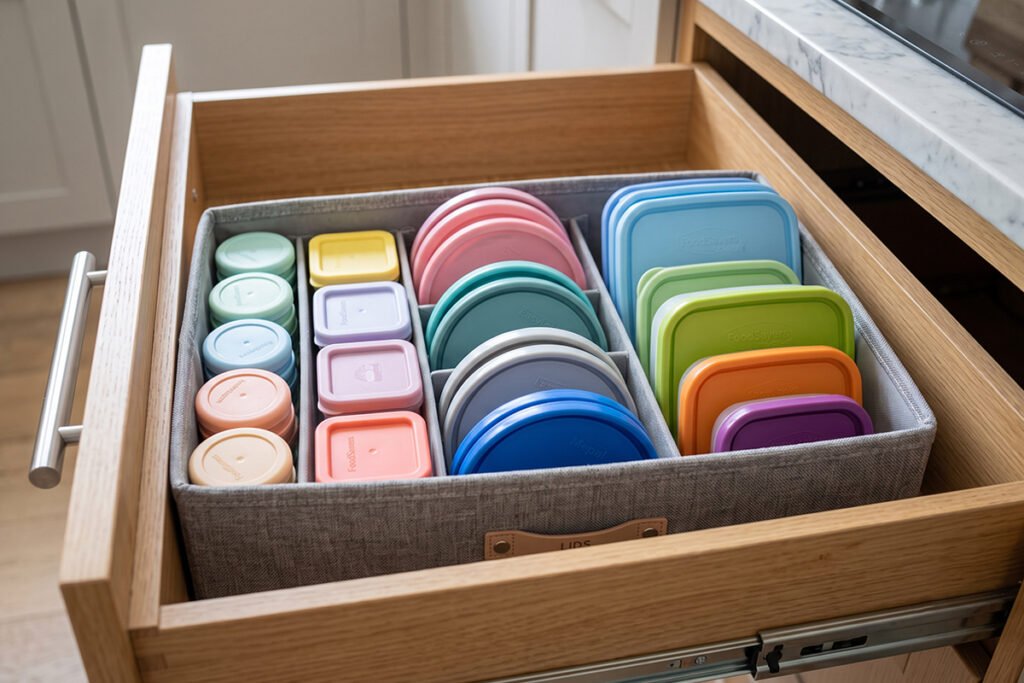
Mounting small magazine holders inside deep drawers establishes vertical filing channels for flat container tops. This visual arrangement lets you grab the exact size you need instantly.
How to Store Saucepan Lids in a Drawer?
Storing saucepan covers vertically requires dedicated slots that account for long handles and top knobs. Placing lids at a slight angle prevents handles from catching on upper drawer frames.
Installing adjustable metal divider fins lets you set specific widths tailored to deep, domed saucepan tops. This custom layout secures every piece comfortably during rapid drawer opening.
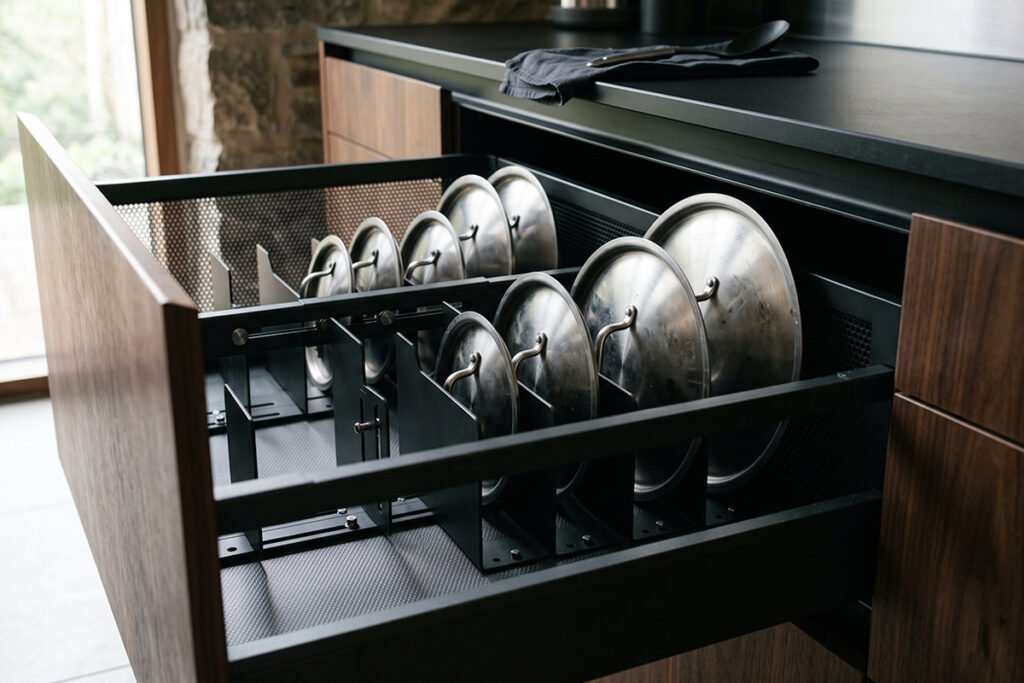
Pairing your saucepan lid organizer with soft rubber bumpers stops metal-on-metal rattling. Soft linings protect enamel coating and keep your cookware looking brand new.
Does Hobby Lobby Have Drawer Organizers?
Hobby Lobby stocks various wooden crates, wire baskets, and decorative acrylic trays suitable for drawer organization. While primarily a craft store, their storage section contains versatile bins for kitchen projects.
Craft enthusiasts often adapt Hobby Lobby’s unfinished wooden dividers to build custom drawer inserts. Sanding and staining these pieces yields high-end aesthetic storage at a low price point.
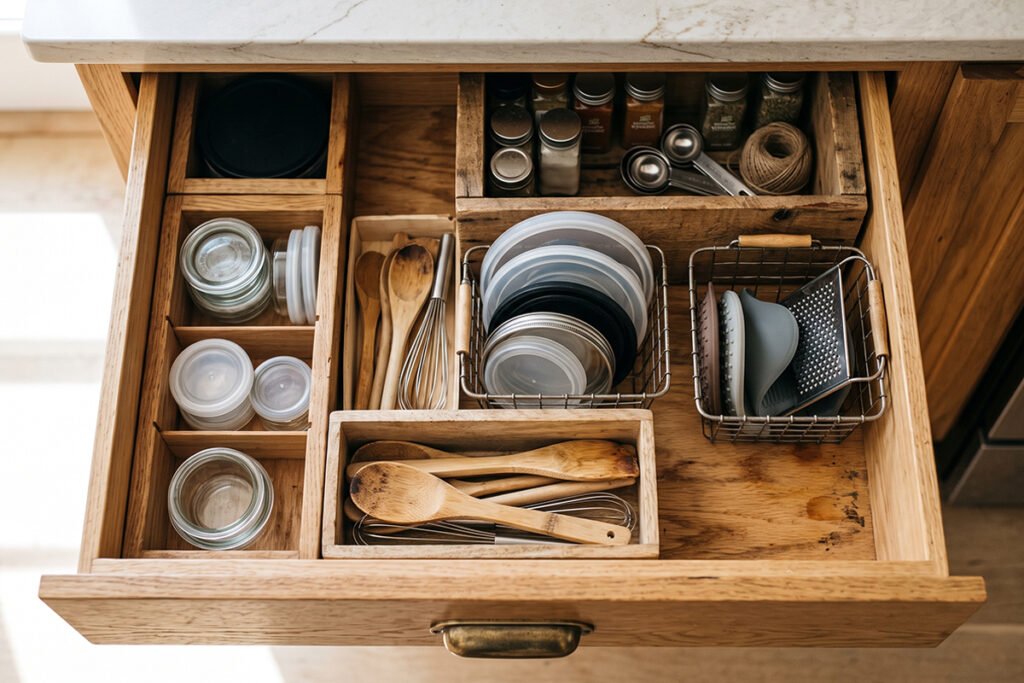
However, specialized cookware racks designed for heavy metal pot lids are less common in craft aisles. Dedicated home improvement retailers usually offer sturdier hardware for heavy kitchen gear.
What Are the Different Types of Drawer Organizers?
Expandable wooden dividers expand horizontally to fit variable drawer widths seamlessly across custom kitchens. They provide a polished, built-in appearance while holding lightweight to medium items securely.
Heavy-duty chrome wire racks offer maximum structural stability for heavy glass and cast-iron covers. Open wire construction promotes airflow and prevents moisture buildup inside deep cabinetry.
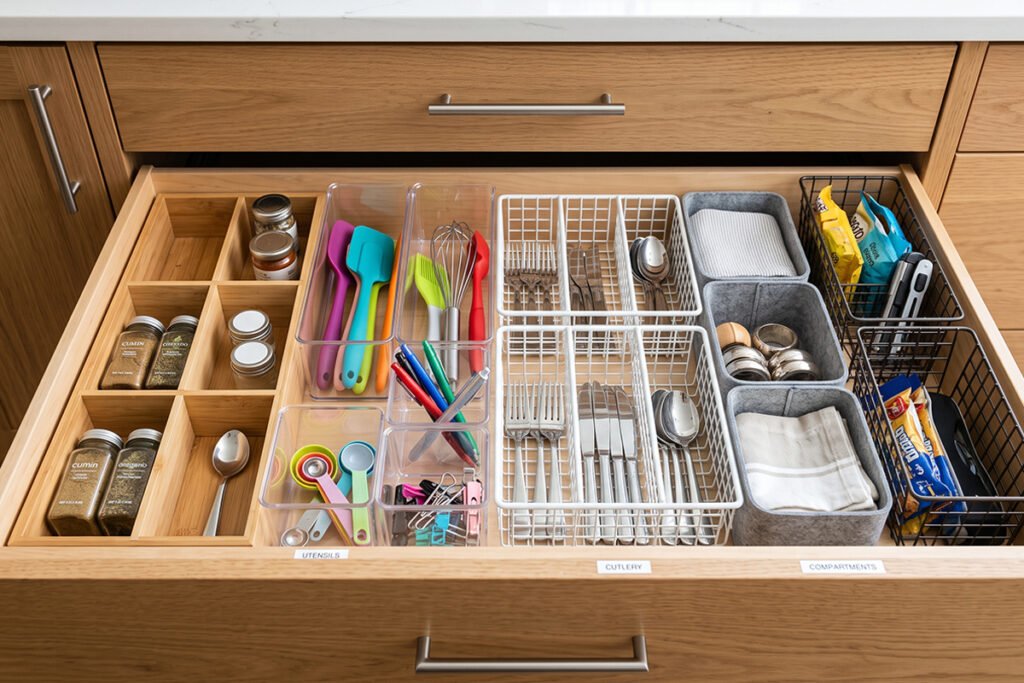
Modular plastic container bins allow complete freedom to mix, match, and reconfigure layouts over time. Their lightweight design makes them easy to wash and rearrange as cookware collections grow.
What Is the Most Common Item in a Junk Drawer?
Loose rubber bands, expired coupons, and stray batteries top the list of common junk drawer items. Without structured organization, these tiny household items quickly overwhelm functional storage space.
Installing small grid dividers prevents small essentials from mixing into an unmanageable mess. Assigning dedicated compartments ensures scissors, tape, and pens remain easy to find.
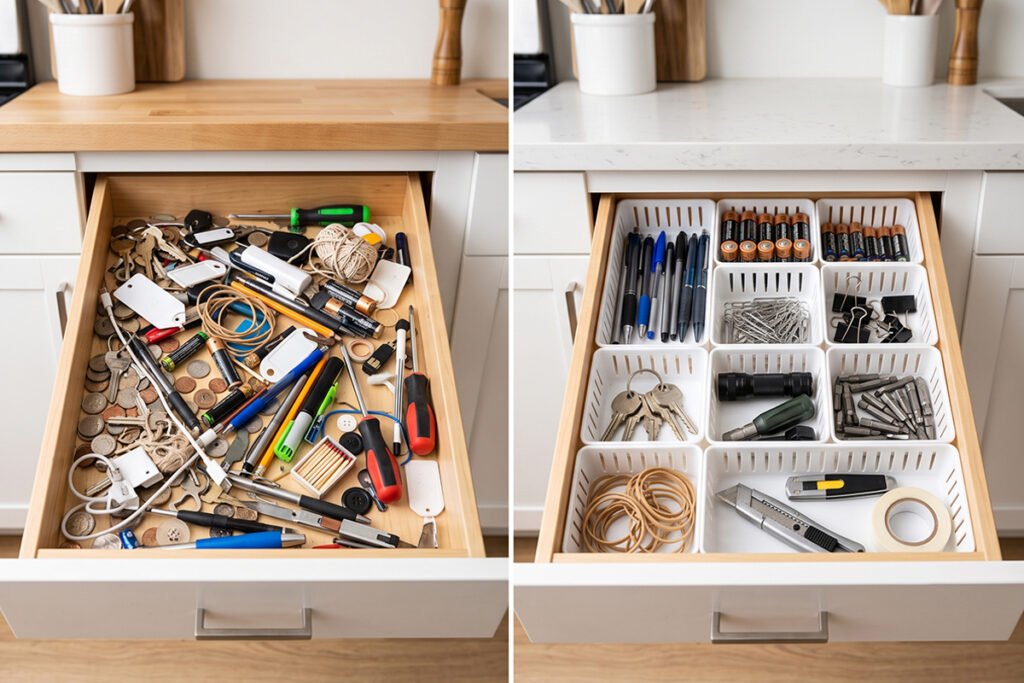
Purging unwanted clutter quarterly keeps utility drawers streamlined and genuinely useful. Keeping non-essential items out preserves high-value drawer space for daily cooking needs.
What Are the Best Kitchen Drawer Organizers?
The best kitchen drawer organizers blend durable structural materials with flexible, adjustable divider tracks. Look for models featuring heavy steel frameworks or solid hardwood construction for long-lasting reliability.
Tired of the “Lid Avalanche” Every Time You Open Your Cabinets?
Transform your messy Tupperware drawer into a sleek, organized pull-out system with our top-rated lid holder recommendations.
Customizable systems that allow fine-tuning channel widths accommodate both flat container tops and bulky pot lids. This versatility ensures your investment adapts whenever you purchase new cookware sets.
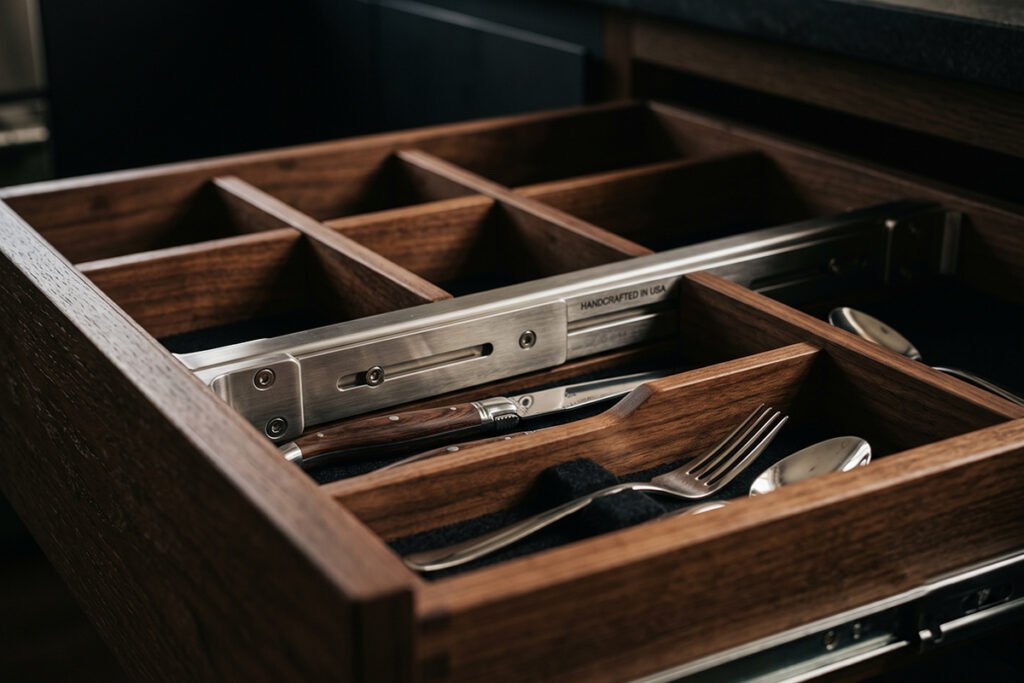
Selecting organizers equipped with anti-skid rubber feet prevents internal sliding during frequent drawer motion. Secure placement protects cabinet interiors while keeping your kitchen items perfectly arranged.
Why Put Aluminum Foil in Kitchen Drawers?
Lining kitchen drawer bases with aluminum foil acts as a protective shield against grease, spills, and moisture stains. Reflective foil brightens dark drawer interiors, making small items significantly easier to spot.
Foil liners are exceptionally easy to wipe down or replace whenever sticky residue collects over time. This budget-friendly trick preserves cabinet wood finishes without purchasing expensive commercial matting.
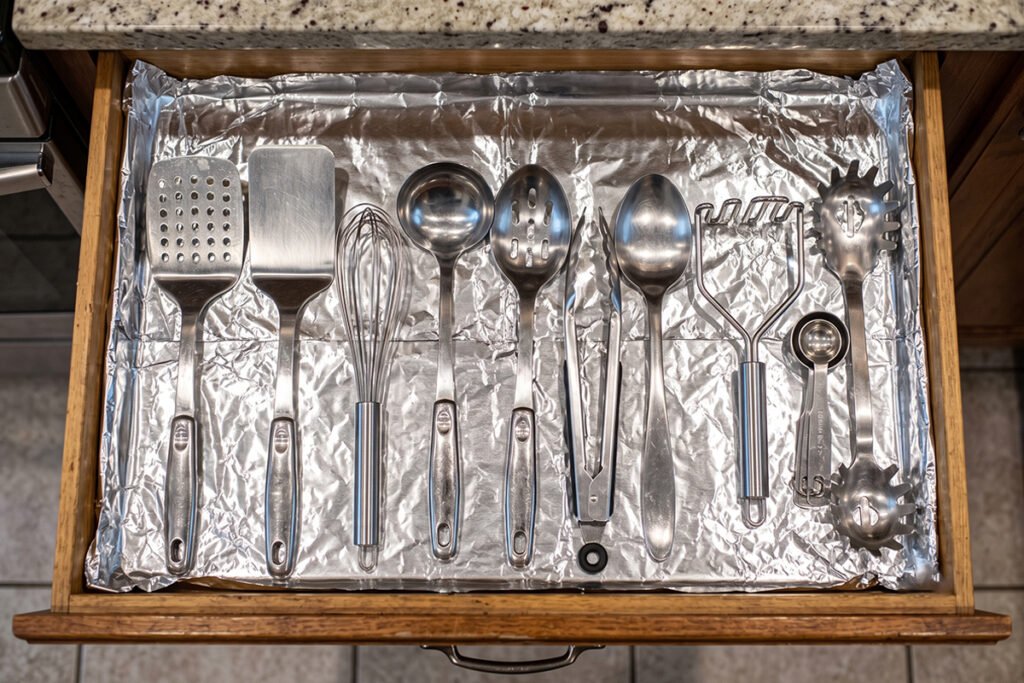
For heavy pot storage, heavy-duty foil combined with a padded liner provides maximum scratch protection. It cushions hard drops while preventing metal edges from scuffing painted drawer bottoms.
What Is the KonMari Method for Drawer Organizing?
The KonMari method emphasizes storing items vertically so every object remains completely visible at a glance. Instead of stacking items horizontally, everything is filed upright like books on a shelf.
Applying this philosophy to vertical lid storage for kitchen drawers eliminates the clutter of hidden lower layers. You instantly see every available cover without disturbing or digging under adjacent items.
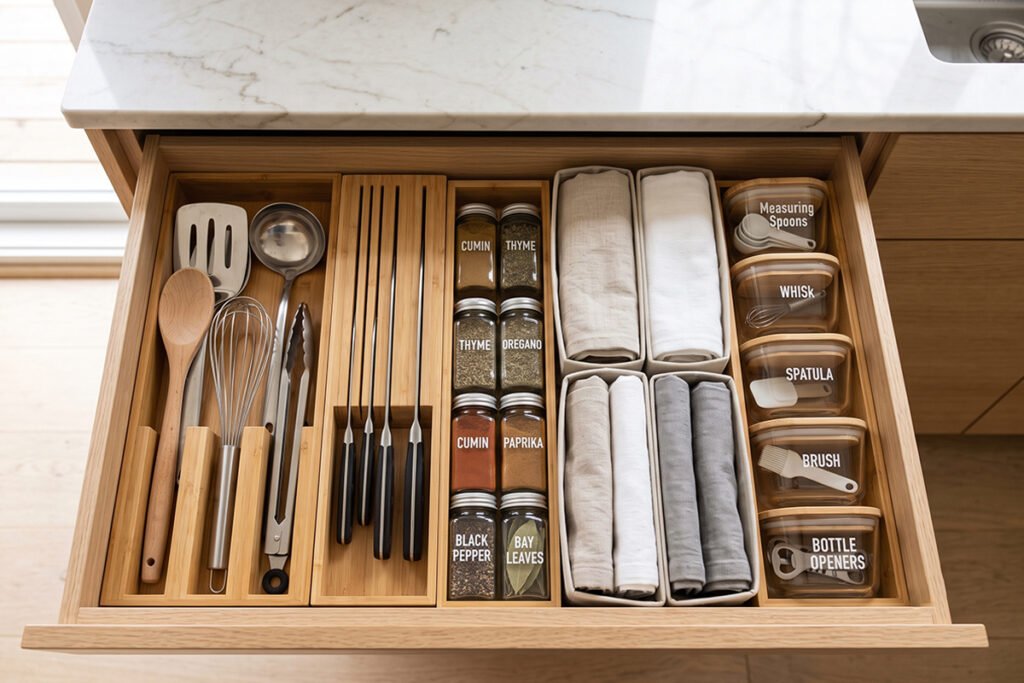
Keeping only items that serve a clear purpose creates a serene, highly efficient cooking space. Discarding warped or mismatched lids frees up substantial room for essential tools.
Adjustable Rack Organizers
Adjustable rack systems represent the most versatile choice for arranging irregular cookware covers upright. These units feature movable steel wires that slide along a sturdy base track.
You can customize each slot width to accommodate thick cast-iron tops alongside flat plastic lids. This adaptability makes an adjustable saucepan lid organizer ideal for evolving cookware collections.
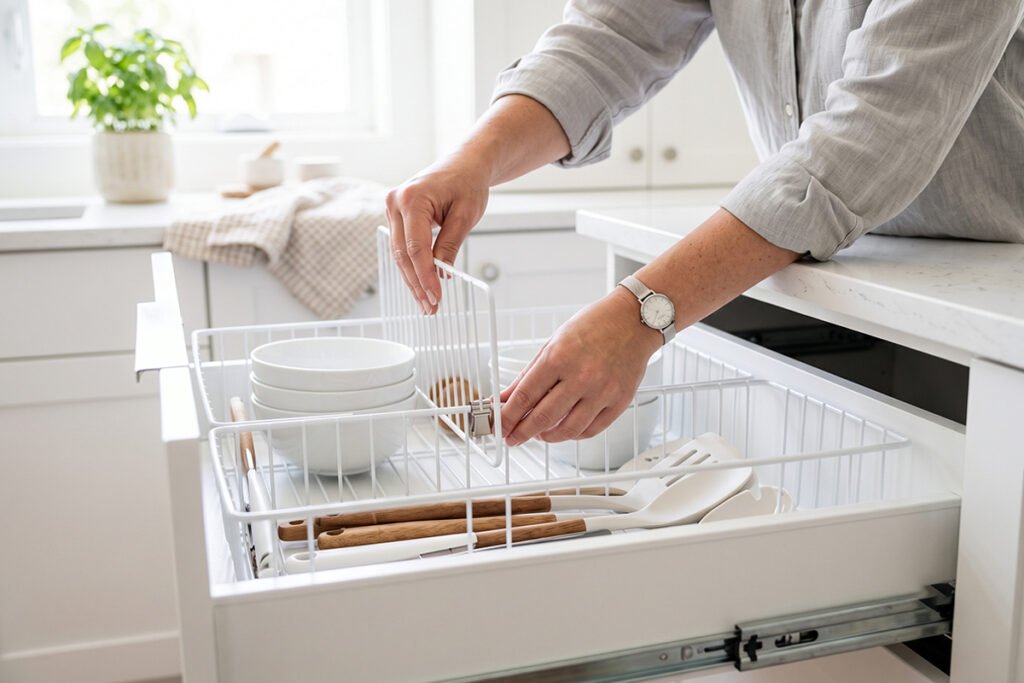
Sturdy base tracks keep partitions firmly upright even under the weight of heavy tempered glass lids. Solid structural support prevents tipping, keeping your drawer interior balanced and quiet.
Integrated Pegboard Systems
Integrated pegboards turn deep drawers into fully customizable, heavy-duty organization zones. Thick wood or plastic boards line the bottom, featuring evenly spaced peg holes across the surface.
Durable wooden or metal pegs slot into holes to partition space according to your exact needs. This layout locks heavy pans and lids securely, preventing shifting during drawer movement.
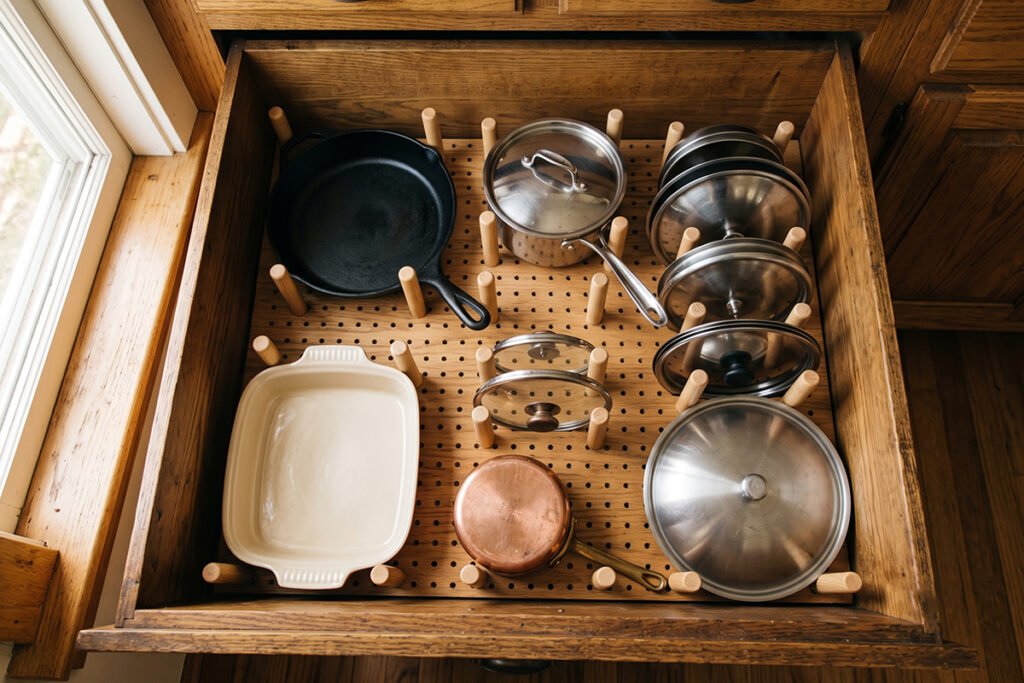
A custom pegboard organizer system offers incredible versatility for holding unique pot shapes and sizes. Repositioning pegs takes seconds, allowing quick layout updates whenever you buy new gear.
Food Container Lid Bins
Dedicated food container bins solve the chaos of scattered plastic caps and container tops. Compact plastic or mesh bins keep small lids contained in one neat upright zone.
Divided compartments allow sorting plastic covers by size, shape, or brand for maximum speed. Using a dedicated tupperware lid holder eliminates digging through overflowing container stacks.
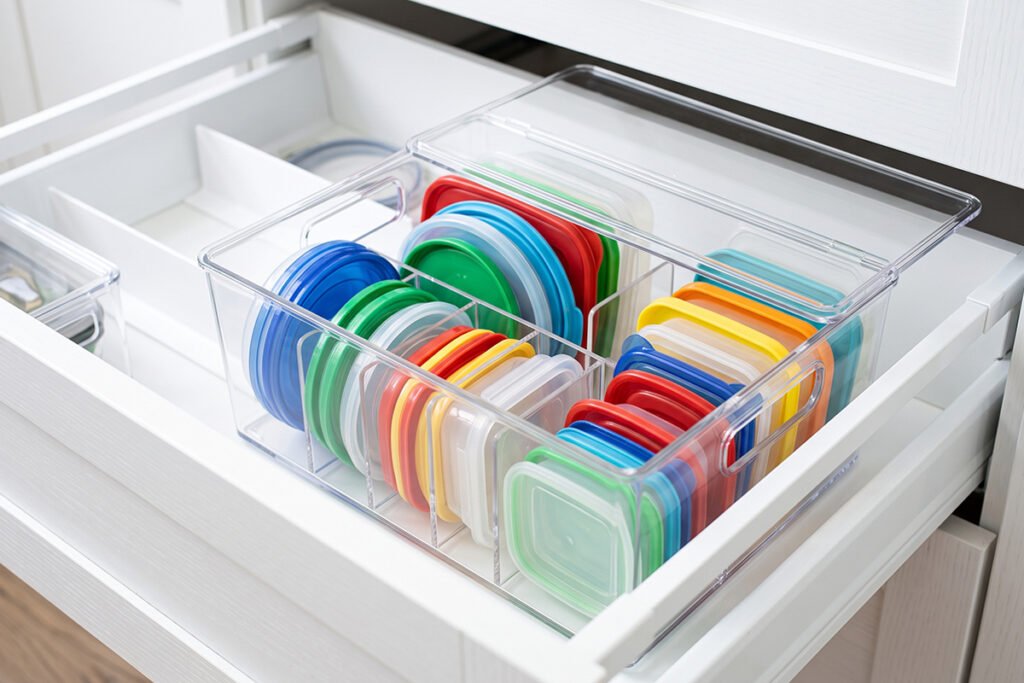
Clear acrylic bins provide instant visibility while keeping lightweight lids from flying around inside deep drawers. Their compact structure leaves plenty of remaining room for matching base containers.
Key Features to Check Before Buying
Selecting the perfect storage system requires careful evaluation of your drawer dimensions and hardware limits. Measuring twice prevents buying organizers that snag on cabinet frames or block drawer closure.
Prioritize models made from non-toxic, easy-to-clean materials that resist moisture and heavy weight. Quality construction guarantees your investment withstands years of daily kitchen activity.
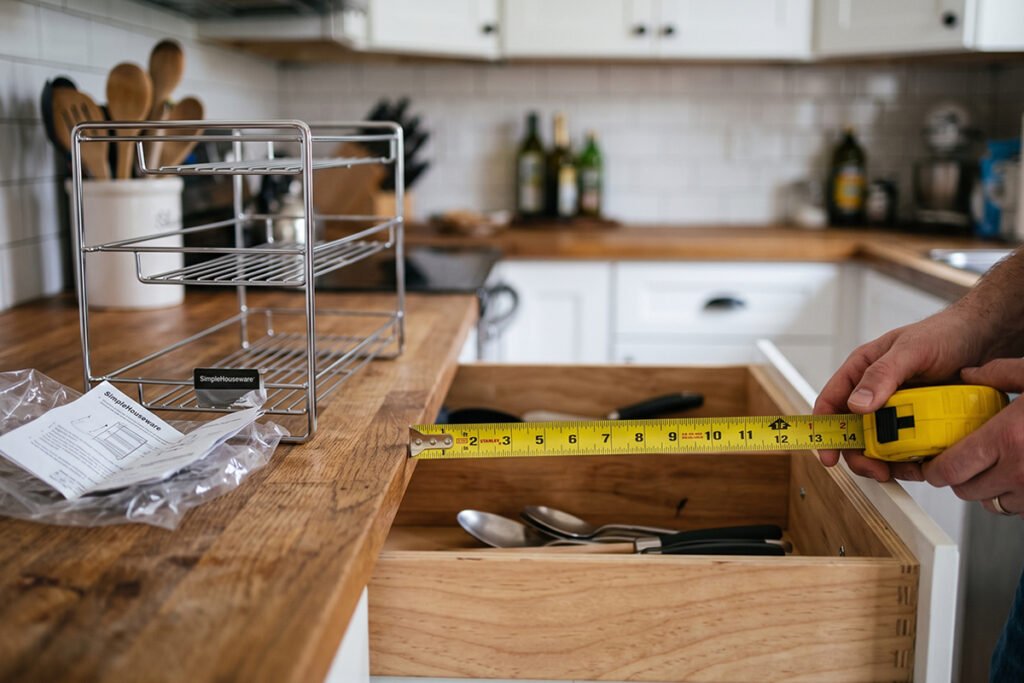
Choosing an open-wire or modular design ensures proper airflow to prevent trapped moisture. Proper ventilation keeps cookware dry and hygienic between uses.
Drawer Depth
Checking exact drawer depth requirements is critical before purchasing any vertical lid storage system. Measure from the drawer floor to the upper frame edge to ensure tall lids clear easily.
Tall glass lids often require at least ten inches of clearance to sit completely upright. Standard shallow drawers may require slanted or horizontal layout options instead.
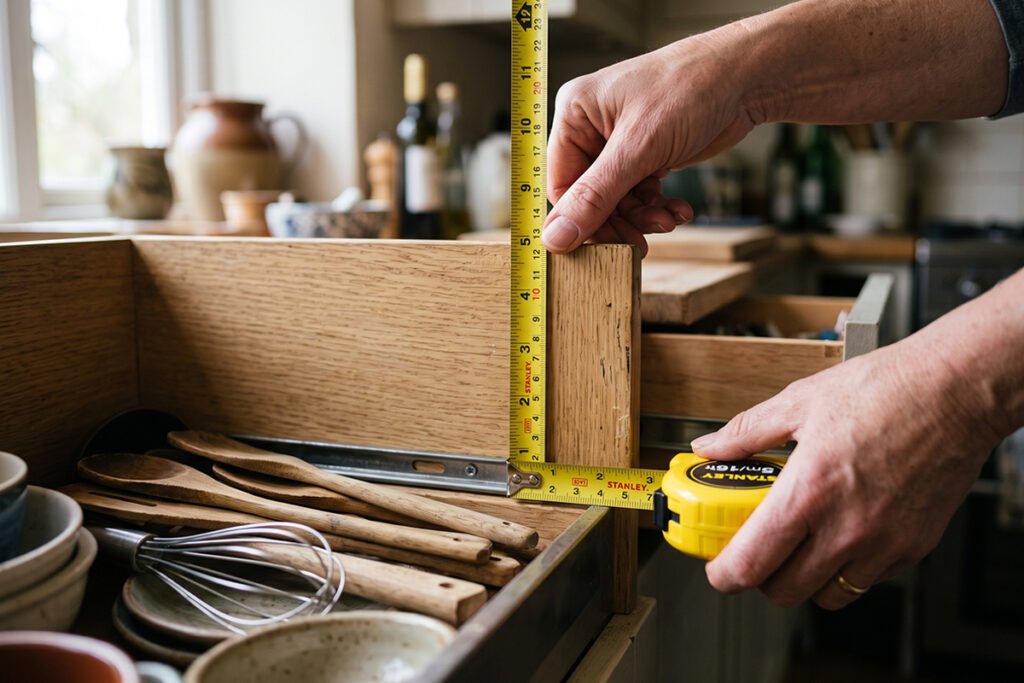
Accounting for bottom divider thickness prevents unexpected fit issues during final installation. Leaving an extra inch of clearance ensures smooth, snag-free drawer operation every time.
Handle Clearance
Pot lid handles and deep knobs add extra height and bulk that standard racks often overlook. Ensure your organizer accounts for pot handle clearance to prevent snagging top drawer frames.
Choosing slanted rack slots tilts lid knobs downward, saving crucial vertical cabinet height. Angled storage keeps oversized handles contained without blocking smooth drawer movement.
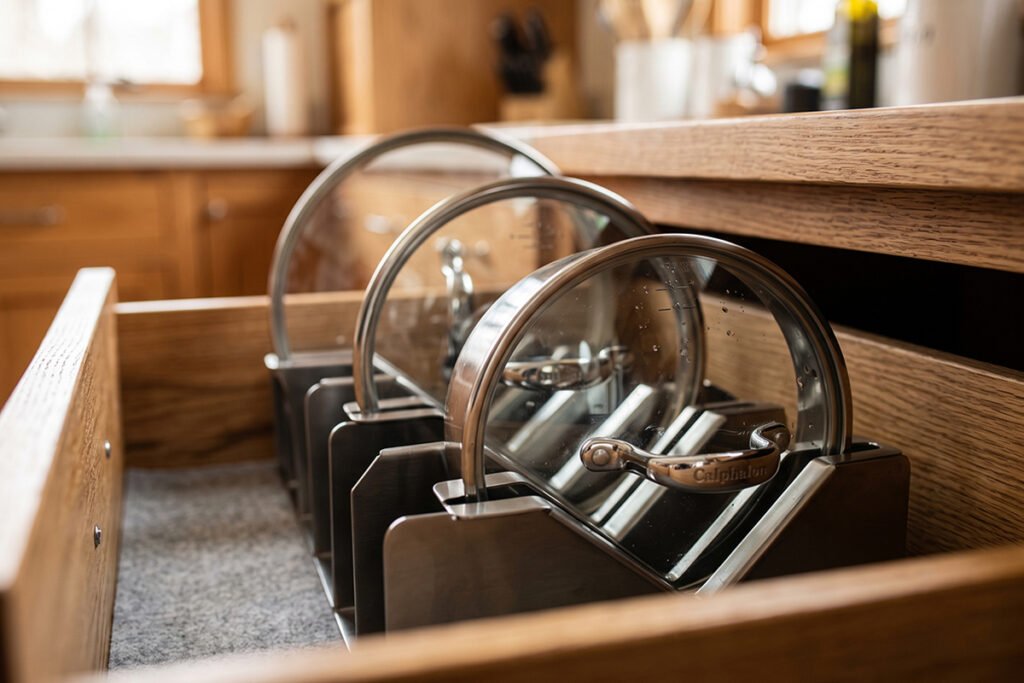
Testing handle placement before finalizing divider spacing guarantees easy retrieval during busy cooking hours. Wide slot spacing accommodates thick loops and sculpted knobs effortlessly.
Non-Slip Grip
Smooth drawer liners allow heavy metal organizers to slide backward whenever drawers shut quickly. Adding a textured non-slip drawer liner locks racks securely in place without adhesives.
Rubberized feet on metal frames provide extra stability and dampen noise when inserting glass covers. Secure gripping points prevent scratching expensive wood or laminate drawer floors.
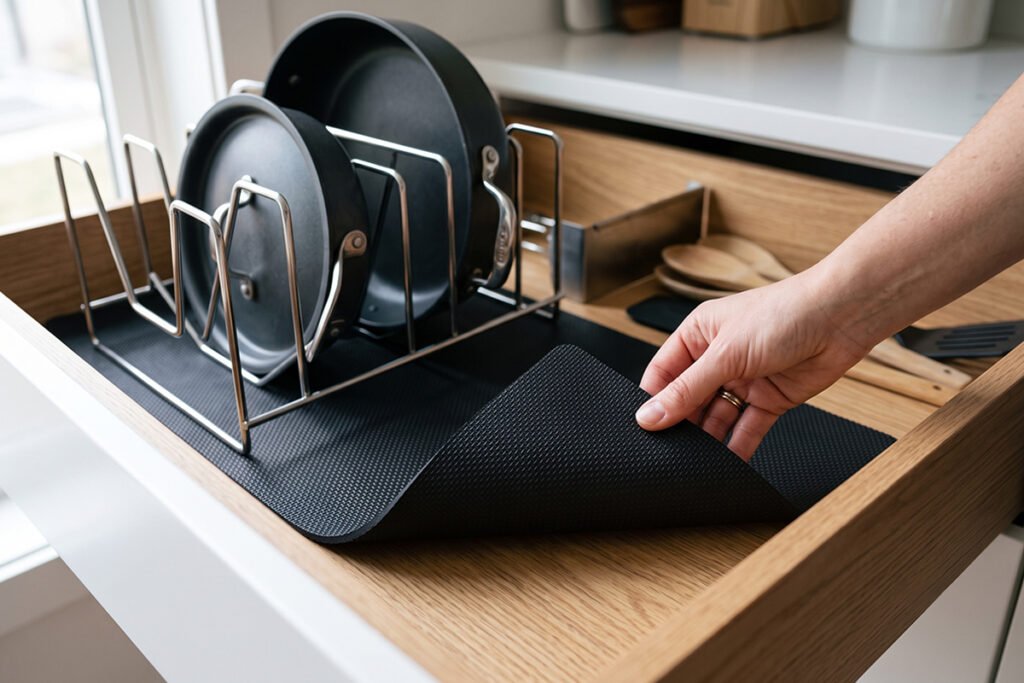
Maintaining steady organizer positioning protects glass lids from hitting cabinet walls during sudden pulls. A stable base ensures quiet, reliable operation across daily kitchen routines.
Top Recommended Vertical Lid Storage For Kitchen Drawers to Buy
- YouCopia StoreMore Adjustable Lid Organizer: Features customizable steel dividers and non-slip feet designed to keep varying pot covers upright and secure inside deep drawers.
- Rev-A-Shelf Wooden Pegboard Drawer System: A customizable hardwood pegboard insert that locks heavy glass lids and saucepans in place with repositionable wooden pegs.
- Joseph Joseph DrawerStore Compact Lid Holder: A space-saving plastic container lid bin featuring sloped compartments perfect for organizing plastic tops in small kitchens.
- Bambusi Expandable Bamboo Drawer Divider Set: Natural bamboo spring-loaded dividers that create custom vertical channels for pot lids and baking sheets without tools. - Simple Houseware Metal Pan and Lid Rack: Heavy-duty chrome wire frame designed to hold heavy cast-iron lids vertically or horizontally inside lower cabinets and deep drawers.
Conclusion
Mastering vertical lid storage for kitchen drawers transforms cooking zones from chaotic messes into streamlined culinary hubs. Storing lids upright optimizes drawer capacity, protects cookware finishes, and saves prep time.
Whether using customizable pegboards, expandable wire racks, or budget tension rods, choosing the right system depends on cabinet dimensions and cookware volume. Upgrading your layout yields a functional, visually pleasing kitchen space.
Leave a Reply