

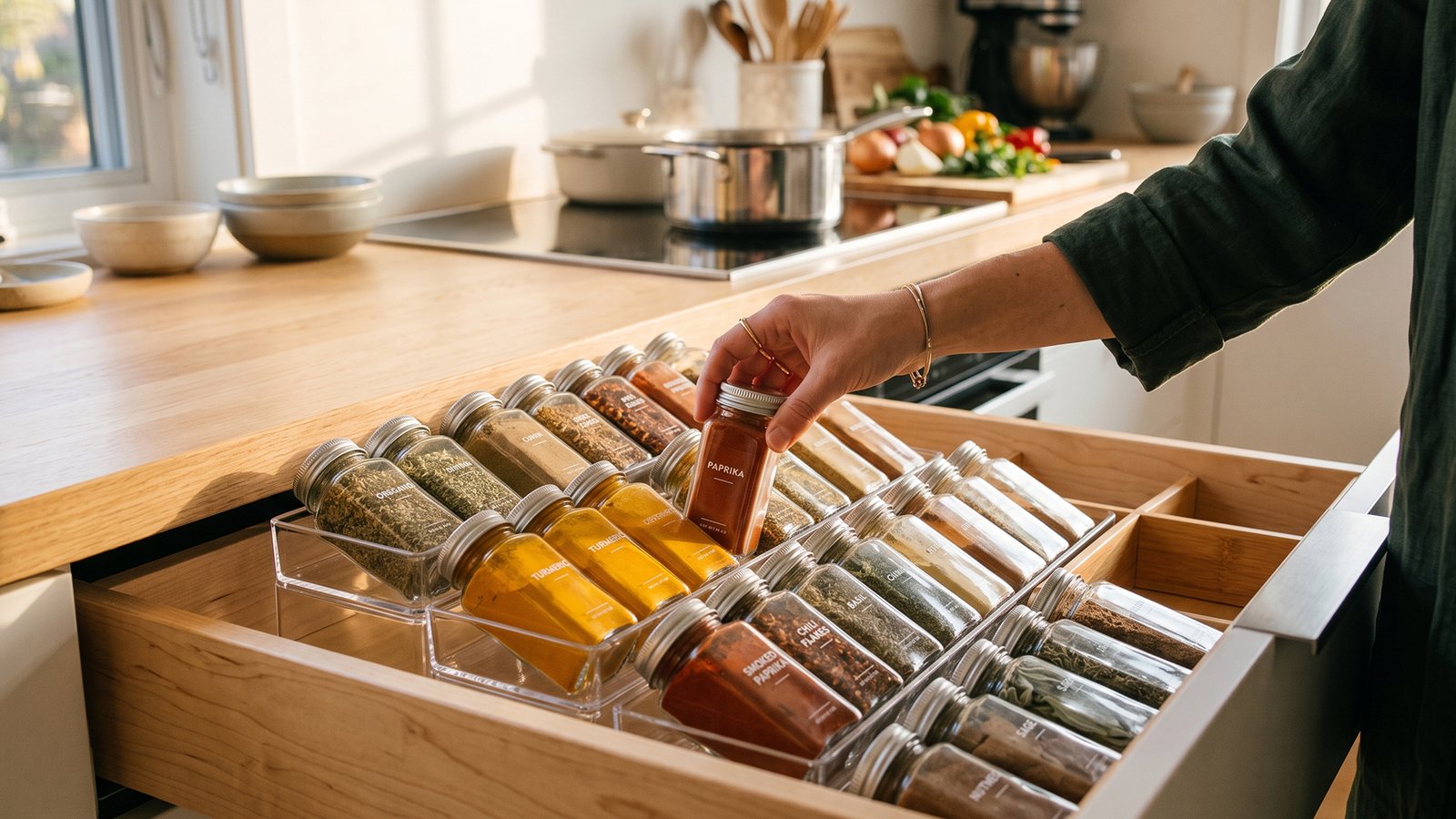
Completing a successful acrylic expandable spice drawer liner installation begins with preparing your storage space properly. Clearing out your existing drawer gives you a fresh canvas to create an organized kitchen drawer storage system. This simple project instantly upgrades your cooking workflow while keeping spices visible.
Table of Contents
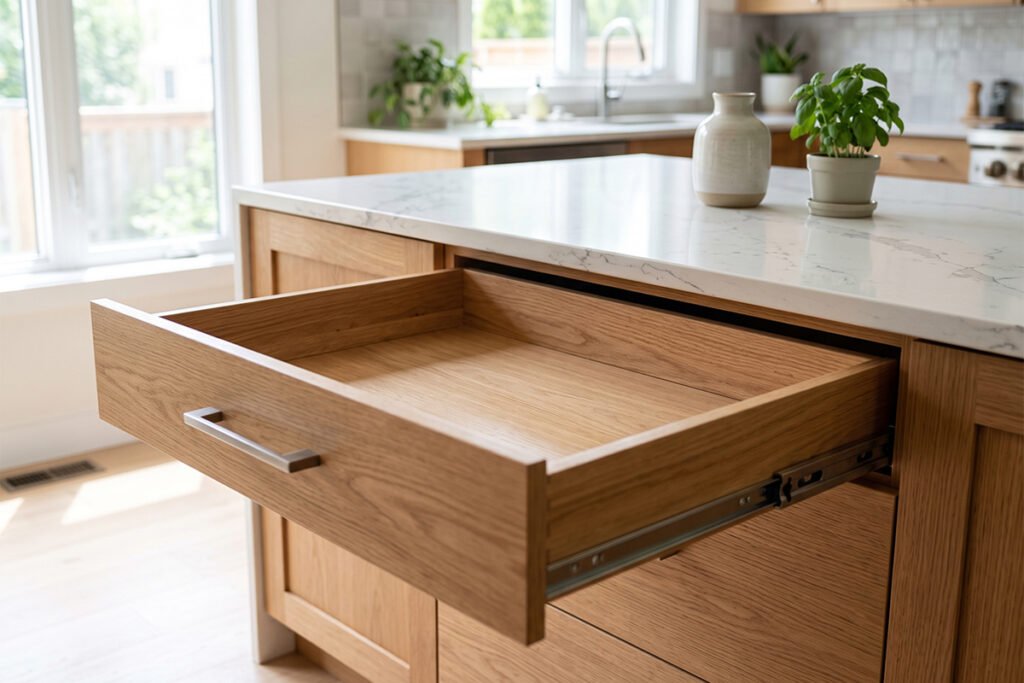
A premium clear acrylic material provides a sleek look while offering durable support for heavy glass jars. Unlike flimsy rubber mats, an expandable acrylic tray expands horizontally to create a custom-fit tray tailored to your exact drawer width. Measuring your space beforehand ensures a seamless, hassle-free setup.
Installing this liner eliminates cluttered counter space and makes finding your favorite seasonings effortless. With a steady base, your jars remain stable whenever you pull open the drawer. Taking time for proper installation yields long-lasting organizational benefits for any home chef.
Accurate drawer dimensions are crucial before placing your new expandable organizer inside the unit. Measure the width, depth, and vertical clearance of your interior space using a tape measure. Be sure to account for any lip or hardware that might reduce total usable room.
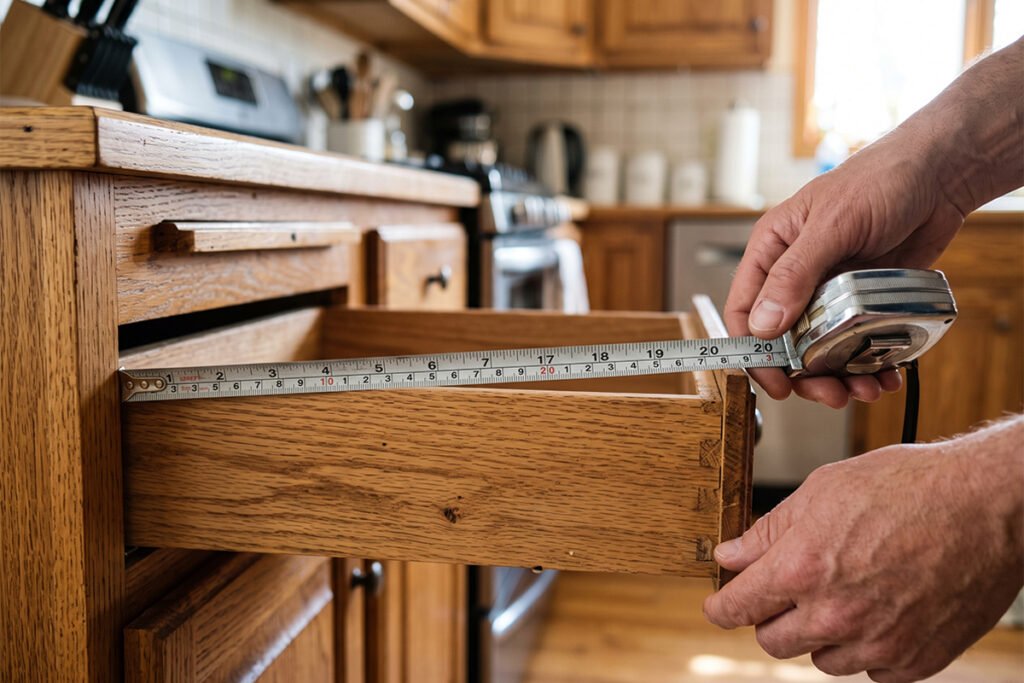
Check your standard spice container height to ensure your drawer shuts smoothly without snagging jar lids. Most standard spice containers require at least three to four inches of total height clearance when resting on a tiered spice rack. Verifying these measurements prevents frustrating clearance issues later on.
Thoroughly clean the bottom surface of your drawer to remove lingering dust, wood debris, or oil residues. A clean surface allows your non-slip grip pads to adhere firmly and stay stationary. Once dried, your drawer is fully prepared for liner placement.
Position the primary base segment of your acrylic tray into the front corner of your empty drawer. Carefully slide the secondary tiered panel outward until it fits snugly against both side walls. This seamless expansion fills empty gaps to deliver a seamless shelf liner placement.
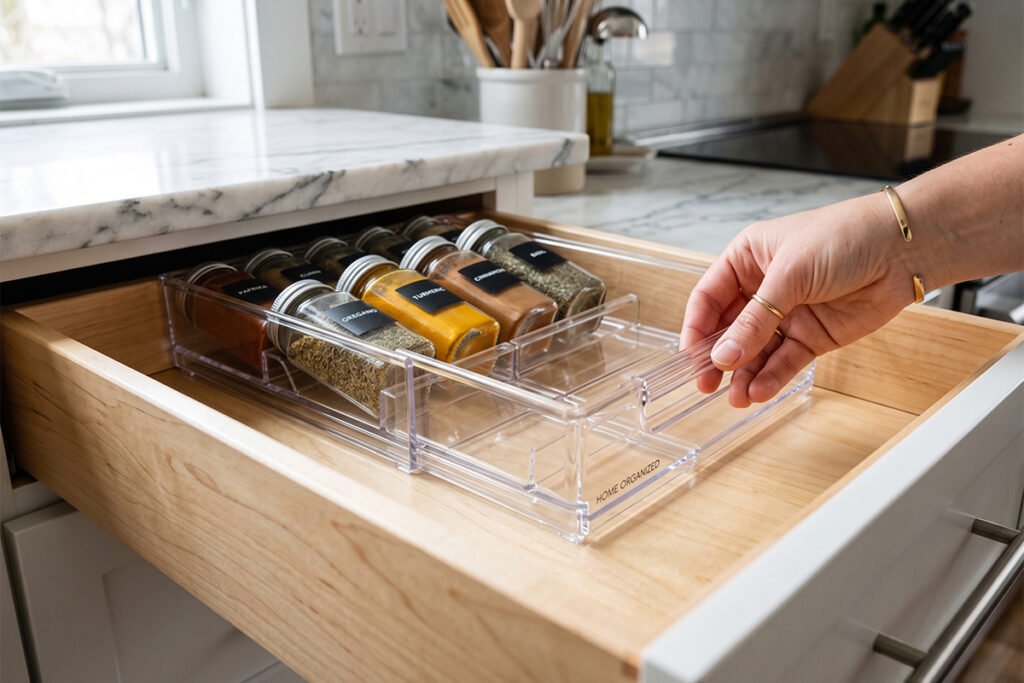
Ensure the slanted tiers face toward the front opening so your jar labels remain readable at a glance. Adjusting the width allows you to customize your spice drawer organizer layout without needing custom woodworking tools. The transparent design blends naturally into any cabinet interior.
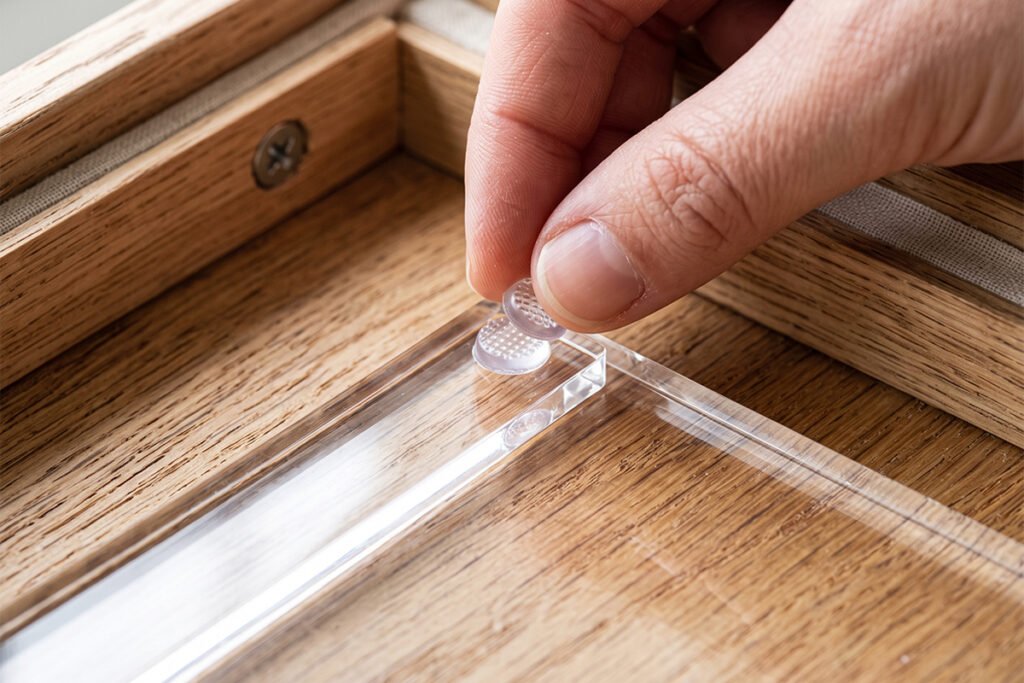
Test the stability of the expandable tray by pushing lightly against the edges to confirm it does not shift. If the tray slides on smooth laminate, apply small rubber bumpers underneath for additional stability. Once anchored, your drawer is ready for full spice arrangement layout.
Loading Your Spices
Organizing your seasonings on a newly installed spice drawer organizer transforms daily meal preparation into a seamless experience. Grouping your containers by frequency of use or alphabetically allows you to grab essential spices in seconds. Placing taller jars toward the back ensures that every label remains clearly visible.
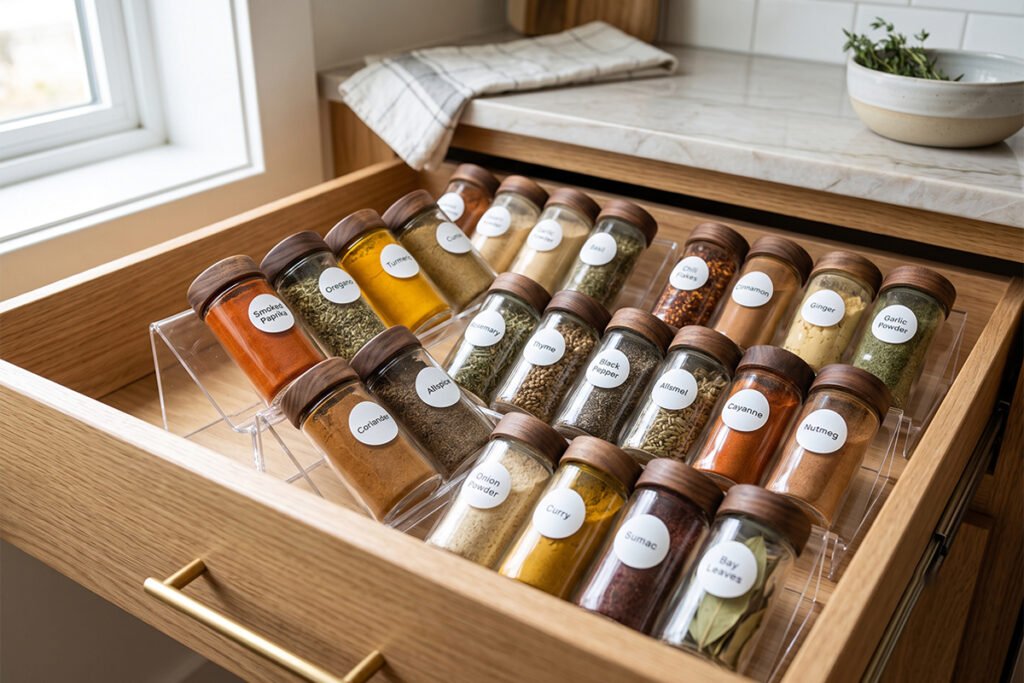
Transferring bulky store-bought bottles into uniform glass jars maximizes your total drawer capacity. Standardized containers rest flat against the slanted acrylic tiers, preventing rolling or tipping. This uniform approach enhances the overall visual appeal of your entire kitchen drawer storage setup.
Leave a small gap between each container so you can lift individual jars without disturbing neighboring spices. Keeping your most-used seasonings near the front edge minimizes reaching and speeds up meal prep. A well-organized tray brings both efficiency and aesthetic beauty to your kitchen.
Further Exploration
Maintaining your clear acrylic material liner requires minimal effort to keep it looking pristine over time. Periodically wipe down the sloped channels with a damp microfiber cloth to remove dust or spilled herbs. Avoid harsh chemical cleaners or abrasive scrubbers that could scratch the smooth plastic surface.
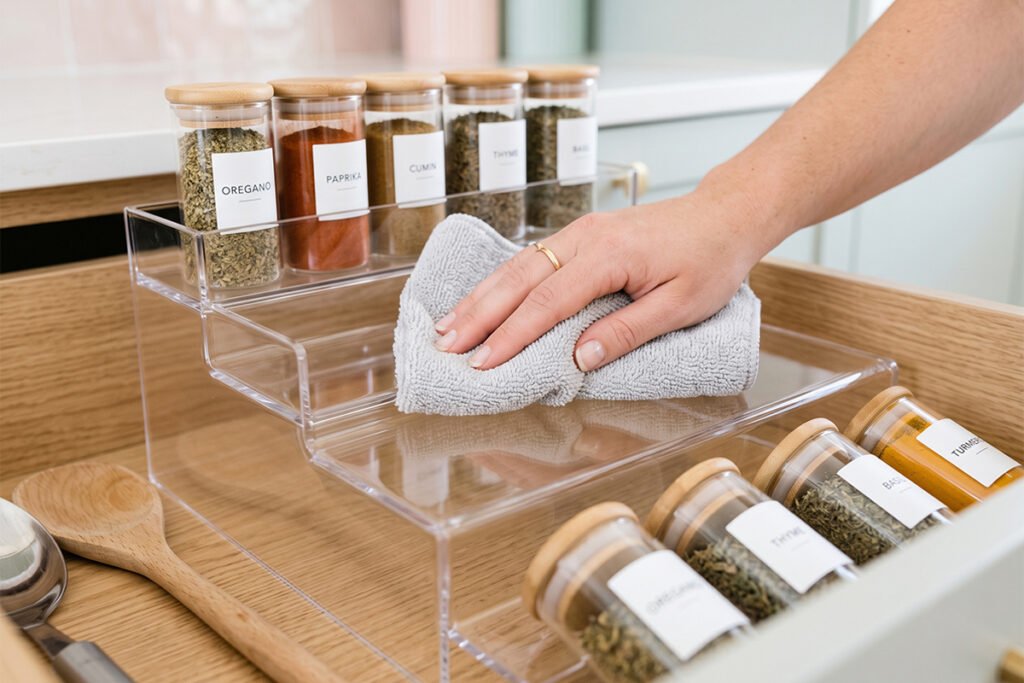
If you expand your spice collection later, simply adjust the sliding side panels to accommodate extra jars. The versatile design scales easily with your growing culinary needs without requiring a replacement. Exploring different jar arrangements helps you discover the perfect layout for your cooking style.
Upgrading adjacent drawers with matching acrylic dividers creates a cohesive look across all your kitchen storage. Combining spice organizers with utensil trays brings unified order to your entire cooking station. Taking time to refine your space makes every daily kitchen task more enjoyable.
How to Install a Spice Drawer Organizer Quickly
Executing an acrylic expandable spice drawer liner installation takes less than ten minutes from start to finish. Begin by removing all existing items from the drawer and vacuuming out any loose debris or crumbs. Wipe the interior clean with a mild soap solution and allow it to dry completely.
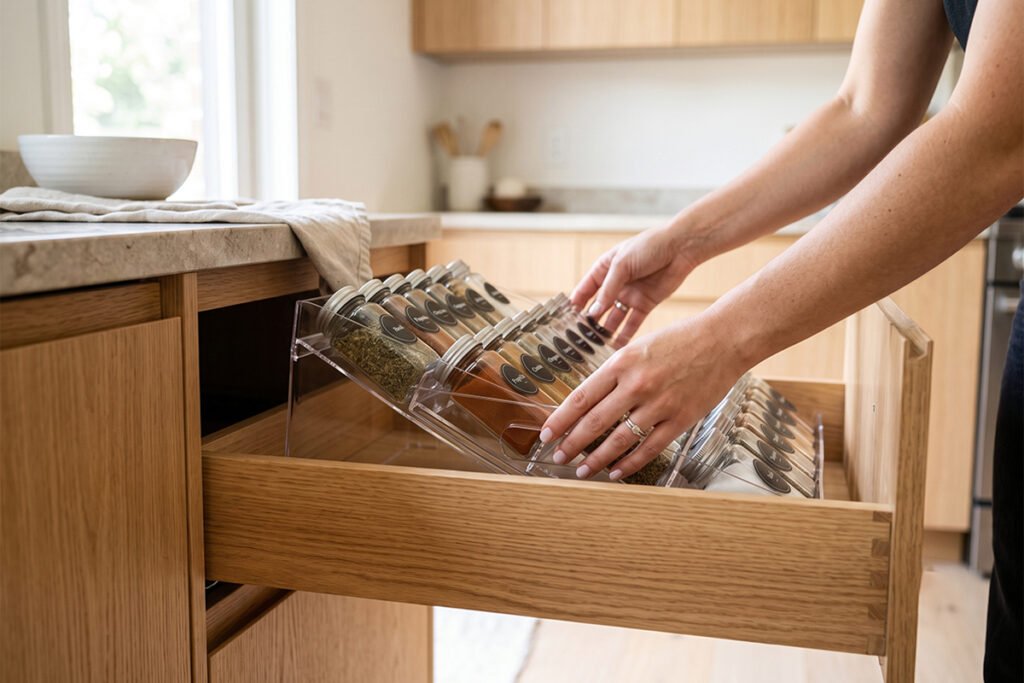
Unbox your acrylic insert and place the main tray directly into the base of your drawer. Slide the expandable wings outward until the unit fits snugly against the side walls of your cabinet. This custom fit keeps the tray completely stable without needing permanent screws or complicated tools.
Finish the process by arranging your spice containers onto the angled ridges in your preferred order. Ensure the drawer glides open and shuts smoothly without any jars catching on the top frame. Your quick installation is now complete and ready for daily cooking use.
How to Keep Drawer Liners from Moving in Your Kitchen
Unwanted movement can disrupt your carefully planned spice arrangement layout whenever a drawer opens quickly. Using high-tack rubber feet or silicone anti-slip pads under the base provides immediate traction against smooth wood surfaces. These small additions grip the drawer bottom without leaving sticky residues behind.
Another effective method involves placing a thin, washable mesh shelf liner placement mat directly under your acrylic tray. The soft mesh creates friction that locks the heavy plastic insert securely in place. This double-layer strategy absorbs impact forces when drawers are pulled shut firmly.
For lightweight trays, filling any remaining side gaps with small acrylic dividers prevents lateral shifting. Ensuring a snug edge-to-edge fit eliminates empty space where sliding can occur. Simple traction enhancements keep your setup rock-solid over years of active kitchen use.
How to Attach Drawer Liners and Hold Shelf Liner in Place
Securing non-adhesive liners requires non-permanent attachment solutions to preserve your cabinet woodwork. Double-sided removable mounting tape applied to the four corners of your liner delivers a strong hold without damage. This allows you to lift the insert later for deep cleaning whenever necessary.
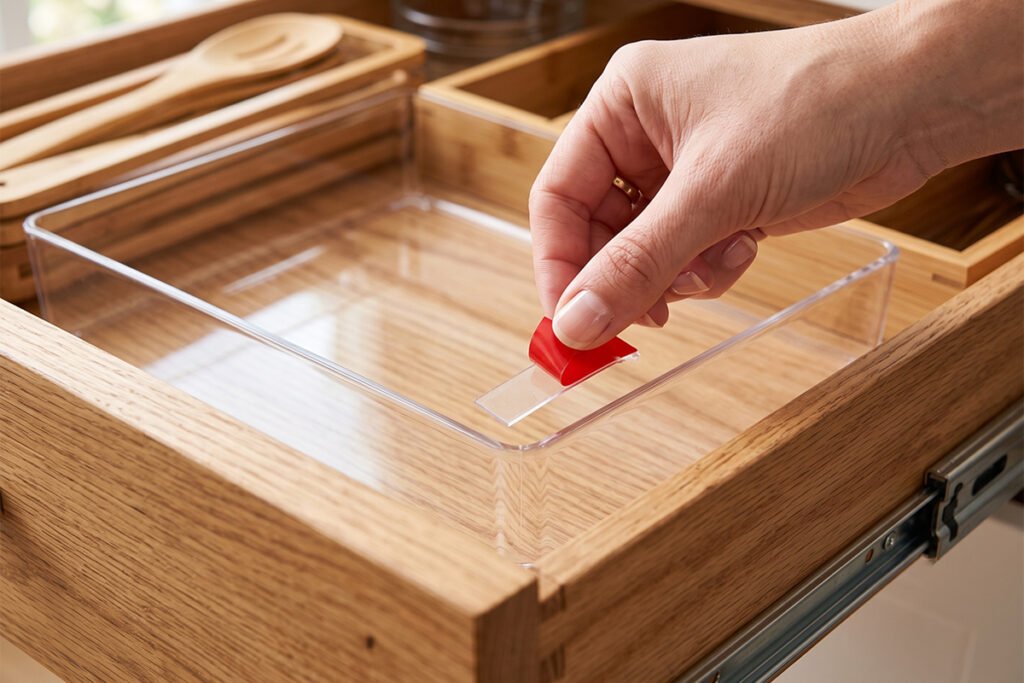
Museum gel or clear sticky putty provides another reliable option for holding rigid liners stationary. A tiny dab placed under each corner anchors the insert firmly against horizontal forces. The pliable gel lifts clean off wood surfaces without leaving grease stains or sticky film.
If you prefer a fast, tool-free solution, weighted corner grips offer instant stability. Placing heavy glass spice bottles on the front and back rows adds natural downward pressure that stops shifting. Simple friction techniques keep your liners perfectly aligned during heavy usage.
How to Get Drawer Liners to Stick Without Damaging Wood
Protecting your custom cabinetry while securing liners requires choosing the right temporary adhesive methods. Avoid permanent contact paper or aggressive glues that peel away wood varnish upon removal. Instead, opt for low-tack repositionable spray adhesives designed specifically for kitchen shelving applications.
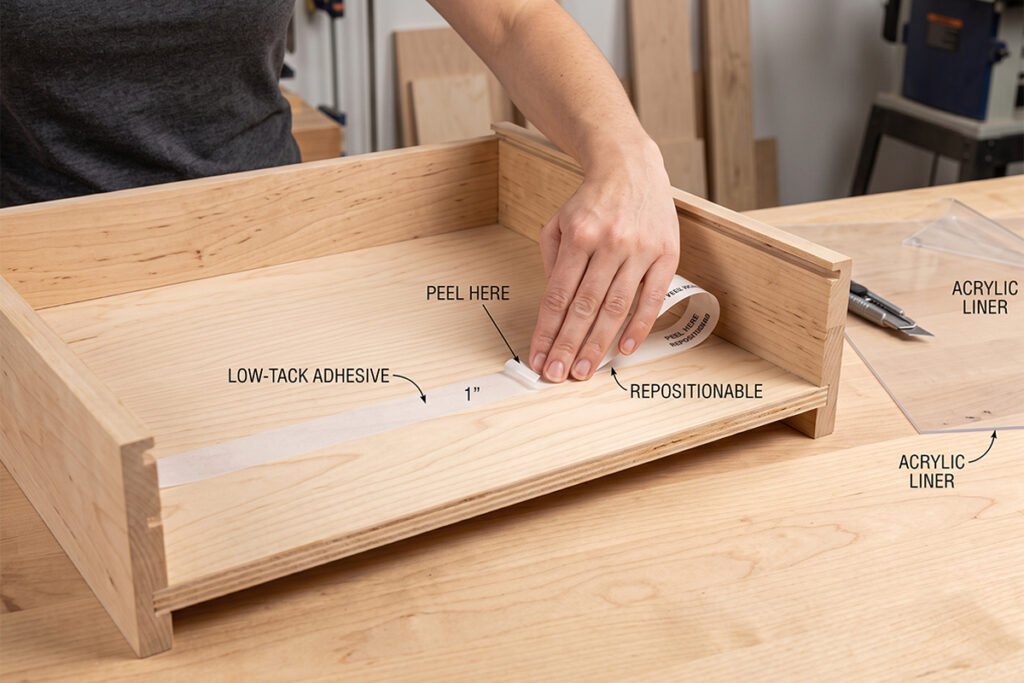
Pre-cut removable mounting strips offer precise adhesive placement without messy residue or harsh chemical fumes. These thin strips peel off cleanly when you decide to reconfigure your storage layout later. They provide a reliable non-slip grip while keeping underlying cabinet finishes completely safe.
Static-cling drawer liners offer an adhesive-free alternative for smooth, painted, or laminated drawer interiors. The material uses surface tension to cling firmly to flat wood bottoms without any glues. Choosing gentle mounting materials preserves your kitchen cabinetry value for the long term.
How Deep Does a Spice Rack Need to Be for Standard Jars?
Standard spice drawer inserts require a minimum interior depth of three inches to function properly without jamming. This clearance accommodates both the angled height of the tiered spice rack and typical four-inch glass bottles. Measuring vertical clearance ensures your drawer opens smoothly after loading your spices.
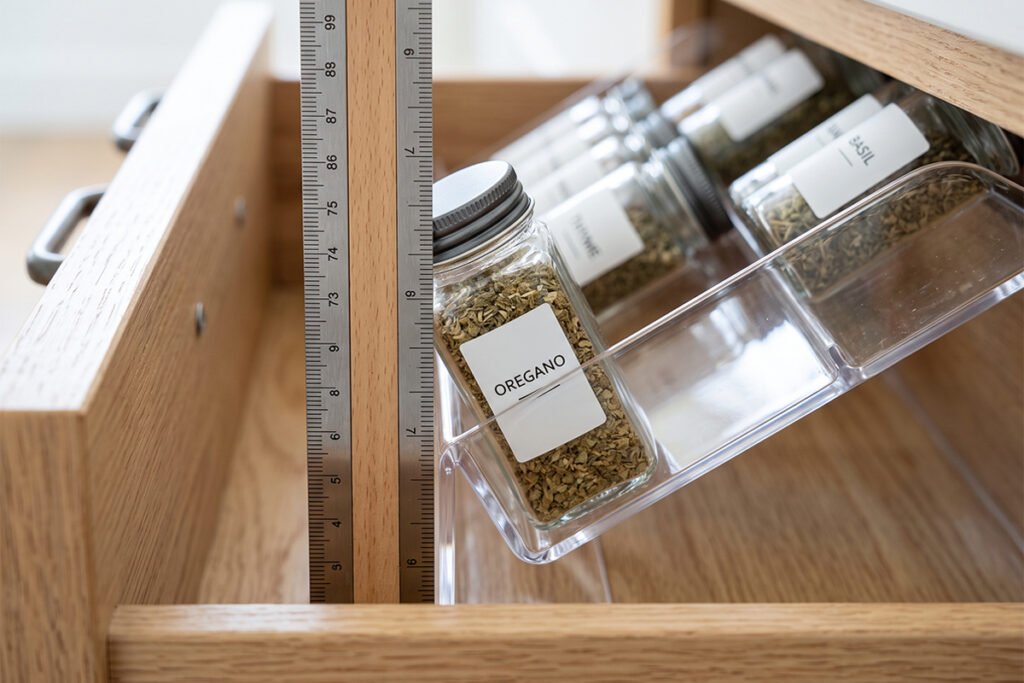
If you use extra-large commercial seasoning containers, aim for a drawer depth of four to five inches. The increased clearance prevents taller bottle caps from scraping against the upper face frame of your cabinet. Checking jar heights beforehand avoids frustrating drawer jams during busy cooking sessions.
Deep drawer systems offer extra vertical headroom, allowing you to layer larger jars comfortably on upper tiers. However, shallow top drawers still work brilliantly when paired with low-profile round tins or smaller jars. Selecting the right bottle scale guarantees seamless clearance every single time.
What Are the Dimensions of a Standard Spice Drawer Organizer?
Most standard expandable organizers measure approximately 12 to 20 inches in width when fully extended. The fixed depth typically spans 16 to 18 inches to fit standard American kitchen cabinetry seamlessly. Understanding these drawer dimensions helps you select an insert that maximizes every square inch.
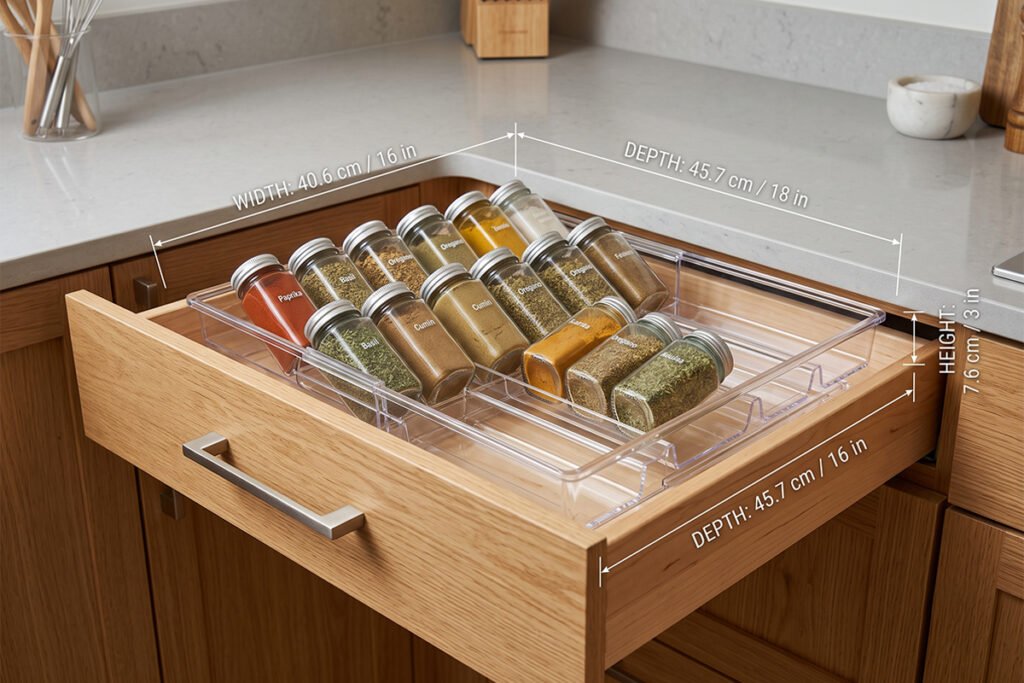
Height profiles for acrylic tiered trays generally range between 1.5 and 2 inches at their apex. This low-profile geometry leaves ample overhead space for standard 2-inch diameter spice bottles. Compact designs ensure full compatibility across various custom and stock cabinet styles.
For wider cookware drawers, heavy-duty expandable models can stretch up to 26 inches wide. These extra-wide trays hold over thirty standard spice jars across multiple sloped tiers. Matching tray dimensions to your drawer volume creates a clean built-in appearance.
How to Mount a Spice Rack vs Using a Drawer Insert
Wall-mounted spice racks save internal drawer space but expose your delicate herbs to heat, steam, and direct sunlight. Light and heat exposure rapidly degrade essential oils, causing spices to lose flavor and potency quickly. Drawer inserts keep spices tucked away in a dark, cool environment that preserves fresh taste.
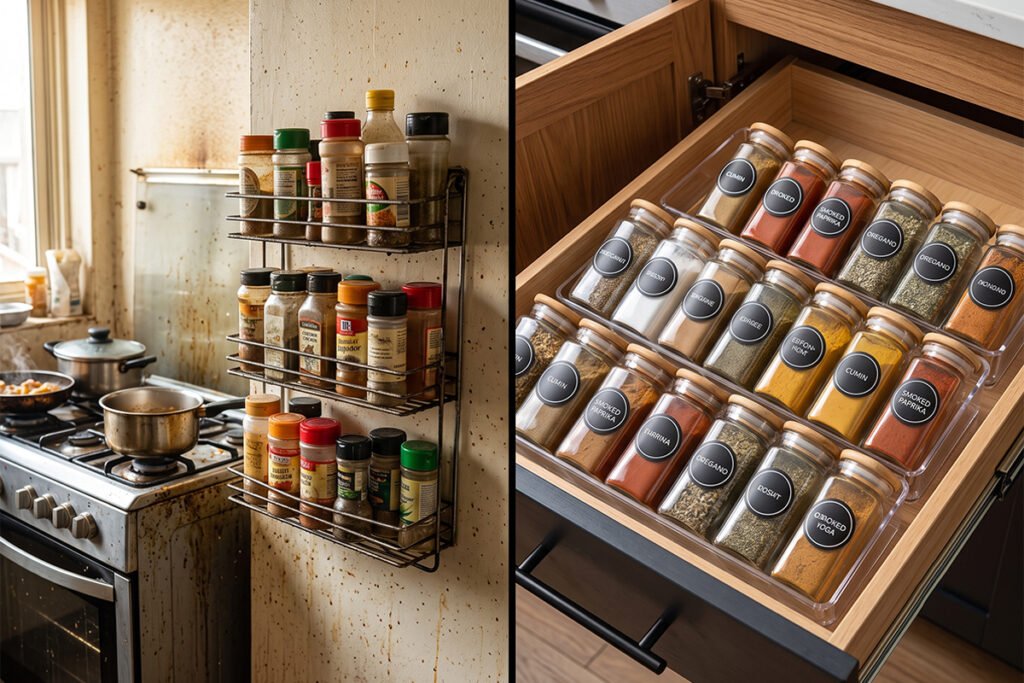
Installing wall racks requires drilling holes into tile, drywall, or cabinet doors, which can permanently damage surfaces. In contrast, an acrylic expandable spice drawer liner installation requires zero drilling or permanent modifications. Simply drop the tray into an empty drawer and expand it to fit instantly.
Upgrade Your Kitchen Drawers with the Perfect Food Storage Setup
Uncover smart drawer layout ideas that keep your glass and plastic containers neatly organized, accessible, and clutter-free.
Drawer inserts also keep countertops free from clutter, creating a cleaner visual look across your kitchen prep areas. Accessing spices from above while standing at your prep station is often faster than reaching up to wall shelves. Drawer storage combines superior flavor protection with effortless daily ergonomics.
What Are the Best Spice Organizers for Drawers Today?
Selecting the right drawer organizer depends on your preferred aesthetic, budget, and spice collection size. Expandable clear acrylic inserts remain the top choice for modern kitchens due to their sleek transparency and easy maintenance. They blend effortlessly into any drawer interior while providing durable daily support.
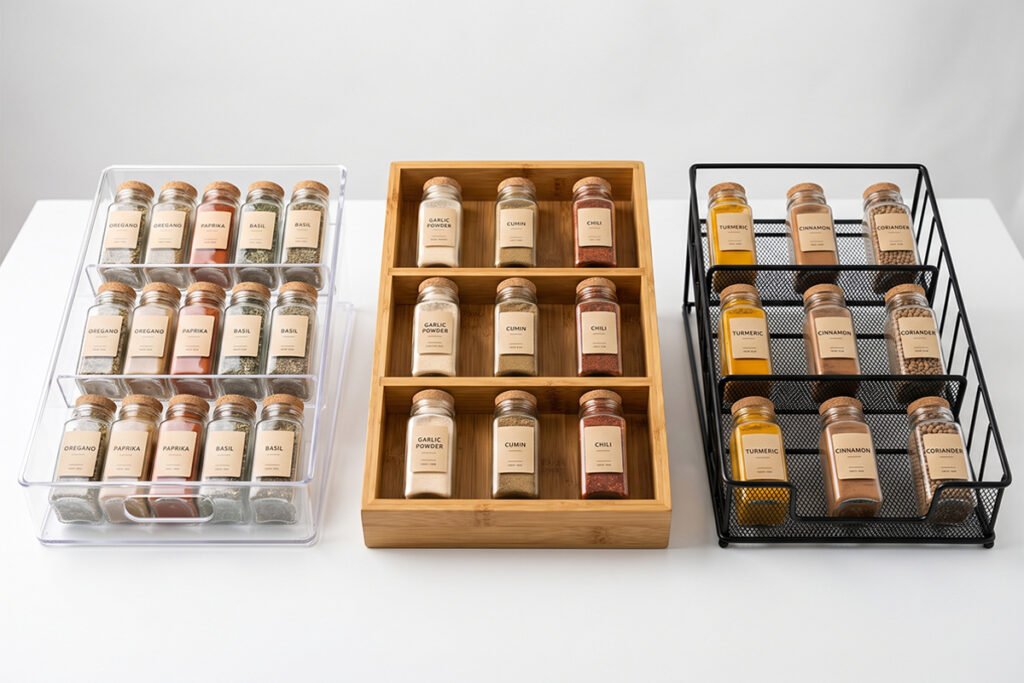
Bamboo tiered trays offer a warm, natural look that matches wooden cabinet interiors beautifully. However, wood inserts can absorb oily residues and require more careful cleaning than waterproof acrylic models. Heavy-duty wire mesh inserts provide a budget-friendly alternative with excellent ventilation and stability.
For maximum flexibility, modular silicone spice mats allow you to trim channels to fit unusual drawer shapes. However, rigid acrylic trays offer superior structural support for heavy glass bottles over long periods. Choosing a clear acrylic system delivers an ideal balance of durability, style, and function.
Is a Spice Drawer a Good Idea for Modern Kitchens?
Converting a standard kitchen drawer into a dedicated spice station is one of the most practical upgrades you can make. Resting jars on their sides with angled labels makes finding specific herbs instantaneous during active cooking. You eliminate the frustration of rummaging through deep, dark cabinet shelves for hidden bottles.
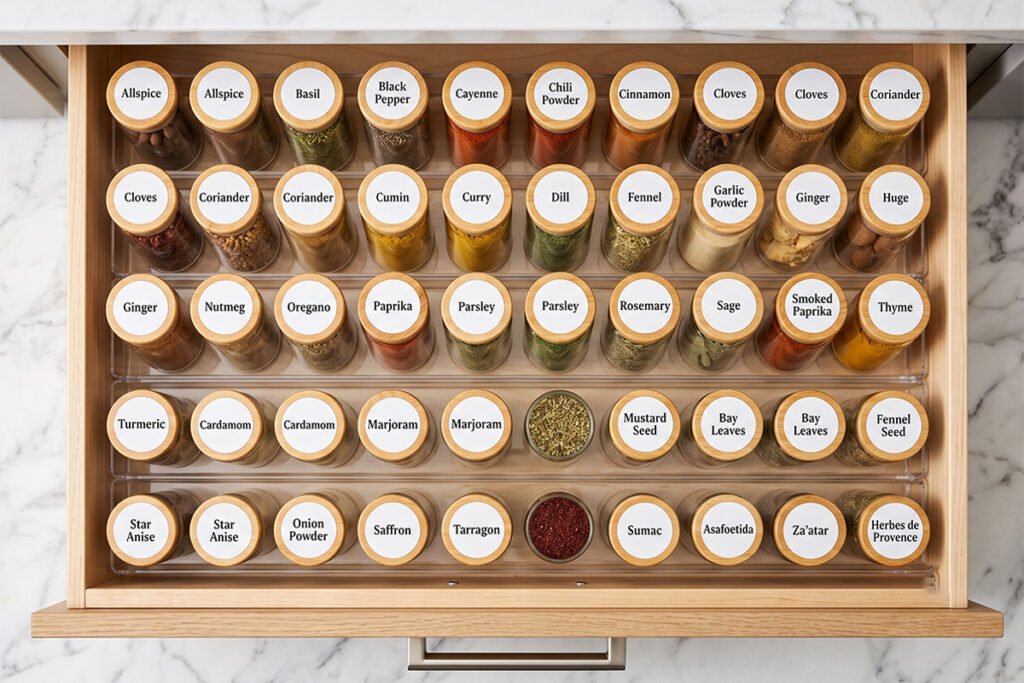
Spice drawers also keep essential seasonings within arm’s reach of your primary stove or prep zone. Lowering your reach improves kitchen safety by preventing awkward stretching over hot burners or heavy cookware. The ergonomic benefits make cooking faster, cleaner, and far more organized.
Furthermore, keeping spices in a dark drawer protects delicate ground herbs from ambient light and temperature swings. This extended shelf life saves money by preventing premature spoilage of expensive seasonings. A spice drawer remains a smart investment for both novice cooks and seasoned chefs.
What Are the Differences Between a Spice Cabinet and a Spice Drawer?
Traditional spice cabinets stack bottles vertically on upper shelves, often obscuring smaller jars behind larger ones. Rummaging through deep cabinet shelves frequently leads to duplicate purchases and forgotten, expired seasonings at the back. Drawer systems eliminate hidden spots by displaying every single jar in plain sight simultaneously.
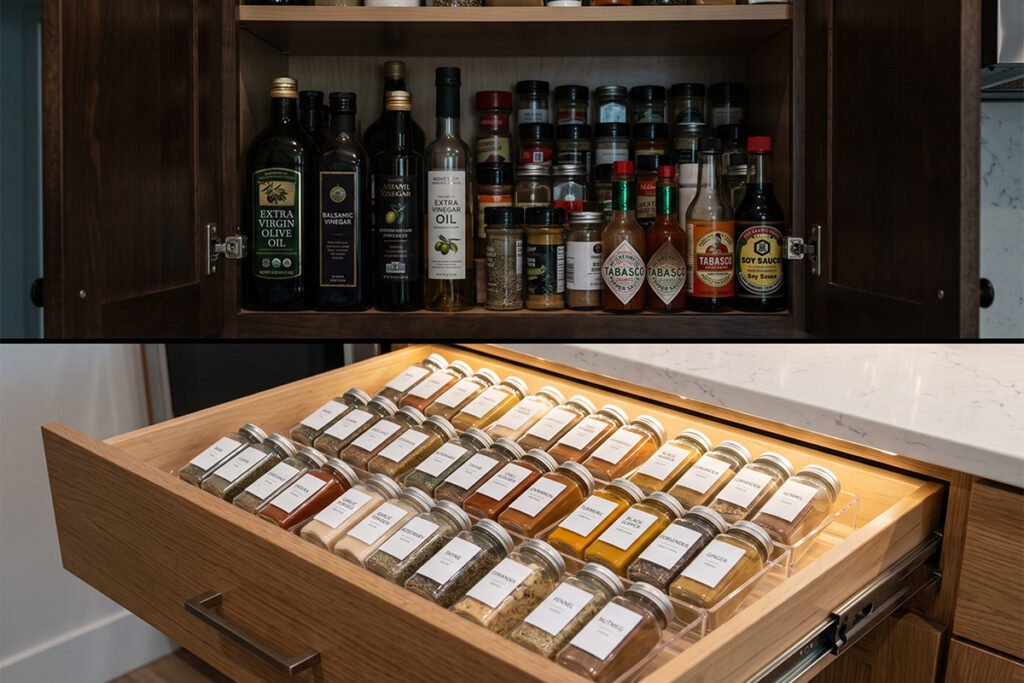
Cabinets also risk accidental jar drops when reaching for items stored on high, hard-to-reach top shelves. A drawer layout keeps heavy glass bottles stabilized within sloped acrylic channels at waist height. This low-center-of-gravity design minimizes accidental tip-overs and messy kitchen spills.
Additionally, spice drawers streamline your cooking workflow by placing seasonings right next to your cutting board or cooktop. Cabinets often require stepping away from your active workspace to retrieve ingredients during cooking. Transitioning to a drawer setup optimizes both space and meal prep efficiency.
What Are the Disadvantages of a Pull-Out Spice Rack?
Narrow pull-out spice racks mounted beside ovens seem convenient, but they suffer from significant thermal exposure. Heat generated by adjacent ovens degrades sensitive spice compounds, rapidly reducing overall aromatic quality. Storing spices inside a cooler, insulated drawer protects delicate herbs from heat damage.
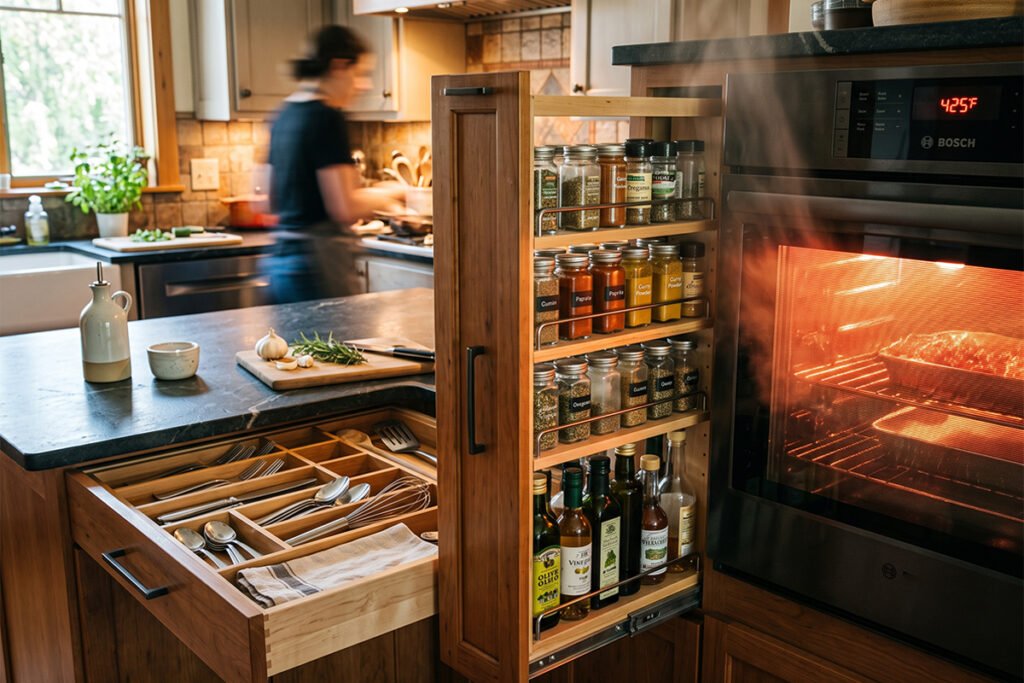
Pull-out racks also rely on complex mechanical slides that can stick, loosen, or fail over years of heavy use. Cleaning tall, narrow pull-out shelves is notoriously difficult when ground spices spill into deep bottom tracks. In contrast, removable acrylic drawer inserts lift out effortlessly for fast cleaning.
Furthermore, tall pull-out racks often wobble when extended quickly, causing top-heavy bottles to tip or fall off. Drawer inserts cradle each container securely within individual slanted channels to eliminate motion. Choosing drawer storage avoids the mechanical hassles and thermal risks of pull-outs.
How to Arrange a Spice Drawer for Maximum Efficiency
Organizing your spice collection logically dramatically speeds up meal preparation and simplifies grocery list creation. Grouping seasonings by cuisine type—such as Italian, Mexican, or baking spices—keeps related flavor profiles together. Alternatively, an alphabetical layout works best for large collections with dozens of unique jars.
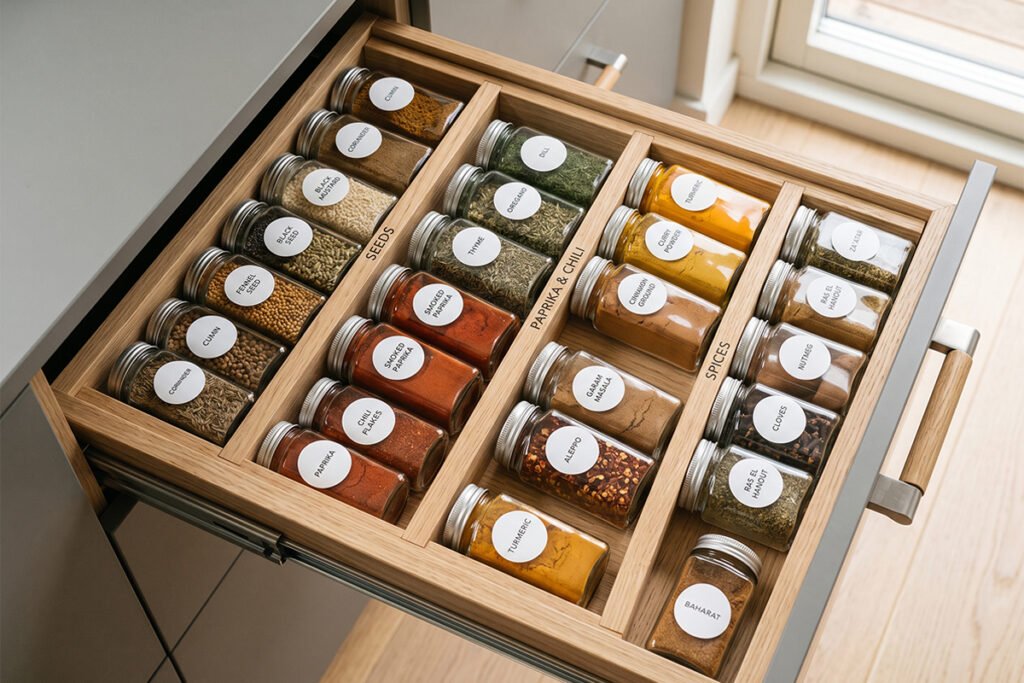
Place your most frequently used seasonings, like salt, pepper, garlic powder, and onion flakes, in the front row. This positioning allows quick access without opening the drawer fully during rapid cooking tasks. Reserve upper tiers for specialized herbs and seasonal baking spices used less often.
Grouping Seasonings By Cuisine Type
Apply clear, uniform labels to the top or side of each jar cap so names are instantly readable from above. Consistent labeling eliminates guesswork and creates a stunning, cohesive look across your entire drawer layout. Small organizational details yield huge time savings during daily meal prep.
What Should Every Spice Rack Have for Daily Cooking?
A well-rounded spice drawer should contain core culinary essentials alongside your favorite specialized flavorings. Foundational seasonings like coarse kosher salt, cracked black pepper, garlic granules, and onion powder form the base of most dishes. Keeping these essentials organized in the front row ensures smooth daily meal execution.
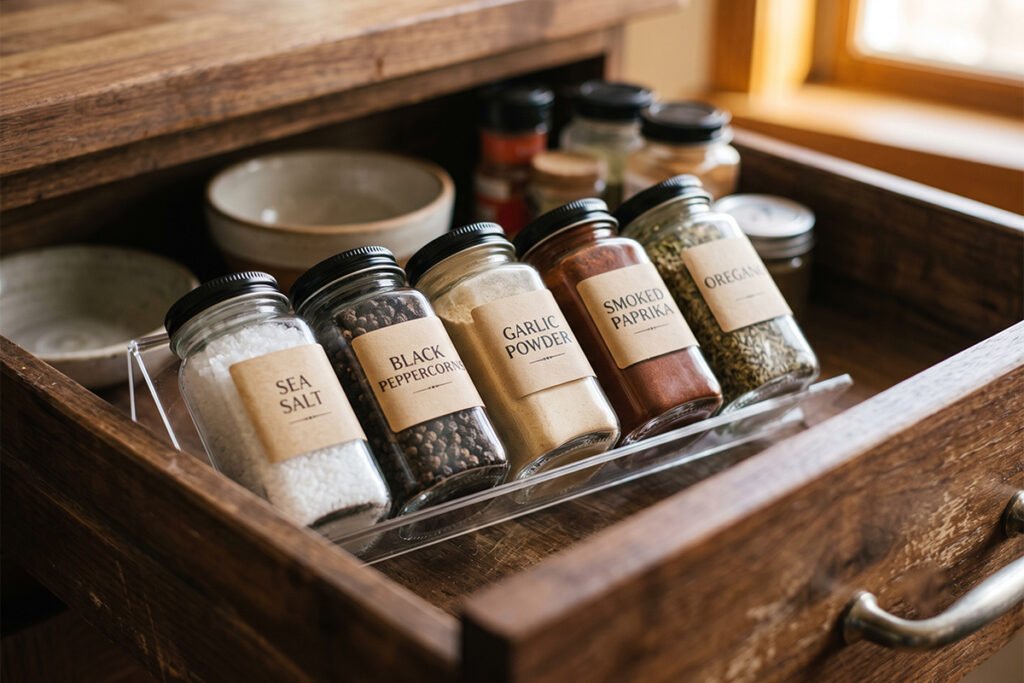
Versatile herbs like dried oregano, basil, thyme, and crushed red pepper flakes belong in every home cook’s collection. Warm ground spices like cumin, smoked paprika, chili powder, and cinnamon add depth to savory and sweet recipes alike. Storing these staples properly guarantees you are always ready for any recipe.
In addition to fresh seasonings, your setup needs a durable tiered spice rack insert to maintain long-term order. Having standard measuring spoons nearby makes scooping spices quick and clean during active cooking. Equipping your drawer with essential tools elevates your entire culinary experience.
What Are Common Spice Container Mistakes to Avoid?
One major mistake is storing spices in mis-matched, oddly shaped original supermarket containers. Varying bottle sizes prevent efficient packing and cause jars to roll around on tiered tray channels. Transferring spices into uniform glass bottles maximizes available surface area and stops shifting.
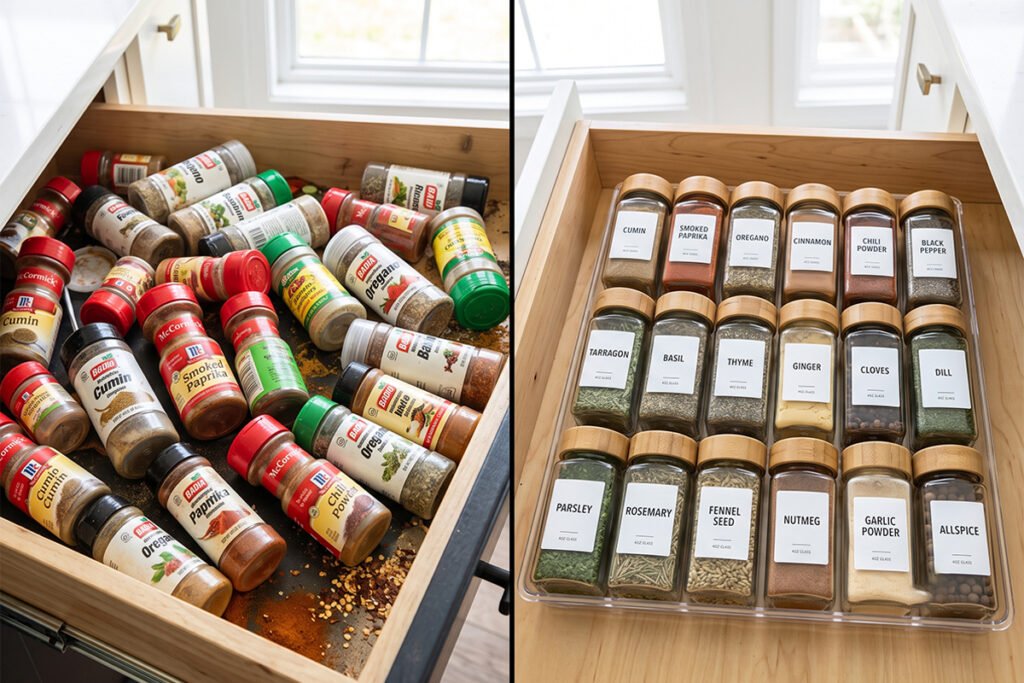
Another common error is failing to label bottle caps, forcing you to lift every single jar to identify its contents. Applying top-facing labels allows instant identification as soon as you pull the drawer open. Clear labeling saves precious time and prevents accidental seasoning mix-ups while cooking.
Lose Their Essential Oil Potency Within Six To Twelve Months
Finally, avoid buying massive bulk spice containers unless you cook large volumes regularly. Whole spices and ground herbs lose their essential oil potency within six to twelve months of opening. Buying smaller quantities ensures maximum flavor freshness while keeping your drawer light and uncluttered.
Top Recommended Spice Drawer Organizers to Buy
- YouCopia SpiceLiner Clear Acrylic Drawer Organizer – Features a flexible, expandable layout crafted from durable crystal-clear acrylic that expands from 12 to 24 inches for a seamless custom fit.
- Rev-A-Shelf Tiered Acrylic Spice Drawer Insert – Heavy-duty construction offering pre-formed sloped tiers that fit standard base cabinets while keeping glass bottles completely stable.
- Lynk Professional Expandable Acrylic Spice Tray – Designed with heavy-gauge transparent acrylic channels that slide smoothly to fit wide drawers and hold up to 32 standard spice jars.
- Utopia Home Clear Plastic Spice Rack Organizer – A budget-friendly tiered system featuring shatter-resistant acrylic channels and built-in non-slip rubber feet for maximum stability.
- Empress Arts Expandable Clear Spice Organizer – Ultra-sleek low-profile design engineered specifically for shallow drawers, offering pristine visibility and easy maintenance.
Conclusion
Executing an acrylic expandable spice drawer liner installation is one of the most rewarding home organization projects you can undertake. By converting cluttered cabinet space into a streamlined drawer setup, you protect your spices, elevate your kitchen decor, and speed up daily meal preparation.
The simple, tool-free installation process delivers immediate, long-lasting organizational benefits for any home chef.
Investing in a high-quality spice drawer organizer keeps your herbs fresh, visible, and always within reach. With proper measurements, secure non-slip backing, and uniform glass jars, your new spice drawer will serve as a functional focal point in your kitchen for years to come. Take the step today to transform your cooking space into an organized culinary haven.
Leave a Reply