

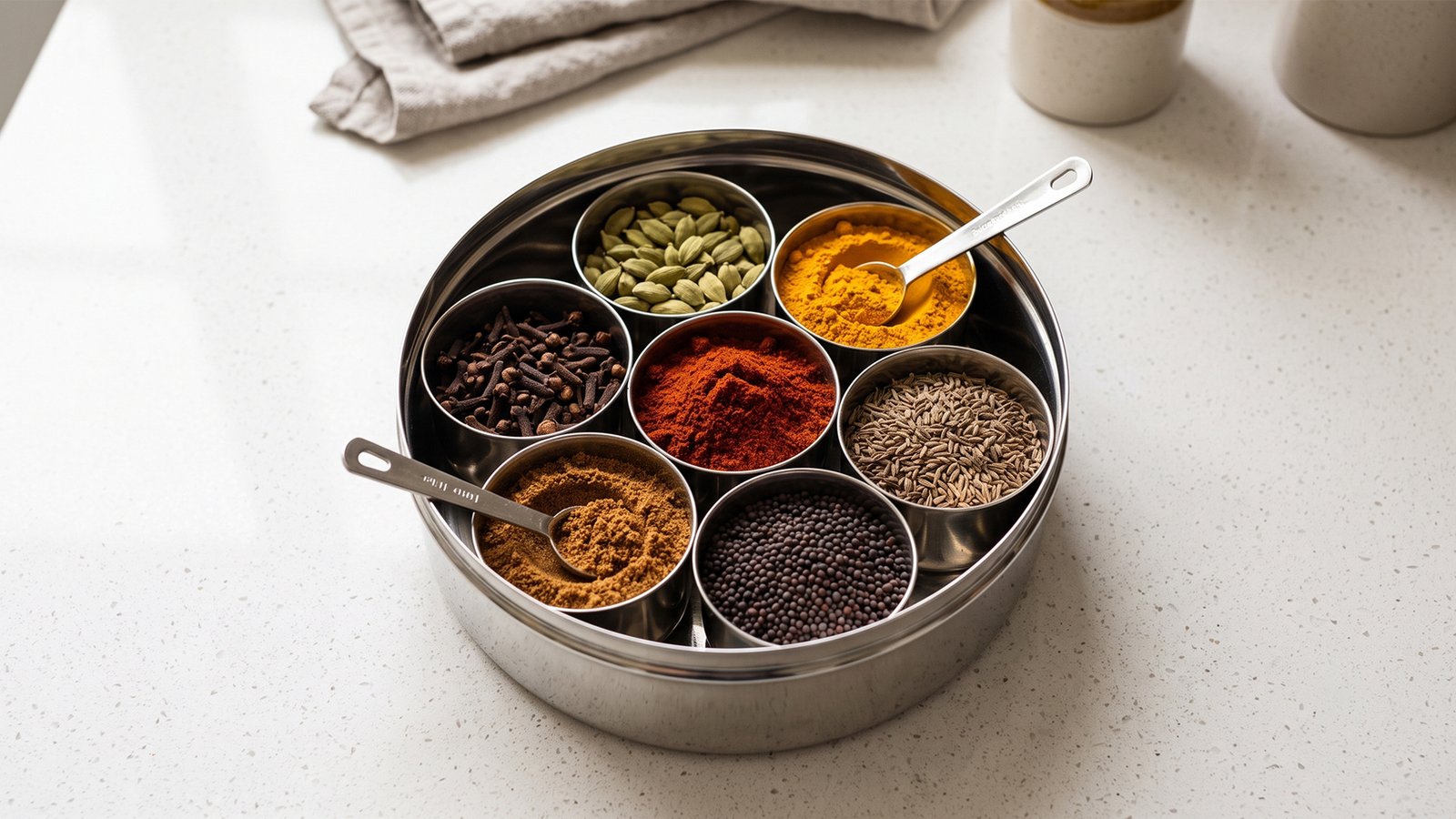
Achieving a clean layout begins with categorizing your spices by usage frequency rather than aesthetics. Implementing smart Indian spice box masala dabba organization ideas relies on keeping your core daily spices within immediate reach while isolating specialized aromatics.
Table of Contents
A well-planned spice storage container prevents unnecessary searching and speeds up your daily cooking workflow during meal preparation.
To create an optimal arrangement, place your primary tempering spices in the central and most accessible cups. Group complementary seasonings together so that your hand moves naturally from one spice cup to the next during tadka tempering. Maintaining this consistent layout forms muscle memory, ensuring you never burn your whole seeds while searching for ground powder.
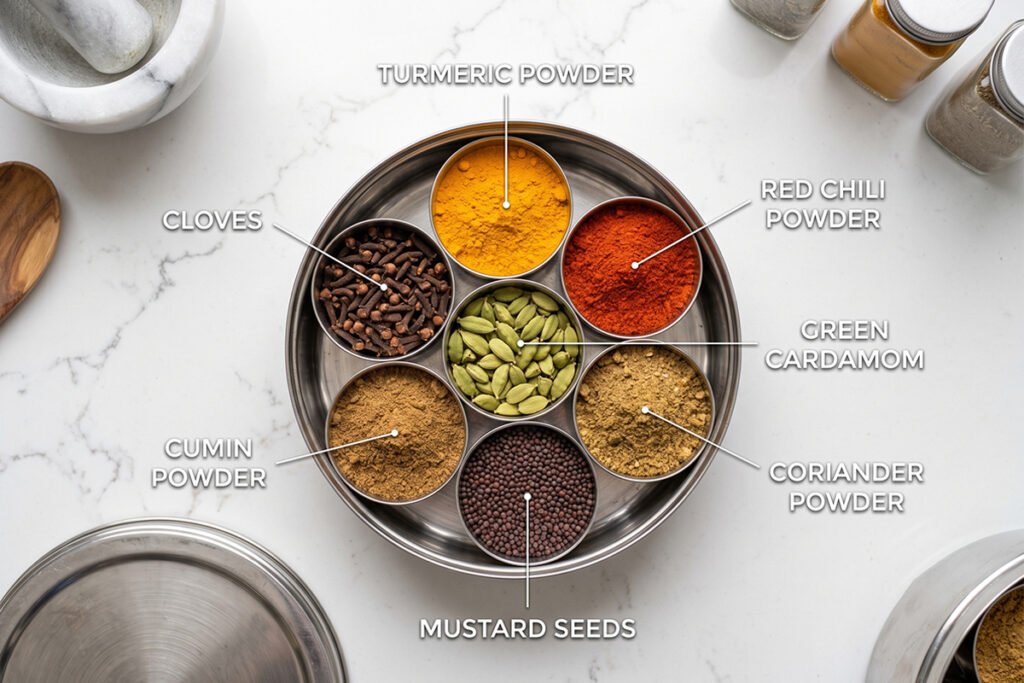
A key layout rule is keeping high-moisture seasonings separate from delicate ground blends to protect their potency. Using a traditional stainless steel dabba with a double-lid mechanism protects your spices from light and environmental humidity. This systematic division preserves the distinct flavor profiles of your spices while extending overall freshness.
The classic Indian spice container centers around seven small inner cups designed to hold your primary everyday seasonings. Selecting your essential Indian spices for these cups depends on your regional cooking style, but typically features core essentials like cumin seeds and mustard seeds. Placing high-frequency items like turmeric powder and red chili powder in this central hub streamlines daily meal prep.
Customizing your seven cups allows you to cater specifically to your daily culinary habits without cluttering the box. Many cooks reserve five cups for essential ground spices like coriander-cumin powder and garam masala, leaving two cups for whole tempering seeds. This balance ensures you have immediate access to both base aromatics and finishing powders in one place.
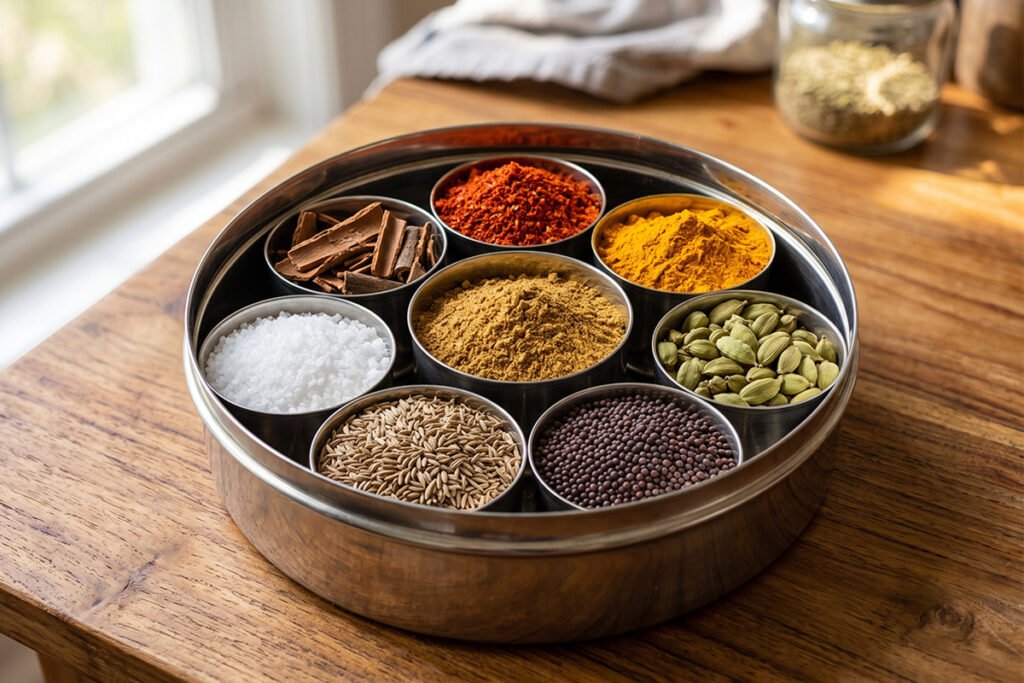
Keeping these seven cups strictly dedicated to daily recipes prevents overfilling and cross-contamination. Avoid packing the cups to the brim, as loose powders can spill over into neighboring compartments during rapid cooking. A clean, well-spaced seven-spice setup provides maximum convenience while keeping your spice inventory neat and organized.
Serious cooks often adopt a dual-box setup to separate whole aromatics from fine powders. The primary box remains dedicated to ground seasonings, while a second box holds whole cardamoms, cloves, cinnamon sticks, and bay leaves. Splitting your whole spices from ground blends prevents fine dust from coating textured seeds and keeps your kitchen counters tidy.
This dual strategy also protects delicate ground spices from losing their aromatic potency over time. Whole aromatics require different handling and last longer, so isolating them in a dedicated spice storage container maintains their essential oils. Having two specialized containers brings professional-grade order to any busy home kitchen.
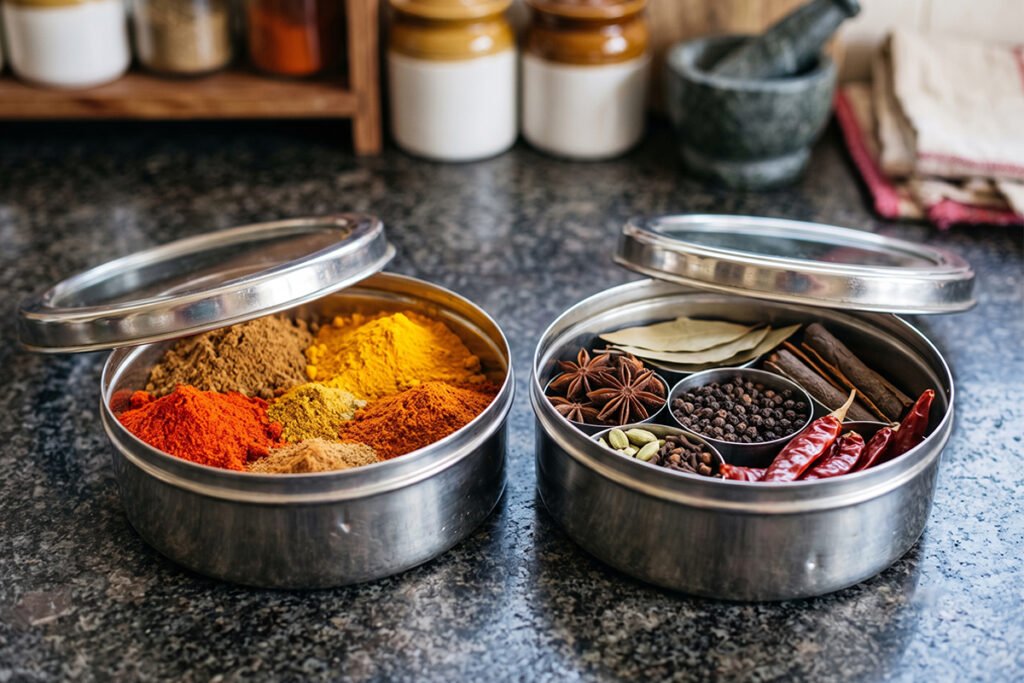
Managing two containers is straightforward when you align them with your cooking steps. The whole spice box is opened first during the oil tempering stage, followed by the ground spice box during sauce building. This logical division prevents cooking delays and keeps your workspace completely streamlined.
Logical Flow Arrangement for Rapid Cooking
Arranging your dabba based on cooking sequence saves precious seconds during active frying and tempering. Placing oil-starter spices like mustard and cumin seeds near the front edge allows quick scooping into hot oil. Following this physical progression keeps your culinary rhythm smooth and prevents burning delicate aromatics.
Group your finishing powders toward the back or side compartments away from the initial splash zone. This layout keeps ground spices like garam masala dry and free from steam exposure when you open the lid over cooking pots. Structuring your dabba by cooking stages brings professional efficiency to your daily routine.
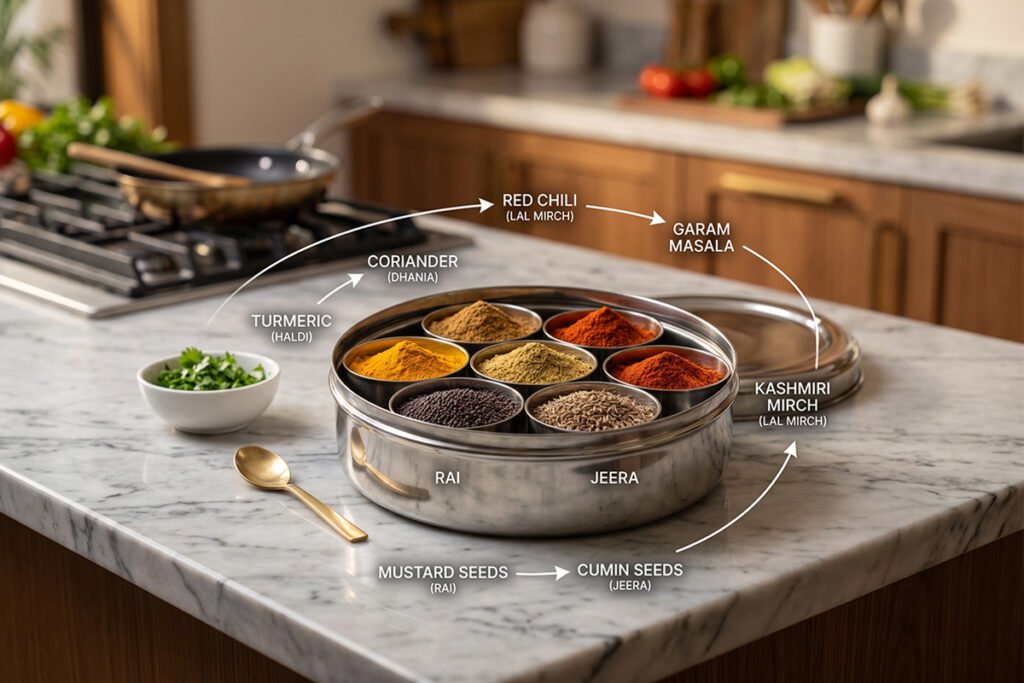
Maintaining a consistent spatial arrangement builds intuitive muscle memory over time. You will quickly reach for turmeric powder or chili without needing to scan every individual cup mid-recipe. A logical spatial design ensures stress-free meal preparation every single time.
How to Arrange Masala Dabba for Maximum Efficiency
Maximizing efficiency starts with placing the most frequently used spice cup directly in the center. Surrounding this middle hub with secondary tempering items creates an ergonomic star pattern for your hands. This thoughtful spatial design makes implementing Indian spice box masala dabba organization ideas effortless during busy weeknight dinners.
Keep dedicated small spoons inside each cup to avoid cross-contaminating flavors between seasonings. Storing the spoons upright or nested flat prevents them from blocking the inner lid when closing the container. Small functional habits like this preserve spice purity and speed up your overall workflow.
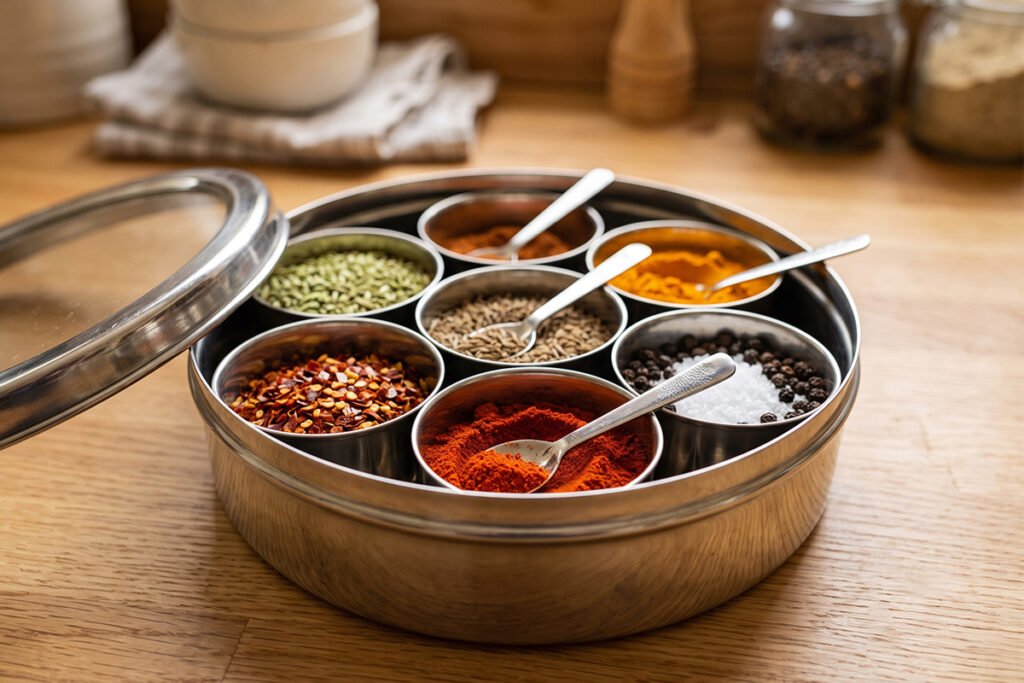
Periodically review your layout and swap out rarely used spices for seasonal ingredients you use daily. Customizing your setup to match your current cooking habits keeps your storage practical and streamlined. Efficiency comes from adapting your container to your actual cooking patterns.
What to Put in My Masala Dabba?
Deciding what to place inside your container depends heavily on your daily cooking preferences and regional dishes. Most traditional setups include mustard seeds, cumin seeds, turmeric, red chili powder, and coriander-cumin powder. These core ingredients form the base for almost every savory dish prepared in home kitchens.
You can also include whole spices like cloves or cinnamon sticks if your daily recipes rely on quick warm tempering. Reserve the remaining cups for specialized regional powders like dry mango powder or asafoetida. Choosing multi-purpose seasonings maximizes the utility of your limited container space.
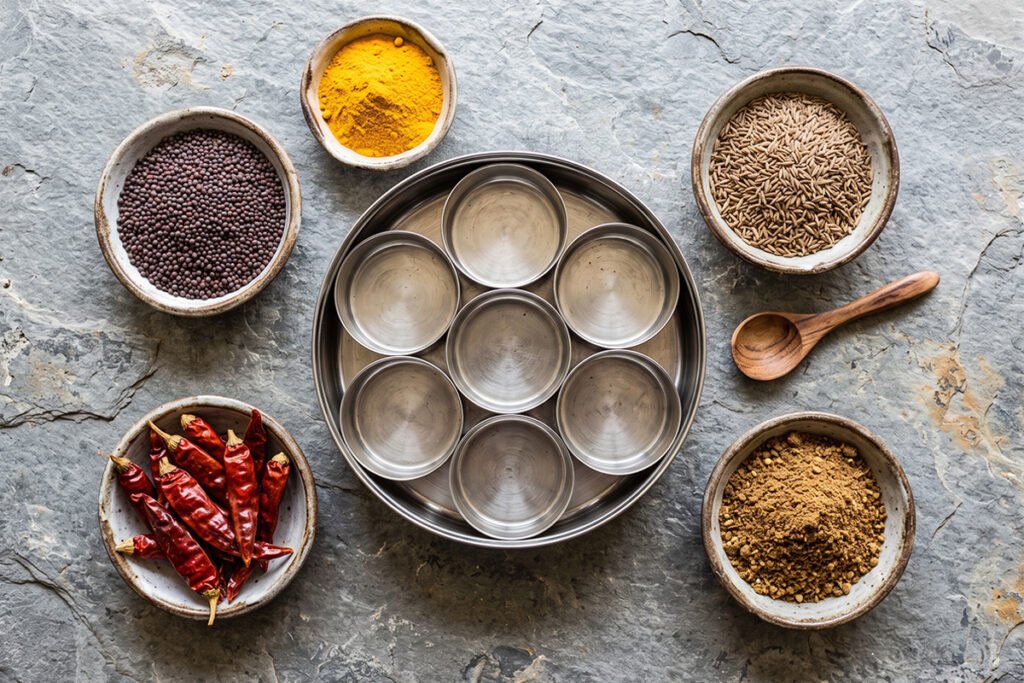
Avoid stocking obscure ingredients that you only use once a month in your main container. Keep special ingredients in separate pantry jars so your primary dabba remains clean and efficient. Focus exclusively on ingredients that support your primary daily cooking workflow.
What 7 Spices Go in an Indian Spice Box?
The standard daily selection consists of mustard seeds, cumin seeds, and yellow turmeric powder for color and health. Spicy red chili powder and fragrant coriander-cumin powder supply the foundational body for sauces and lentil soups. Whole cloves and green cardamom pods often occupy the remaining two cups for sweet spice notes.
Some home cooks swap out cardamoms for asafoetida powder or salt depending on regional cooking rules. This traditional combination provides the perfect balance of heat, color, earthiness, and aroma for daily cooking. Having these seven elements together allows you to build complex flavors in minutes.
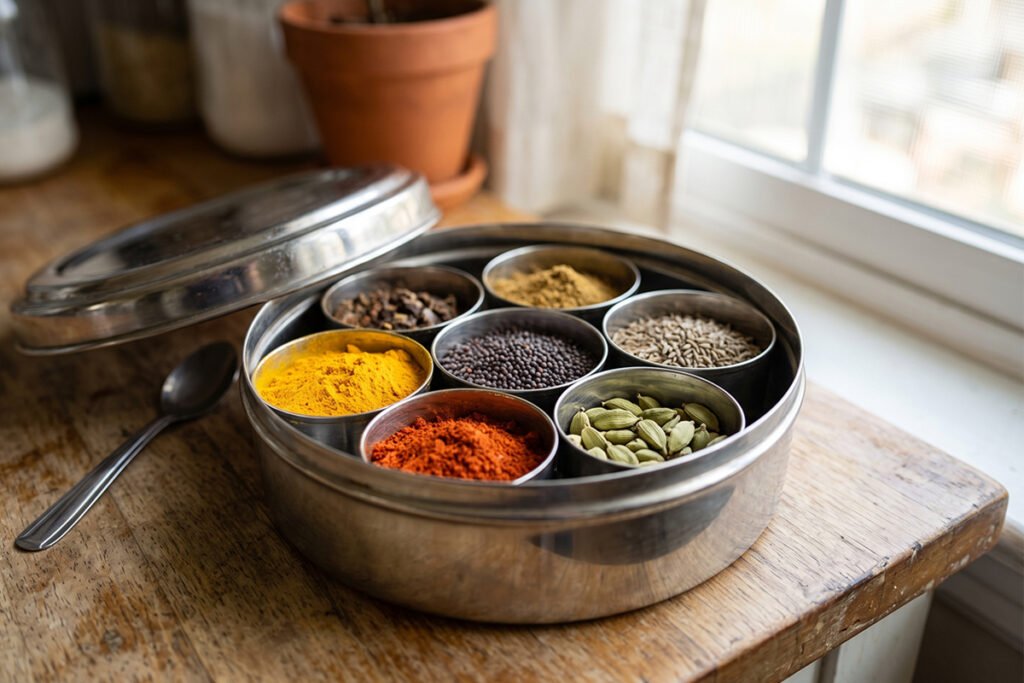
Choosing high-quality, freshly ground blends for these seven cups ensures superior flavor and vibrant color in your cooking. Refill these cups in small batches to guarantee that every dish benefits from peak potency. This classic collection remains the heart of traditional Indian culinary traditions.
What Spices Are in a Masala Dabba Across Different Regions?
Regional preferences significantly influence which ingredients occupy the inner cups of a daily spice box. Northern kitchens frequently include garam masala, dry mango powder, and kasuri methi for rich gravy dishes. Southern setups prioritize black mustard seeds, split urad dal, chana dal, and dried red chilies for rice tempering.
Western Indian arrangements often integrate sweet and sour components alongside ground cumin and coriander. Eastern households regularly feature panch phoron, a classic five-spice blend of fennel, cumin, mustard, fenugreek, and nigella seeds. Regional variations demonstrate how adaptable this traditional storage system truly is.
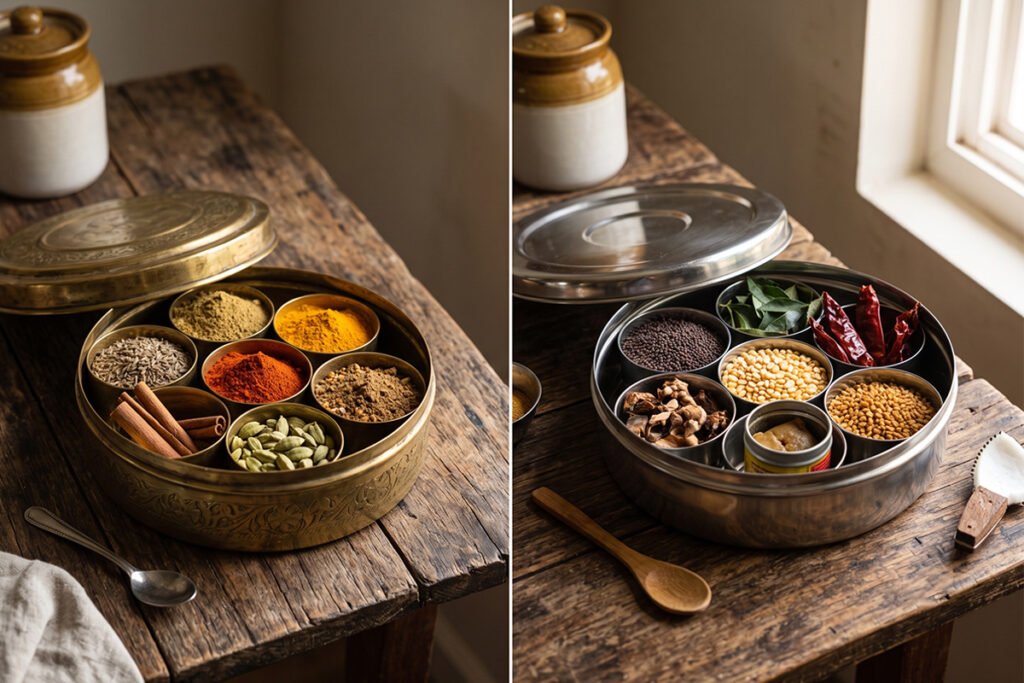
Adapting your container to reflect your culinary heritage makes regional cooking fast and authentic. Standardizing your box around your regional roots guarantees that essential flavor profiles are always at your fingertips. Every region brings its own unique harmony to the standard dabba setup.
What’s Really Inside Your Masala Box?
Beyond mere flavor, a well-curated collection represents a power-packed kit of medicinal seasonings and natural antioxidants. Ingredients like turmeric contain active curcumin, while cumin seeds offer essential digestion support with every pinch. Your daily spice arrangement acts as a natural wellness cabinet integrated directly into your kitchen routine.
Ensuring your seasonings remain pure and unadulterated keeps these beneficial properties active and potent. Commercial powders sometimes contain fillers, so grinding whole seeds at home guarantees superior health benefits. Knowing exact ingredient purity gives you total control over family nutrition.
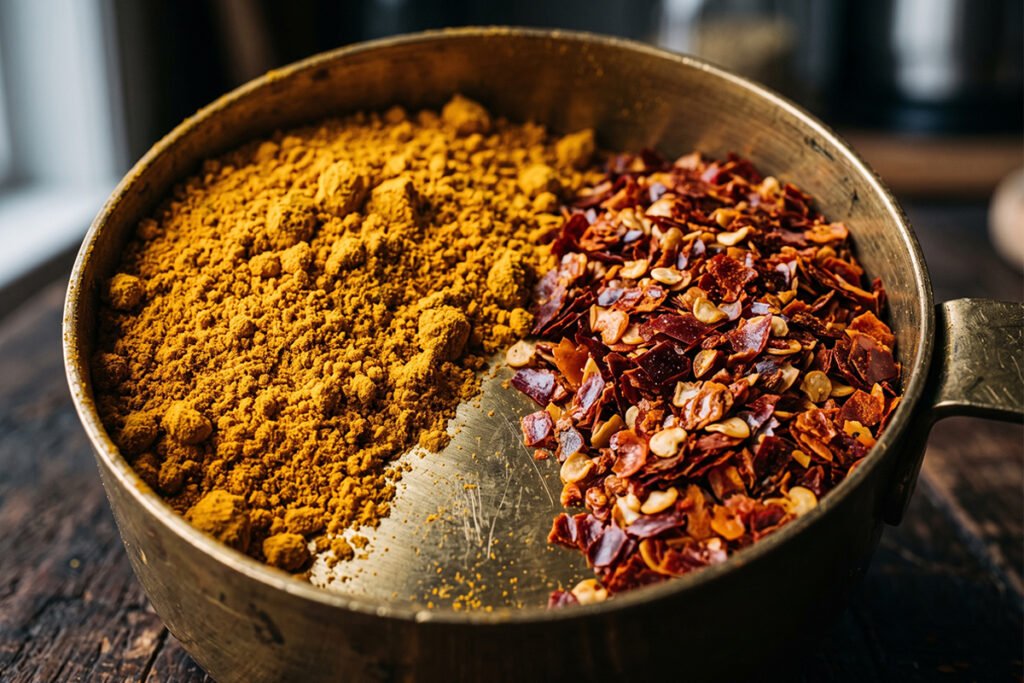
Clean storage practices preserve these delicate volatile compounds against degradation from air and ambient heat exposure. A properly organized stainless steel dabba keeps essential oils locked safely inside each individual compartment. Your daily spice box is truly an investment in both taste and long-term wellness.
How to Organize Spice Packages and Refill Bags
Managing bulk refill bags prevents pantry chaos and keeps your primary dabba operating smoothly. Store extra spice packets in airtight mason jars or sealed storage bins inside a cool, dark pantry. Labeling every refill container with purchase dates makes inventory tracking simple and prevents wasteful duplicates.
Never pour fresh powders over old remaining stock when topping off your inner cups. Completely empty and clean each cup before refilling to maintain optimal freshness and eliminate stale residue. Proper stock rotation prevents old spices from settling at the bottom of your storage cups.
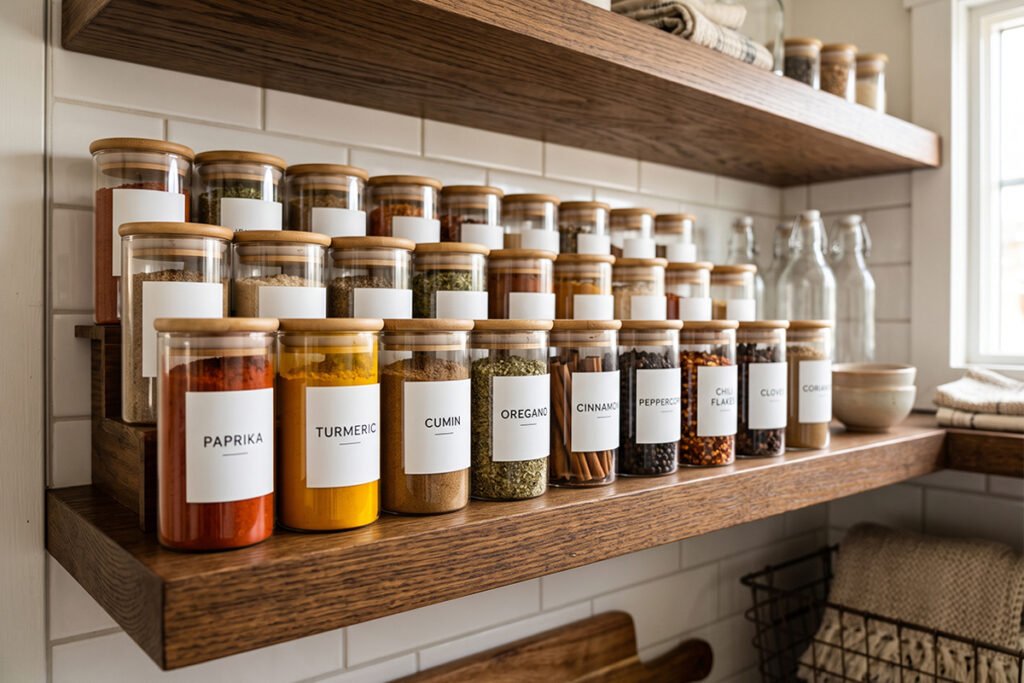
Utilize clear plastic bins with dividing partitions to keep open refill bags upright and neatly aligned. Clamping open bags with airtight sealing clips prevents accidental spills and stops moisture from entering your inventory. Systematic packet storage makes refilling your primary box effortless and clean.
Transform Your Messy Spice Cabinet in Under 15 Minutes!
Download our step-by-step printable decluttering checklist to purge expired seasonings and regain total pantry control effortlessly.
Refill Workflow and Storage Management
Establishing a routine monthly inspection prevents you from running out of crucial seasonings mid-recipe. Inspect your primary spice storage container weekly to identify low cups before starting complex weekend cooking projects. Refill cups only up to three-quarters full to avoid messy spills during rapid scooping.
Store your main bulk reserves away from direct stove heat, steam vents, and sunny windows. High temperatures degrade delicate essential oils and cause ground powders to lose color rapidly. A proper pantry storage system protects your bulk investment and maintains peak flavor profiles.
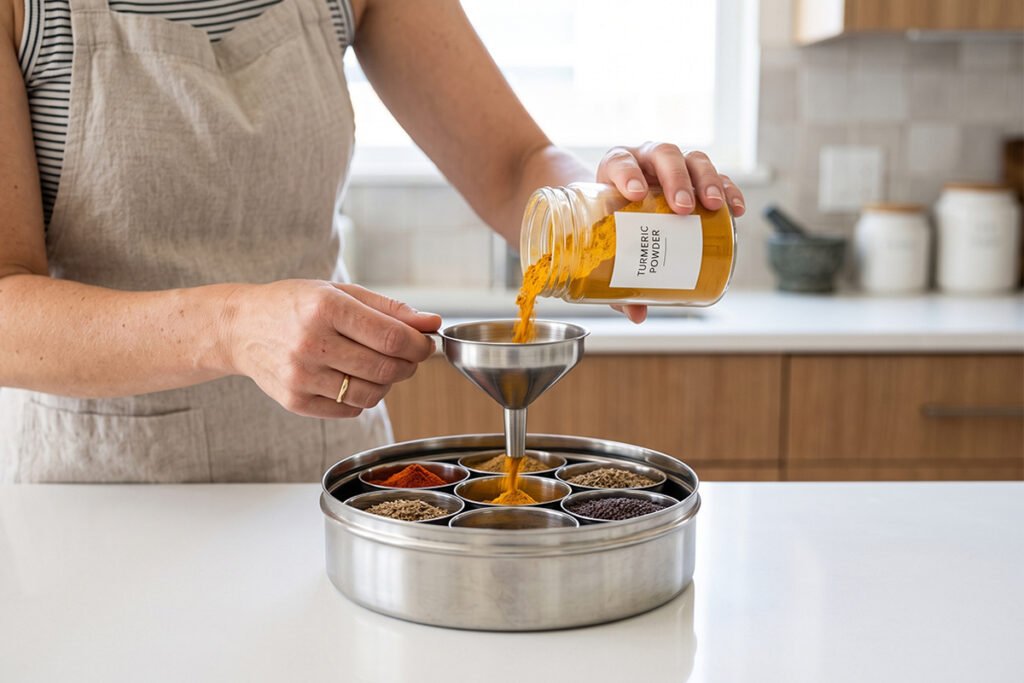
Keep a simple running checklist on your refrigerator to note down low refill stocks immediately. This habit ensures your pantry supplies are replenished long before your daily box runs completely dry. Strategic inventory management turns routine refilling into a seamless kitchen operation.
Do Spices Stay Fresh in a Masala Dabba?
Spices maintain good potency in a standard dabba for roughly three to four weeks under daily use. Because the main lid opens daily during cooking, ground items experience brief exposure to ambient air and humidity. Keeping your main supply in small quantities prevents flavor loss before the cups are emptied.
Whole spices retain their aromatic essential oils much longer than fine powders inside open inner cups. Whole seeds can stay fresh for several months, whereas ground turmeric and chili lose top notes after a month. Replenishing ground powders in small weekly batches guarantees maximum flavor impact.
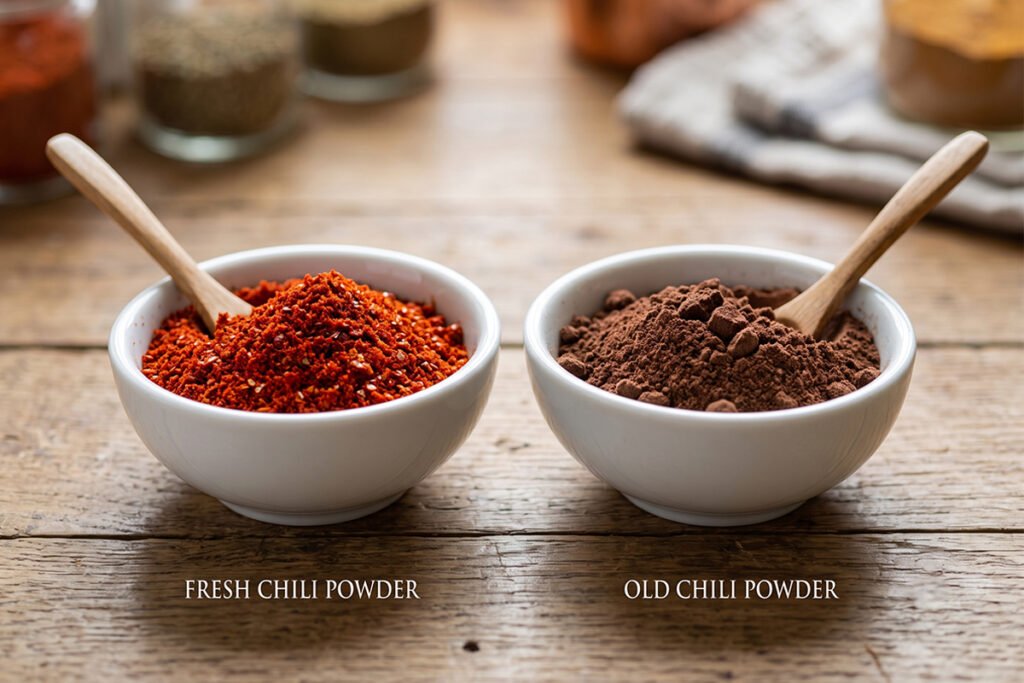
To maximize the spice shelf life inside your container, always close the inner lid tightly immediately after use. Avoid leaving the box sitting open on warm counters while cooking over open flames. Fastidious daily habits keep your small spice quantities exceptionally fresh and potent.
Airtight Integrity and Moisture Warning
Humidity is the ultimate enemy of ground seasonings, causing clumping, color fading, and loss of aroma. Steam rising from hot cooking pots can easily penetrate loosely fitted lids, ruining sensitive ground powders. Ensuring your spice storage container features a reliable inner sealing disc protects contents against humidity intrusion.
Never hold your open spice container directly over boiling pots or hot oil pans to scoop ingredients. Rising steam instantly attaches to dry powders, creating hardened clumps that encourage mold growth. Scoop spices away from direct steam to preserve pure dry textures inside every cup.
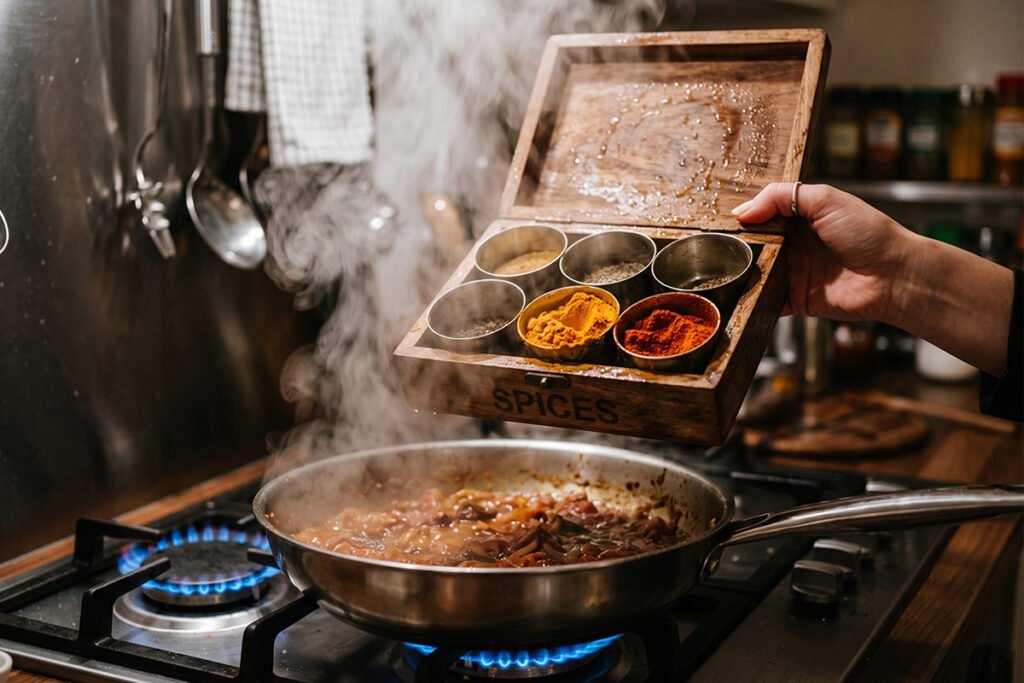
If you live in a humid climate, consider using containers equipped with heavy latch locks or silicone lid gaskets. Protecting your container against environmental humidity ensures smooth powders that measure easily every day. Moisture control is fundamental to effective long-term spice preservation.
Should Masala Box Be Airtight?
An airtight seal is critical for preserving aromatic essential oils and keeping ground powders dry and free-flowing. While traditional stainless models feature snug double lids, modern updated versions include rubber gaskets for absolute sealing. Selecting a container with tight closures extends ingredient quality and prevents premature flavor loss.
Unsealed boxes allow volatile aromatic compounds to escape rapidly into the kitchen air, leaving spices tasting flat. Non-airtight boxes also permit strong aromas to blend together, dulling the unique flavor profile of each spice. Investing in an airtight design guarantees punchy, authentic flavor in every meal.
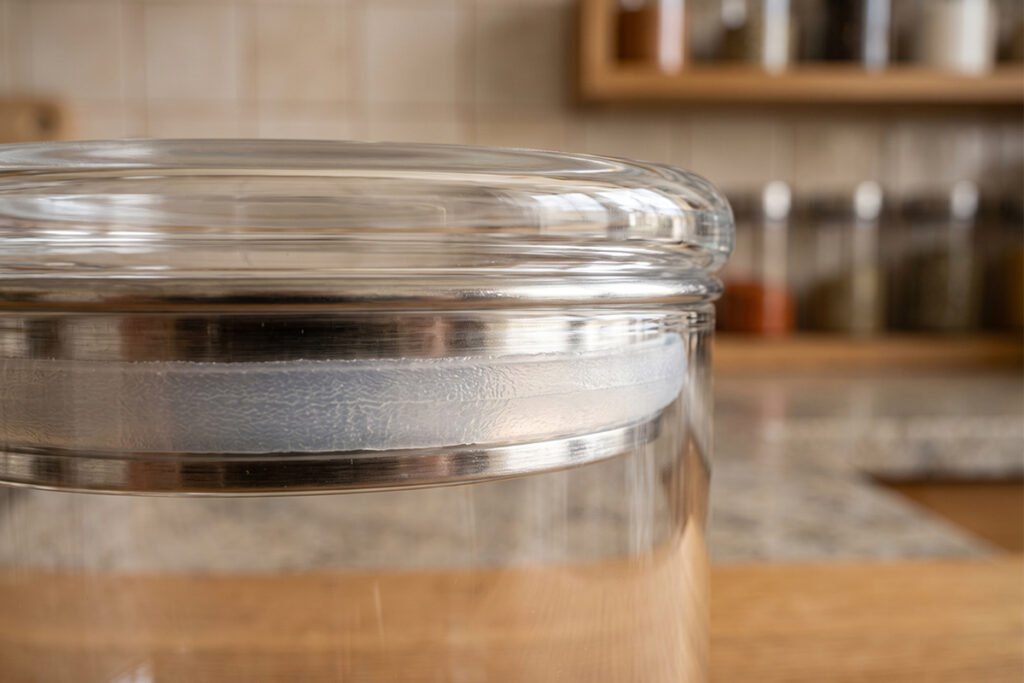
Test your container’s seal strength regularly to verify that lids remain tight after repeated daily handling. If an old lid becomes loose, replace the container or store sensitive powders in sealed outer jars. Prioritizing airtight security protects your investment in quality spices.
Are 10 Year Old Spices Still Good?
Old spices rarely become toxic, but they lose their essential oils, vibrant colors, and flavor potency over time. Ground powders kept for years taste mostly like cardboard or dust, offering zero flavor to complex curries. Consuming decade-old ingredients will ruin meal taste and eliminate all expected health benefits.
Test old seasonings by rubbing a small pinch between your fingers and smelling the released oils. If the scent is weak or completely absent, the spice has expired and should be discarded immediately. Fresh seasonings should deliver an instant, vibrant aroma upon the lightest friction.
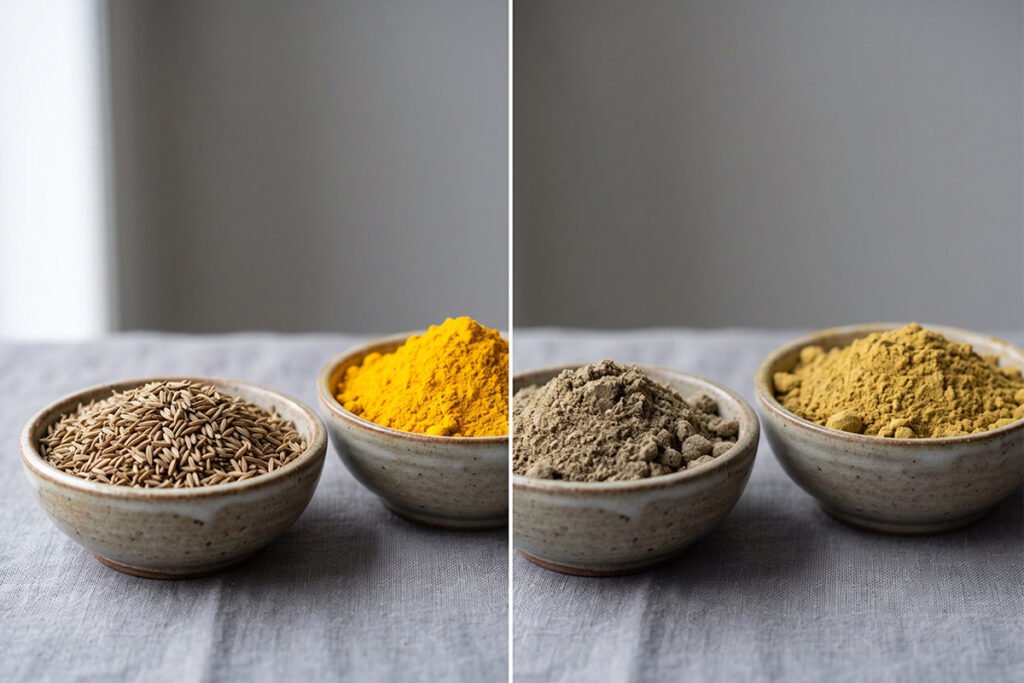
Discard old inventory and replace it with fresh, whole seeds that you grind at home in small quantities. Establishing a annual purge routine guarantees your pantry holds only potent, flavor-packed ingredients. Fresh ingredients elevate your home cooking from average to extraordinary.
Can We Keep Salt in a Masala Box?
Including salt inside your primary container is common practice, but it requires careful moisture management to prevent clumping. Salt is naturally hygroscopic, meaning it attracts moisture directly out of the air and transfers it to nearby spices. If left unchecked, damp salt can make adjacent ground powders clump and harden into solid lumps.
If you choose to keep salt in your box, place it in a cup furthest from delicate ground powders. Using coarse sea salt or rock salt reduces moisture absorption compared to fine table salt varieties. Smart placement allows you to enjoy quick salting access without clumping your other seasonings.
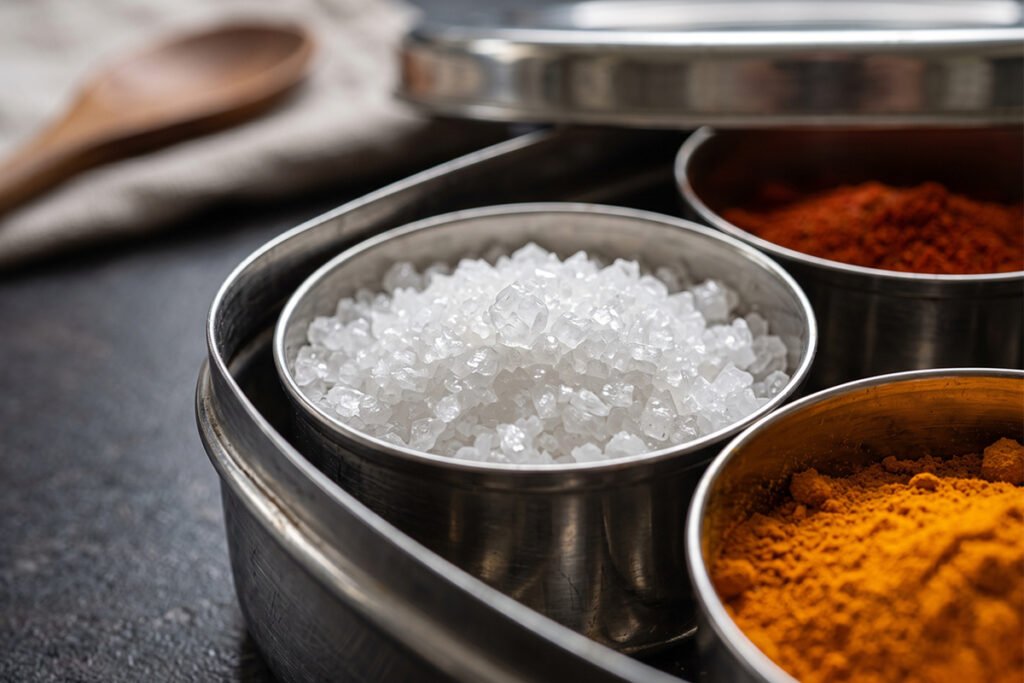
Alternatively, keep salt in a dedicated clay or wooden salt cellar placed beside your primary spice container. This separation completely eliminates moisture risks while keeping essential seasoning within quick reach. Separating salt protects ground powders from humidity damage over time.
Why Should Salt and Turmeric Be Kept Together?
Pairing salt and turmeric powder in adjacent cups reflects practical efficiency found in traditional Indian home kitchens. Almost every savory recipe begins or finishes with a combination of salt for flavor and turmeric for color and health. Placing them side-by-side streamlines your workflow when seasoning dishes mid-cooking.
Historically, turmeric was also believed to act as a natural dry preservative against pest intrusion in basic storage containers. The bright yellow powder provides a clear visual contrast against white salt, preventing accidental over-salting during fast prep. This classic pairing remains a staple layout choice across millions of households.
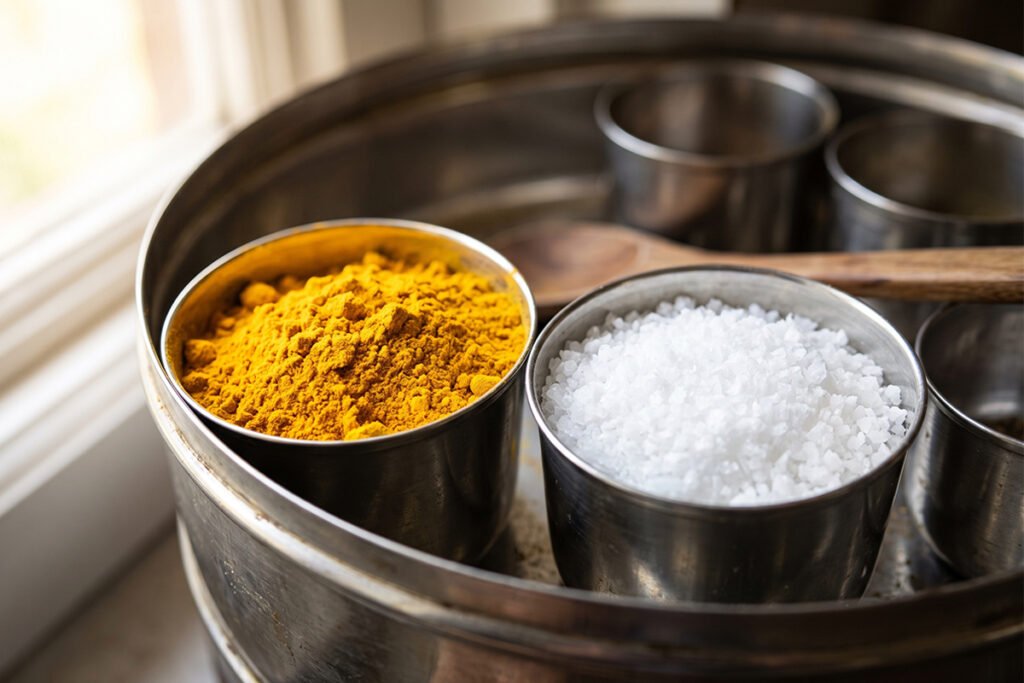
Organizing these two staples together optimizes your hand movements during critical seasoning steps. It simplifies daily routines while respecting centuries of proven culinary habits. Embracing functional pairings improves speed and accuracy in busy home kitchens.
What Is the Best Container for Masala?
The ideal container depends on your kitchen environment, but food-grade stainless steel remains the undisputed traditional champion. Stainless steel blocks harmful light, resists rust, endures heavy drops, and does not absorb lingering aromatic oils. A high-quality stainless steel dabba provides decades of reliable service without cracking or staining.
Heavy brass and copper containers offer rustic beauty and natural antimicrobial properties, but require frequent polishing to prevent oxidation. Glass containers allow instant visual identification, but expose delicate ground powders to light degradation if left on sunny counters. Weighing durability against light protection helps you choose the best container for your kitchen.
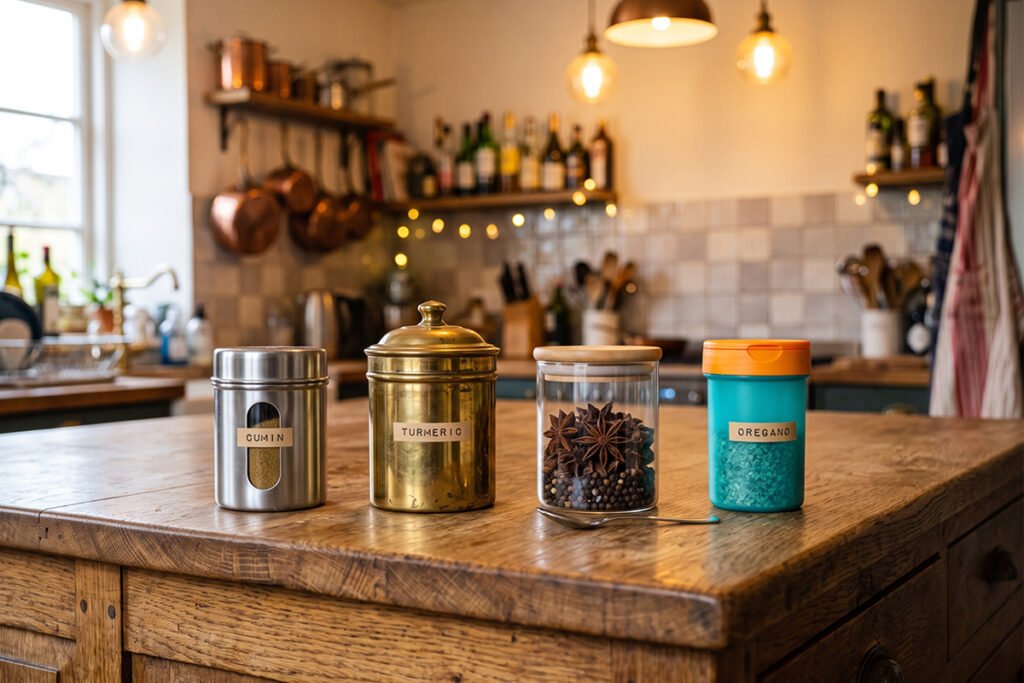
Select a container that balances daily capacity with light protection and ease of washing. Standard stainless steel models with clear acrylic inner lids offer the perfect compromise between visibility and durability. Investing in quality materials guarantees safe, clean spice storage for years.
Are Glass or Plastic Better for Masala Storage?
Glass is vastly superior to plastic because it is non-porous, non-reactive, and completely free of chemical leaching risks. Glass containers do not absorb dark stains from turmeric or retain heavy scents from pungent garlic and asafoetida. Cleaning glass returns it to a pristine state, ensuring original flavors remain unadulterated.
Plastic containers are lightweight and shatterproof, but they absorb essential oils and yellow stain permanently over time. Scratches on internal plastic surfaces can harbor fine spice dust and moisture, making thorough cleaning difficult. Choosing glass or steel over plastic keeps your food pure and safe.
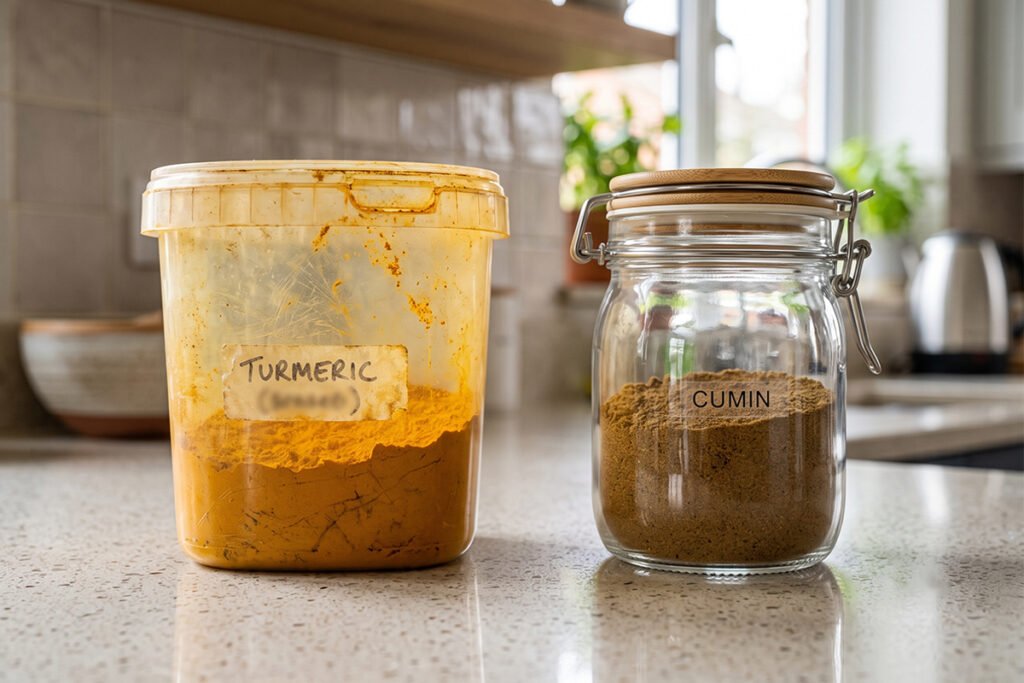
If choosing glass, store containers inside dark cabinets or select dark amber glass to filter out harmful ultraviolet light. Shielding spices from direct light preserves rich colors and essential volatile oils significantly longer. Glass provides a clean, elegant, and safe long-term storage solution.
Which Is the No. 1 Masala Brand in India?
MDH and Everest stand as two of the most popular and widely recognized spice brands across Indian households. MDH is renowned for iconic blends like Kitchen King and Chana Masala, delivering consistent authentic flavor profiles for decades. Everest offers an extensive range of pure ground powders and specialized regional spice mixes trusted nationwide.
Other leading brands like Catch, MDH, and Tata Sampann have gained massive popularity by focusing on unadulterated purity and retained oils. Tata Sampann emphasizes natural essential oil retention, offering exceptional aroma and deep flavor profiles across their line. Brand choice often comes down to regional taste preferences and specific recipe needs.
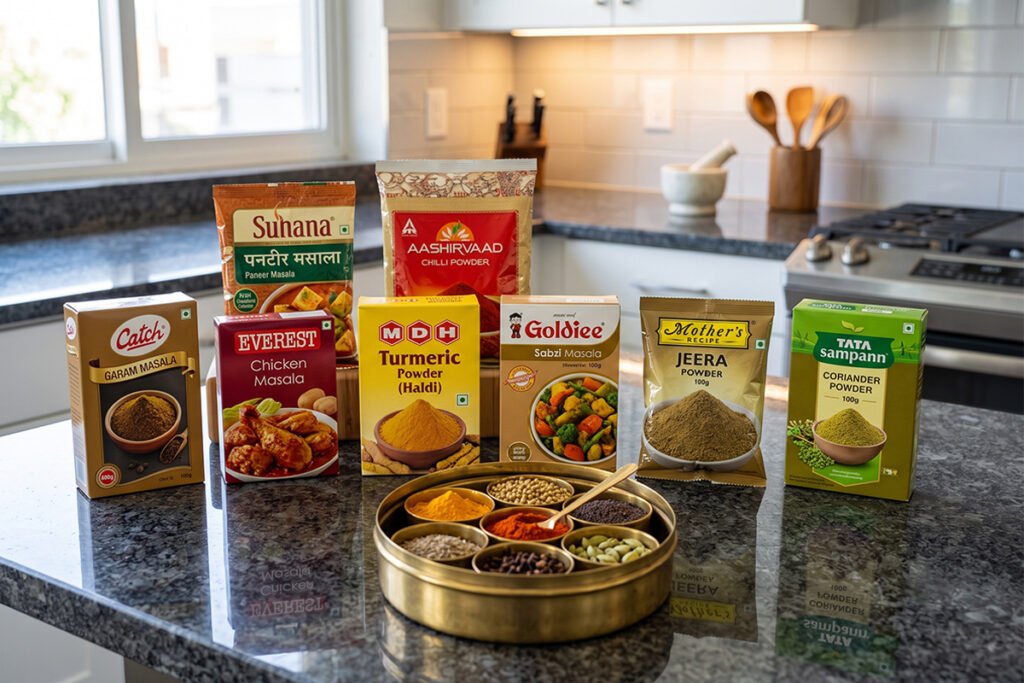
Exploring different reputable brands helps you discover which specific regional blends match your personal flavor preferences. Always check packaging dates to ensure you receive the freshest possible batch for your daily container. Premium packaged brands deliver authentic tasting results consistently.
How Do Indians Store Their Spices Throughout the Year?
Year-round management in traditional homes relies on a two-tier system dividing long-term bulk stock from daily cooking containers. Whole seeds are purchased in large quantities after harvest season, thoroughly sun-dried to eliminate moisture, and stored in large airtight drums. Small portions are transferred monthly into the daily container for immediate kitchen access.
Sun-drying bulk seeds before long-term storage eliminates trapped humidity and naturally wards off unwanted pantry pests. Storing bulk reserves with whole dried neem leaves or bay leaves provides natural protection against insect infestation. This time-tested two-tier strategy maintains year-round spice freshness across changing seasons.
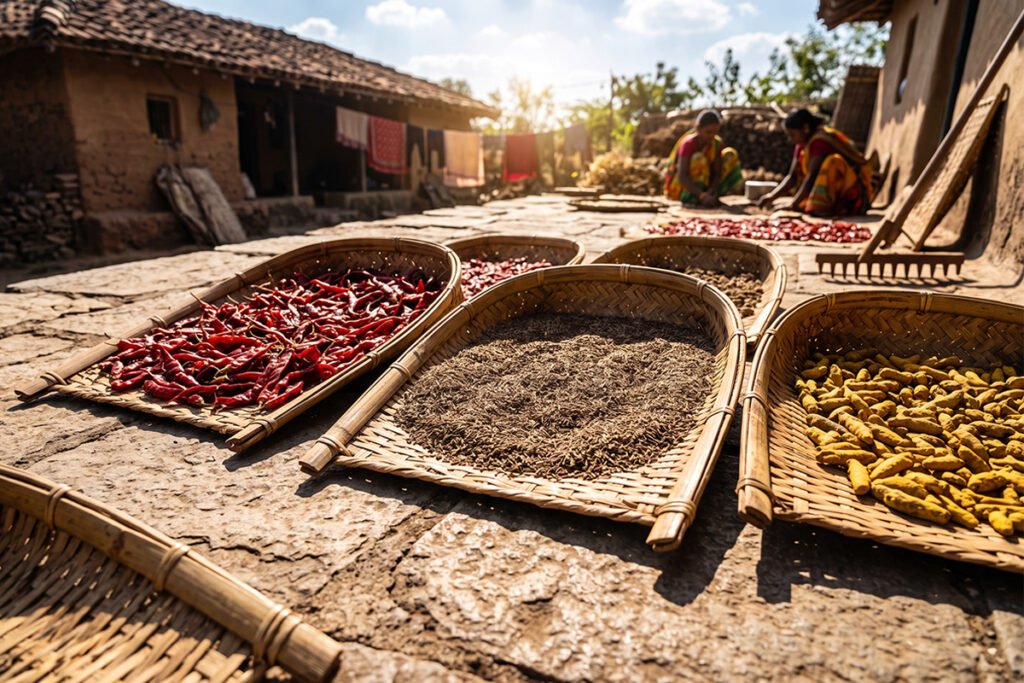
Adopting these traditional storage habits protects your bulk inventory against unexpected heat and humidity spikes. Maintaining clean, dry bulk reserves guarantees your daily container is always replenished with top-quality ingredients. Ancient preservation techniques continue to offer valuable lessons for modern kitchens.
Maintenance and Practical Tips for Everyday Use
Maintaining a hygienic container requires a complete wash and dry cycle at least once every month. Hand wash all individual cups using mild dish soap, avoiding abrasive scrubbers that scratch smooth stainless surfaces. Ensure every cup is completely dry before refilling to prevent moisture from ruining fresh ground powders.
Wipe the outer lid and rim daily with a dry microfiber cloth to remove oily fingerprints and floating cooking grease. Keep your container stored inside a closed cabinet or drawer when not actively cooking to shield spices from heat. Simple preventive care keeps your spice box looking pristine and performing efficiently.
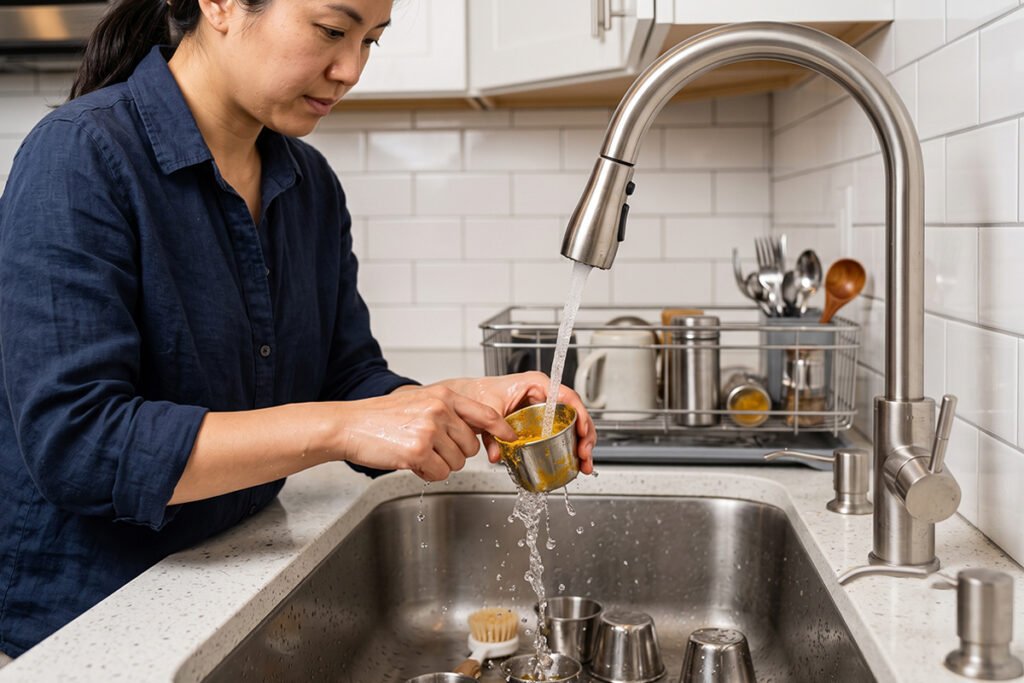
Avoid using wet spoons or damp fingers when grabbing quick pinches mid-cooking. Always handle your container with clean, dry hands to protect dry powders from accidental moisture contamination. Careful daily handling extends ingredient freshness and maintains exceptional kitchen hygiene.
Mini Measuring Spoons and Utility Accessories
Equipping your container with compact utility accessories elevates daily cooking precision and keeps work spaces clean. Small stainless steel mini spoons designed specifically to fit inside individual cups eliminate messy searching mid-recipe. Having dedicated spoons for each cup prevents flavor mixing and keeps measurements consistent across dishes.
Consider adding a small stainless levelling tool or specialized pinch tongs for handling delicate whole spices like bay leaves. Choosing accessories made from high-grade stainless steel ensures they remain rust-free through endless wash cycles. Simple tool additions turn basic containers into professional culinary workstations.
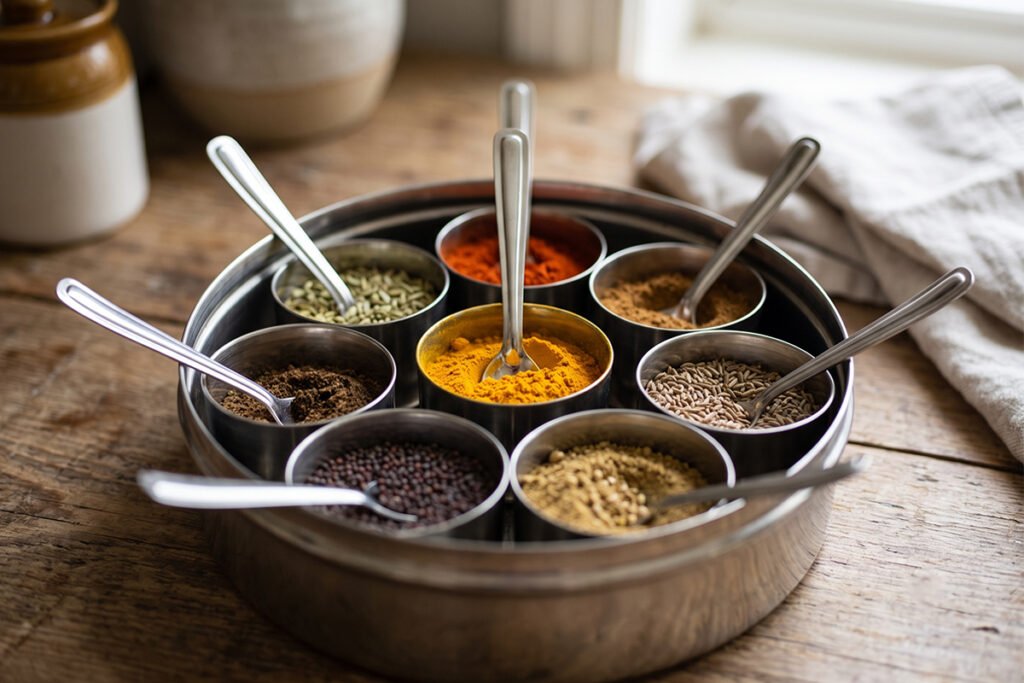
Store these mini tools directly inside the container so they are immediately ready when you lift the lid. Standardizing your pinch sizes with dedicated spoons brings consistent flavor balance to your favorite recipes. Thoughtful accessories complete the ultimate spice organization setup.
Top Recommended Topic Related Products to Buy
- Stainless Steel Masala Dabba with See-Through Lid: Features seven individual compartments and a snug inner sealing disc to keep daily spices fresh, visible, and protected from kitchen moisture.
- Airtight Glass Spice Jar Set with Bamboo Lids: Non-porous borosilicate glass jars complete with silicone gaskets, perfect for storing bulk spice reserves safely away from light and air.
- Mini Stainless Steel Spice Spoons (Set of 7): Compact measuring spoons tailored specifically to fit inside standard dabba cups without blocking lid closure.
- Heavy-Duty Electric Spice and Coffee Grinder: High-speed stainless steel blade grinder ideal for pulverizing whole seeds into fresh, aromatic ground powders in seconds.
- Waterproof and Oil-Resistant Spice Labels: Minimalist pre-printed labels designed for pantry jars and refill containers to keep your entire spice inventory organized and scannable.
Conclusion
Mastering Indian spice box masala dabba organization ideas transforms daily meal prep into an effortless, creative routine. By combining logical spice layouts, airtight moisture control, and systematic refill workflows, you protect ingredient potency while accelerating your cooking process.
Upgrading your daily container setup brings clarity, beauty, and authentic flavor to every dish you create.
Leave a Reply