

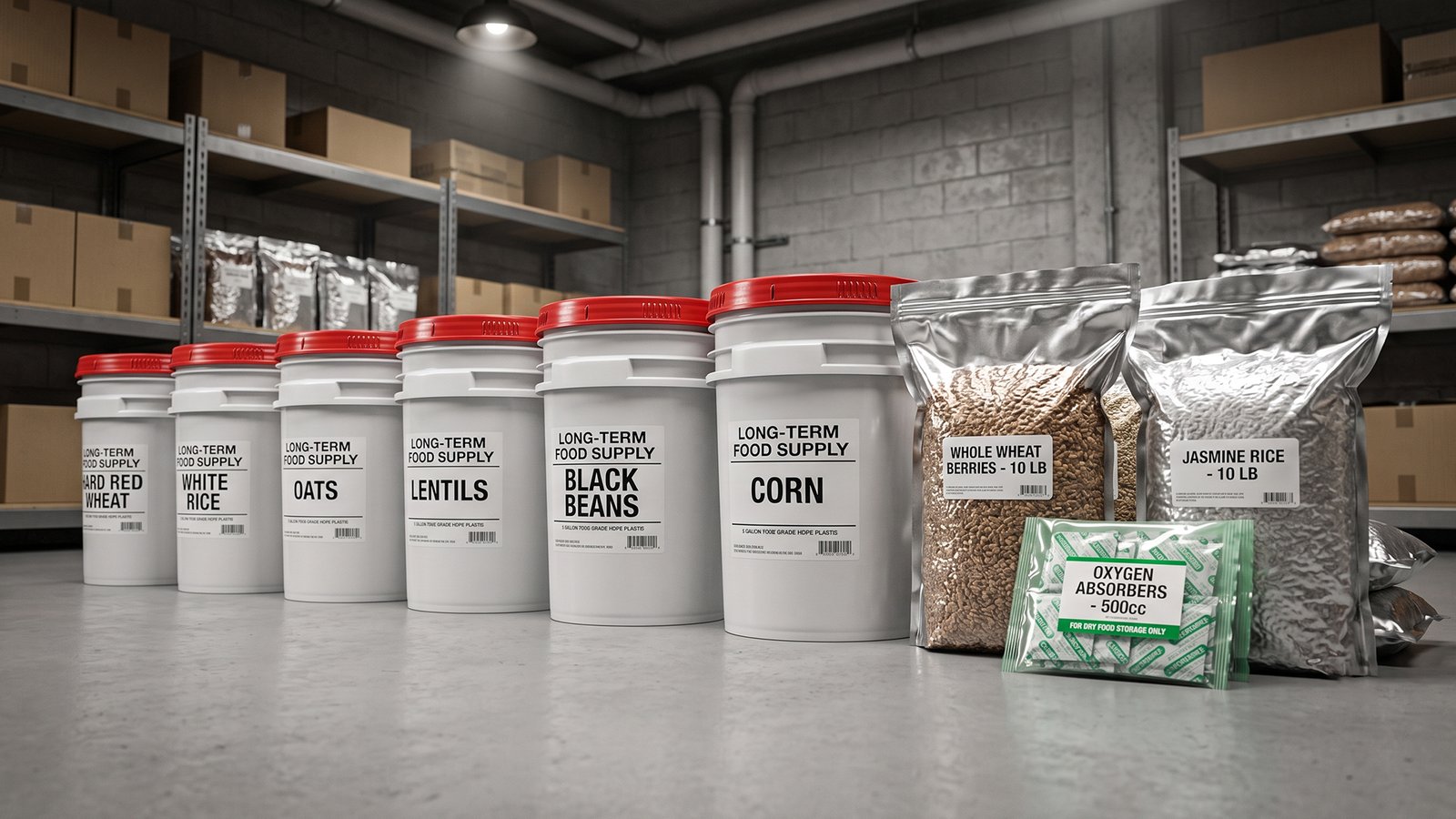
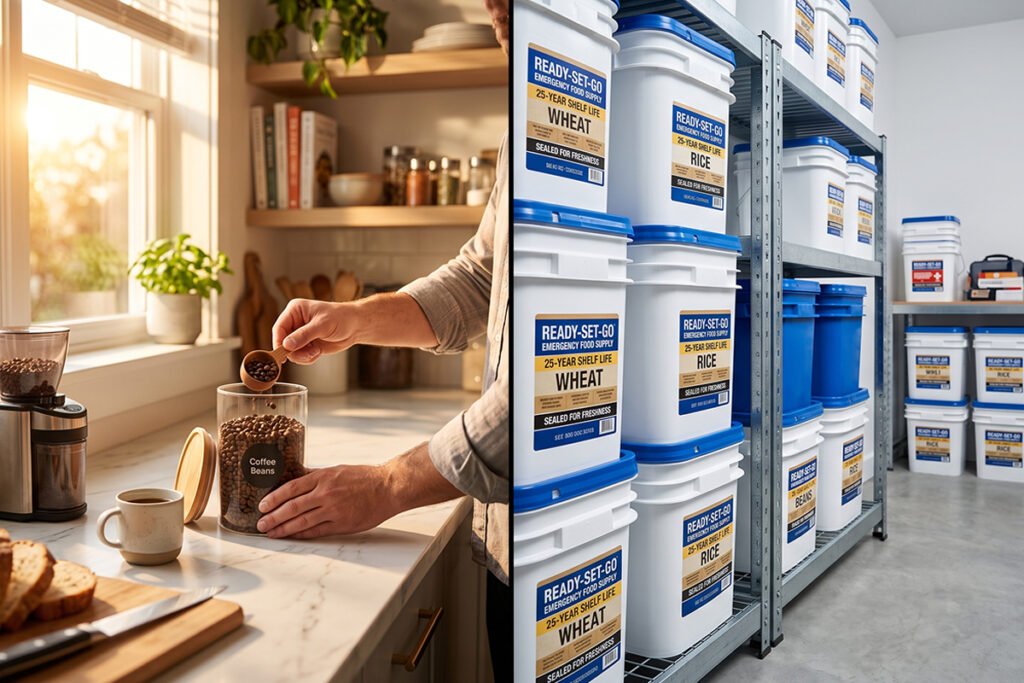
Mastering pantry organization begins with recognizing that standard kitchen containers serve a completely different purpose than heavy-duty emergency vessels. Daily containers prioritize quick opening mechanisms, aesthetic appeal, and easy visual identification of contents.
Table of Contents
In contrast, long-term options focus entirely on total environmental isolation to maximize shelf life preservation over decades. Using the wrong container for long-term stockpiling usually leads to premature food degradation, insect infestation, or moisture exposure.
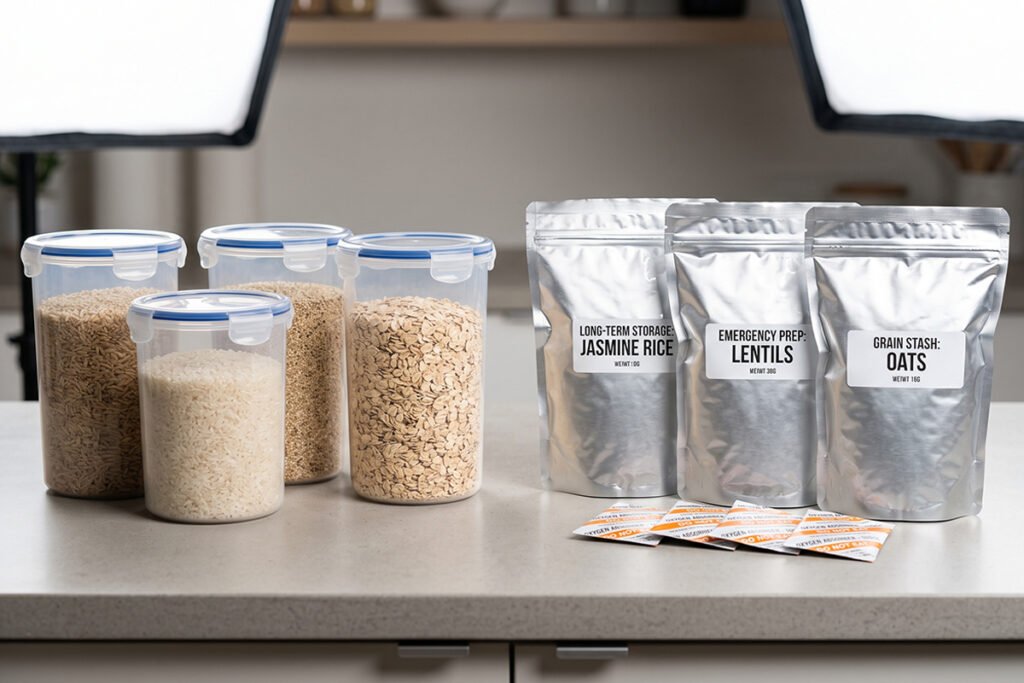
Proper selection ensures your immediate cooking needs are met while your backup supplies remain perfectly safe for emergency situations. Understanding this balance is essential for efficient household management.
Everyday storage units are engineered to support your daily culinary workflow and keep active ingredients fresh for short periods. They excel at maintaining order inside drawers, cabinets, and refrigerators while offering effortless handling during meal prep.
These containers focus on user convenience rather than total isolation from light, ambient gas, or room temperature shifts. They keep active dry goods clean and accessible for weeks or months at a time.
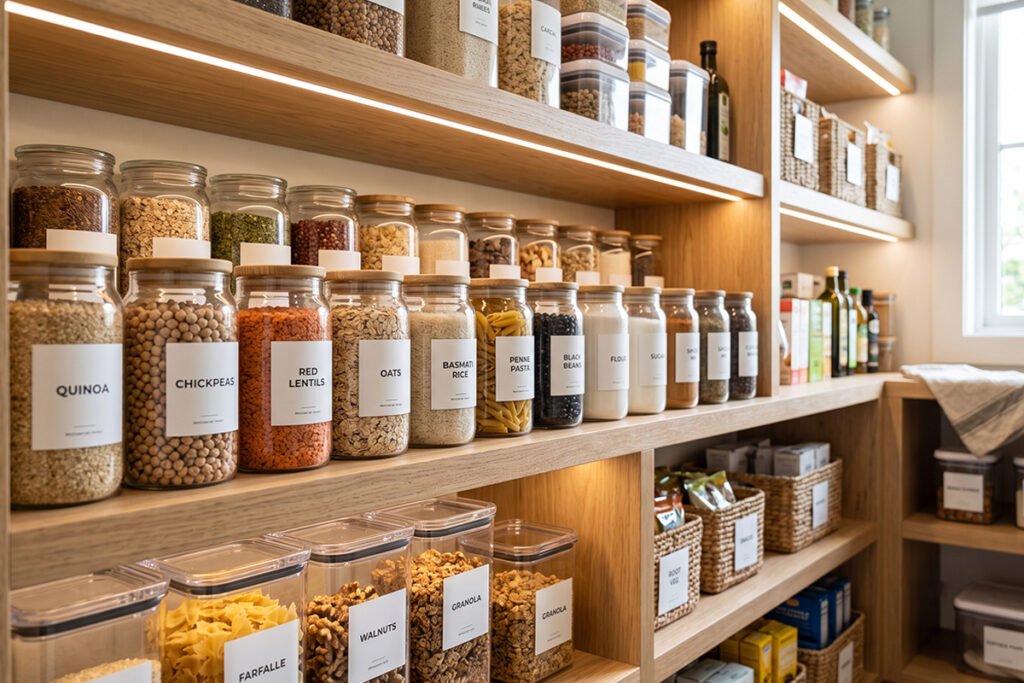
While highly functional for active kitchens, relying on daily containers for multi-year preservation creates serious food safety vulnerabilities. Recognizing their limits prevents frustrating ingredient loss.
The principal objective of daily containers is facilitating active kitchen efficiency, meal planning, and week-to-week freshness. They allow cooks to scoop flours, pour cereals, or stack dinner leftovers with minimal effort.
They are designed for high-frequency handling and frequent washing cycles in residential dishwashers. These vessels protect working ingredients from basic kitchen dust and minor surface splatter.
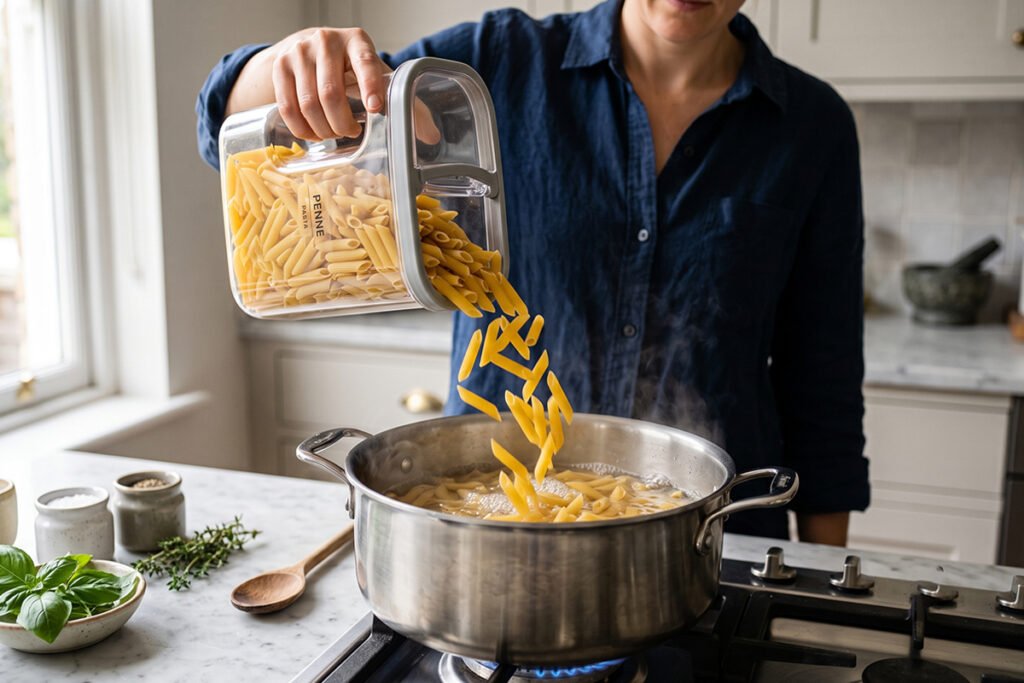
However, they do not offer complete gas barriers required to stop slow oxidation. Their main goal remains functional daily convenience rather than deep preservation.
Common Materials Used
Everyday containers primarily utilize lightweight materials such as BPA-free plastic, borosilicate glass, and clear acrylic. These components allow home cooks to monitor food levels without breaking seals or opening lids unnecessarily.
Glass options provide non-porous surfaces that resist staining and odor retention, while plastic options remain shatterproof and easy for children to handle. Both material choices prioritize safety, affordability, and practical kitchen utility over permanent environmental shielding.
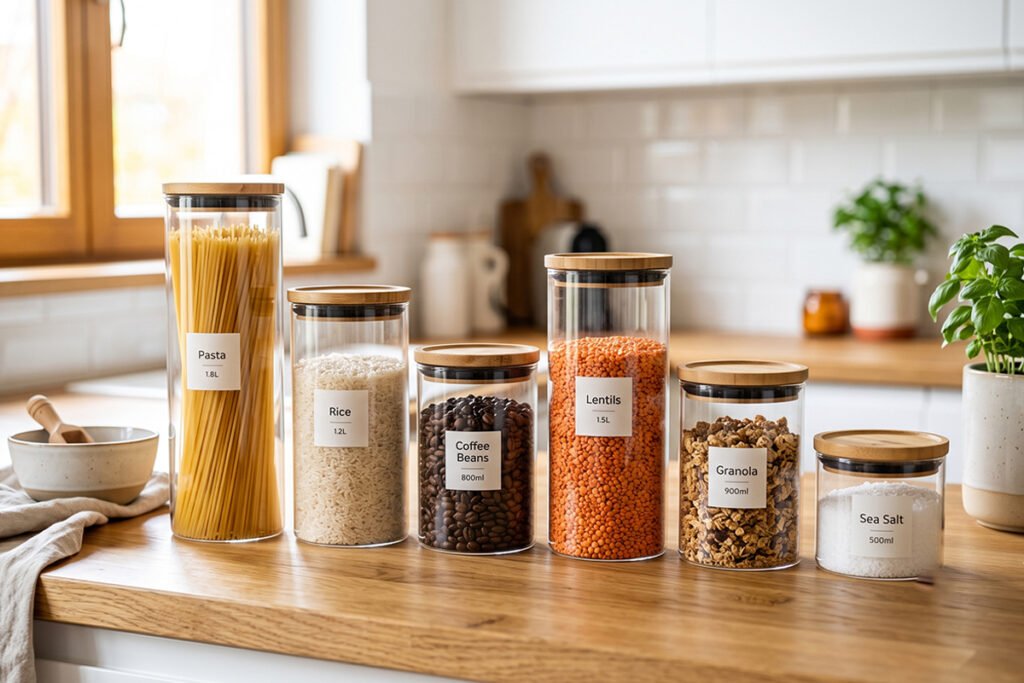
While these materials perform exceptionally well for short-term needs, thin plastic walls gradually allow tiny amounts of gas exchange over time. This slow atmospheric permeability makes them unsuitable for multi-year ingredient stockpiling.
BPA free plastic and borosilicate glass
Key Features for Quick Access
Convenience is the primary engineering focus behind everyday containers, featuring pop-top lids, flip-open spouts, and stackable modular shapes. These user-friendly elements simplify daily cooking prep and maximize limited cabinet or pantry space.
Clear side panels eliminate guesswork during grocery list planning, while quick-release latches ensure instant access to cooking staples. Many modern designs also include silicone gaskets that maintain short-term freshness against ambient humidity.
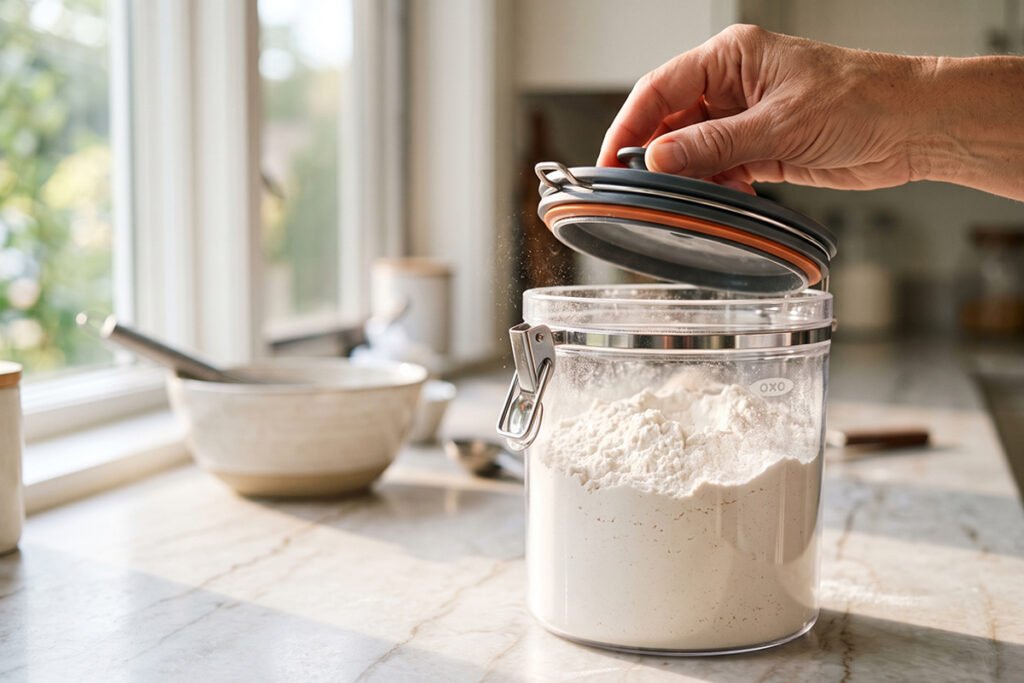
However, these easy-access mechanisms inherently prioritize frequent opening capability over bulletproof seals. The latching joints and silicone gaskets eventually wear down after hundreds of everyday uses.
Expected Lifespan and Durability
Under standard kitchen conditions, high-quality daily containers typically last anywhere from two to five years before showing wear. Regular exposure to hot dishwashers, microwave reheating, and physical drops gradually degrades plastic clearity and gasket flexibility.
Over time, minor micro-scratches develop on inner walls, creating places where food particles and odor molecules can collect. Replacing daily units periodically ensures your active pantry stays hygienic and organized.
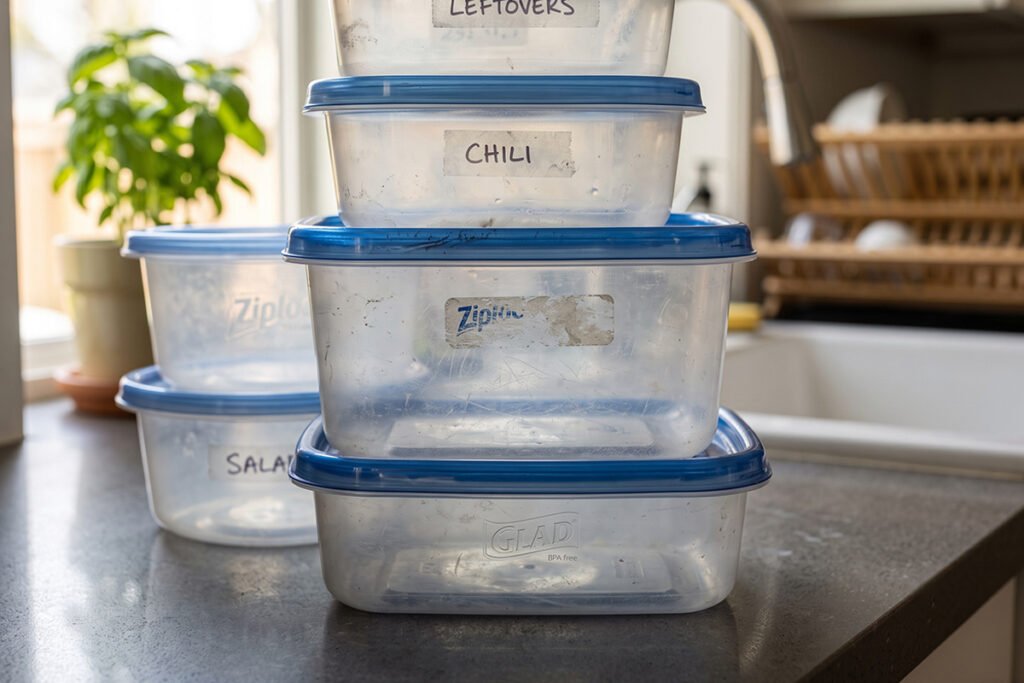
Recognizing when a short-term container has reached its end prevents unexpected leaks and stale ingredients. Keeping fresh units in circulation ensures your daily cooking flow remains efficient.
Understanding Long-Term Food Storage Containers
Transitioning to long-term preservation requires heavy-duty vessels engineered to stop environmental exposure entirely. These specialized containers isolate dry food from light, ambient gas, moisture infiltration, and destructive pests.
Unlike daily kitchenware, long-term options act as total defensive shields designed to preserve calories for anywhere from ten to thirty years. They turn standard dry ingredients into reliable emergency reserves.
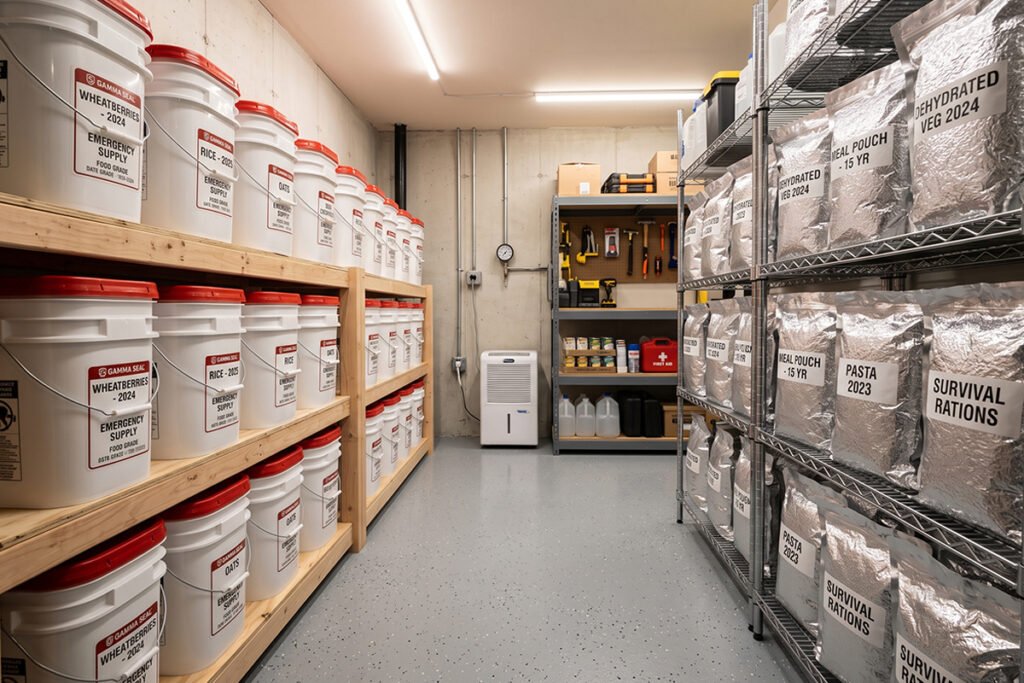
Investing in proper long-term storage gear provides complete confidence during supply chain disruptions or sudden natural emergencies. Choosing correct materials guarantees your dry reserves remain edible decades later.
Purpose of Emergency Preserves
The main objective of long-term containers is long-range security and absolute calories preservation. They protect vital nutrition sources like whole grains, beans, and freeze-dried meals against environmental breakdown over extended periods.
These systems protect dry food stores from catastrophic moisture shifts, chemical leaching, and local rodent damage during unexpected crises. They are meant to be sealed once and safely stowed away until true necessity strikes.
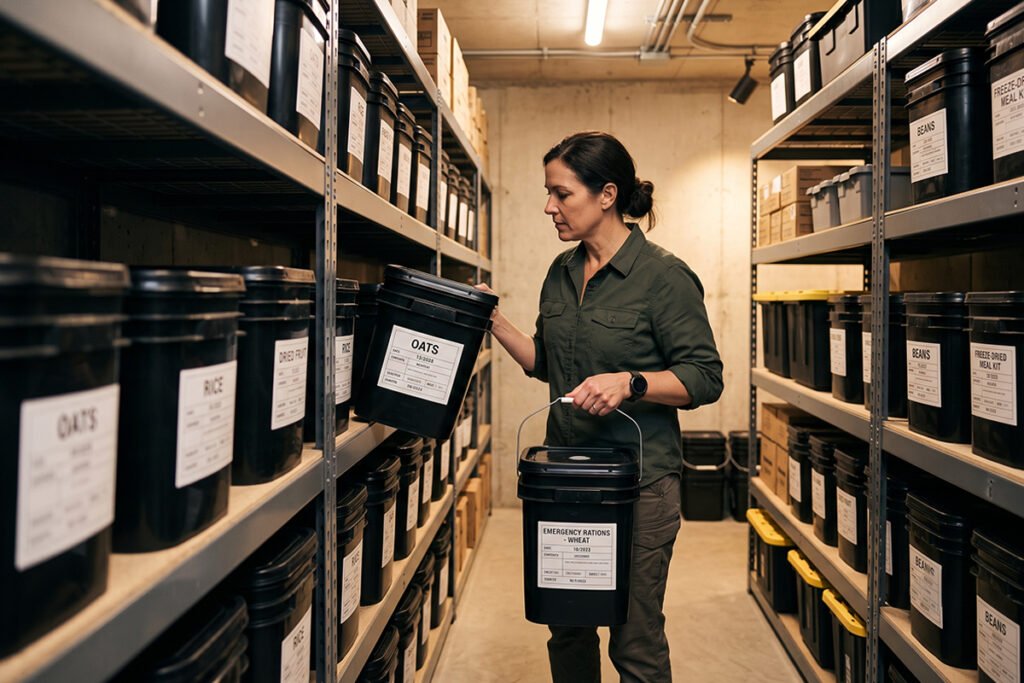
Because these units prioritize survival readiness, convenience features like flip-spouts or clear windows are intentionally excluded. Every design detail focuses exclusively on maintaining total internal environmental stability.
Heavy-Duty Materials Used
Emergency storage relies on ultra-dense materials like food-grade HDPE plastic buckets, thick metallic Mylar bags, and specialized aluminum cans. These materials block light transmission completely while creating absolute barriers against oxygen migration.
Thick food-grade buckets provide impact resistance against physical damage, while multi-layer foil pouches prevent gas transmission down to microscopic levels. Combining these two materials creates the industry standard for multi-decade preservation.
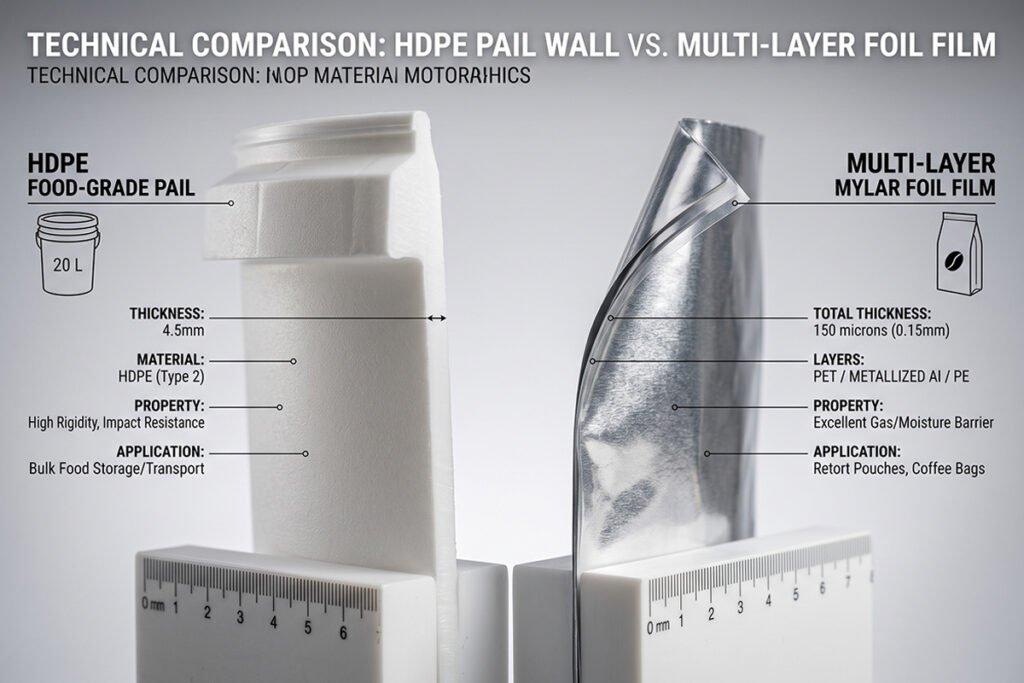
These dense materials prevent volatile chemical off-gassing, keeping stored dry goods pure and free from plastic tastes over decades. Using non-food-grade alternatives risks introducing harmful toxins into your reserves.
Key Features for Decades-Long Protection
Decade-level protection requires air-tight structural seals and the integration of specialized oxygen absorbers within the primary vessel. These components remove trapped air, reducing oxygen levels inside the container down below less than 0.1 percent.
Heavy rubber tear-strip lids, thick foil heat-seals, and light-impermeable layers work together to stop biological decay. This chemical-free atmosphere stops insect egg development and halts oxidation completely.
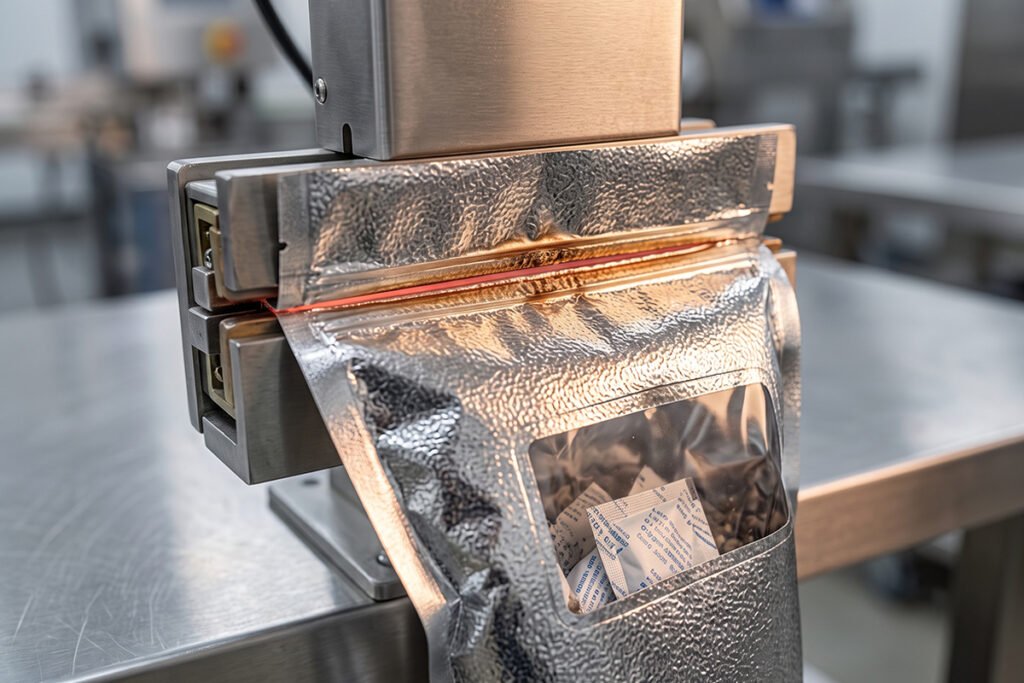
These protective mechanisms ensure stored dry goods experience zero moisture absorption or chemical breakdown over decades. They convert sensitive food items into immortal emergency provisions.
integration of specialized oxygen absorbers
Expected Lifespan and Integrity
When stored in cool, dark environments, proper long-term containers maintain structural integrity for up to thirty years without breaking down. Thick metallic foils and high-density polyethylene do not degrade under stable indoor conditions.
Regular integrity checks focus on verifying bucket lid seals and ensuring foil pouches retain their vacuum-tight shape. As long as physical punctures are avoided, these container systems provide decades of peace of mind.
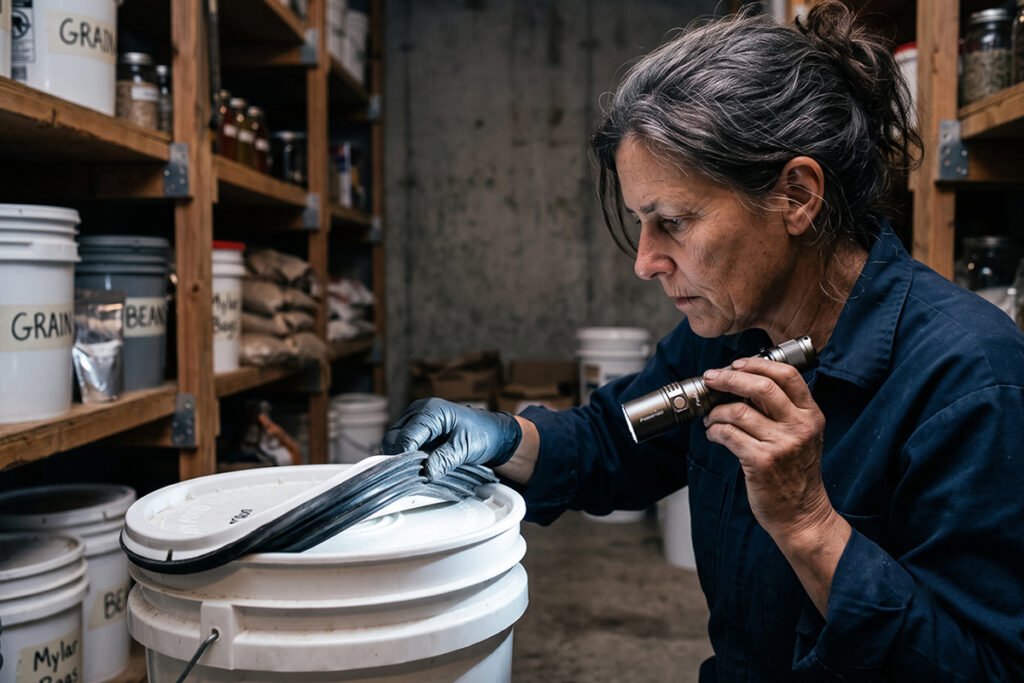
This incredible durability makes long-term preservation gear one of the most cost-effective insurance policies for your family’s future food security. Proper storage keeps your safety net intact across generations.
Comparing Core Features: Everyday vs Long-Term Storage
Analyzing everyday use vs long term food storage containers reveals fundamental differences in sealing power, light blocking, and structural density. While daily units prioritize visual clarity and fast access, emergency vessels focus entirely on total environmental isolation.
Daily containers utilize soft silicone rings that allow minimal gas transfer, whereas long-term containers rely on permanent heat seals and high-density gaskets. Matching the container features directly to your storage timeline prevents costly ingredient spoilage.
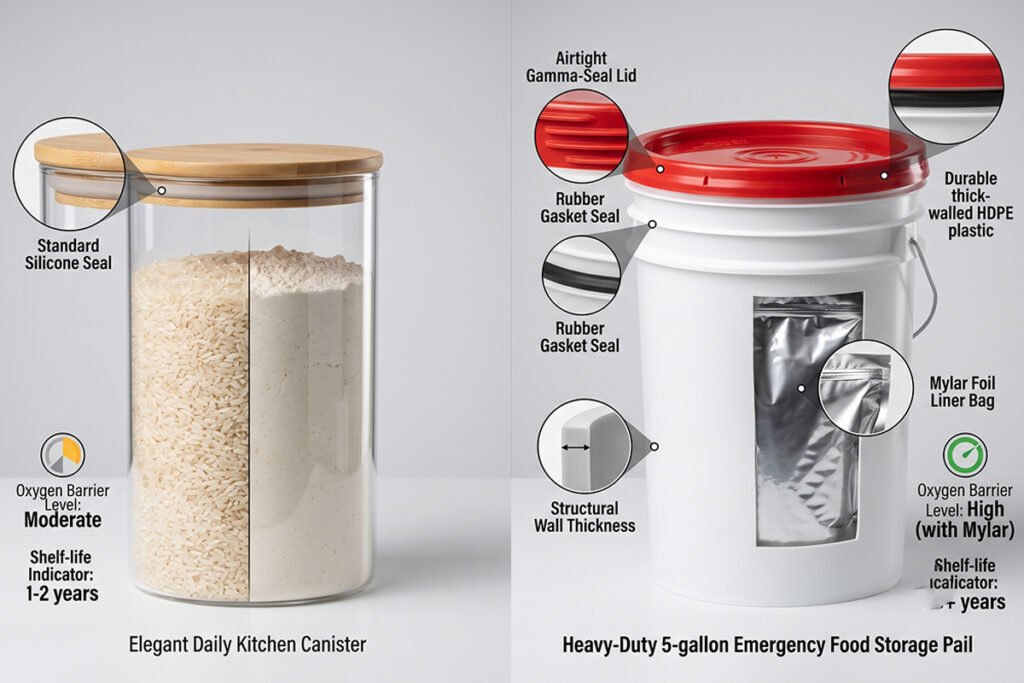
Understanding these distinct feature sets allows preppers and home cooks to divide their pantries effectively between active cooking ingredients and backup emergency preserves.
What Foods Can and Cannot Be Preserved Long-Term?
Not all foods are suitable for extended preservation, regardless of how advanced your container system might be. Low-fat, low-moisture dry goods like white rice, rolled oats, and dry beans excel under long-term sealing conditions.
Conversely, high-fat or high-moisture items like nuts, brown rice, whole wheat flour, and cooking oils spoil quickly due to natural rancidity. Storing improper foods inside air-tight containers creates severe safety risks including dangerous mold growth.
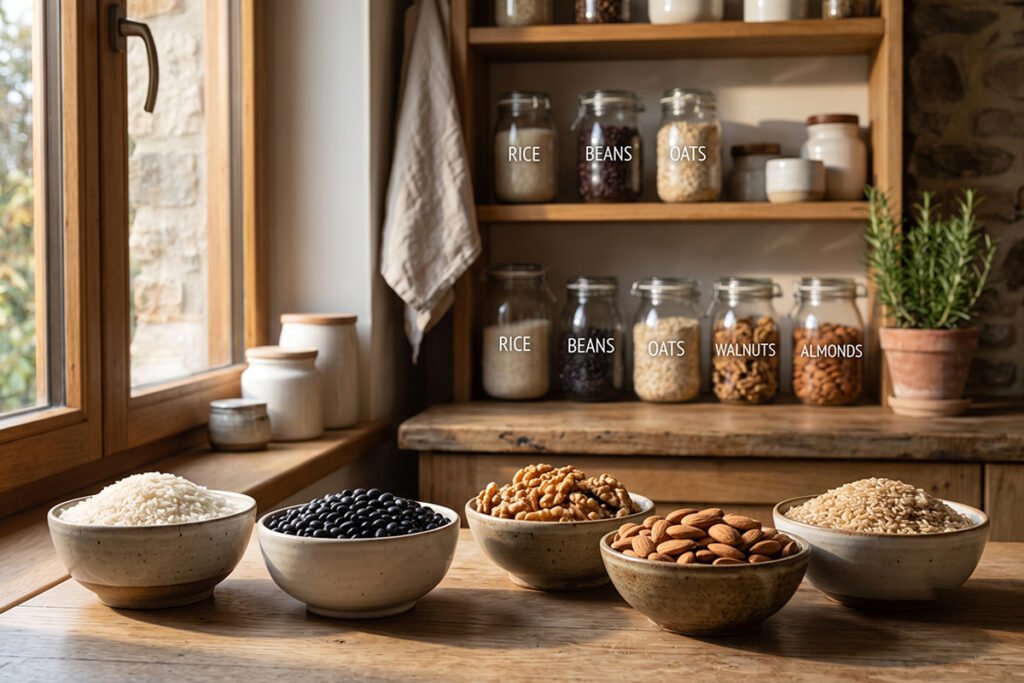
Choosing foods with less than ten percent moisture content ensures your preservation efforts yield safe, edible calories when needed. Aligning ingredient chemistry with proper container selection guarantees survival readiness.
spoil quickly due to natural rancidity
How to Store Food in Mylar Bags for Maximum Shelf Life
Using high-barrier foil pouches requires proper sealing techniques to achieve total environmental protection for your dry goods. Start by filling food-grade pouches with low-moisture staples, leaving several inches of headspace at the top for heat sealing.
Drop the appropriate capacity of fresh oxygen packets into the bag immediately before sealing the edge with a flat iron or specialized heat sealer. As the packets absorb residual oxygen, the pouch draws tight around the food, creating a firm protective shell.
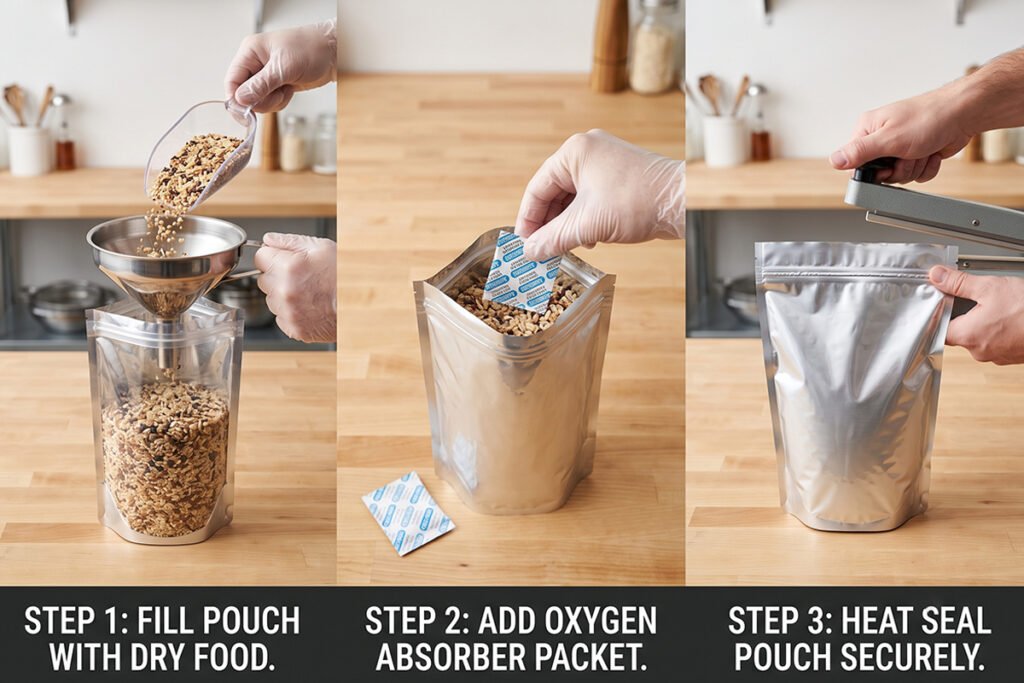
Store these sealed pouches inside rigid food-grade plastic pails to prevent potential damage from sharp handling or invasive pests. This double-layer system guarantees maximum protection against physical and environmental hazards.
Where to Store Survival Food for Optimal Preservation
Finding the ideal physical location for your backup reserves is just as crucial as selecting the proper container types. Ideal environments feature consistent dark conditions, low atmospheric humidity, and ambient temperatures kept under 70 degrees Fahrenheit.
Cool basements, dark interior closets, and climate-controlled storm shelters offer excellent protection against temperature fluctuations that accelerate chemical breakdown. Avoid uninsulated attics, damp crawlspaces, or outdoor sheds exposed to extreme weather variations.
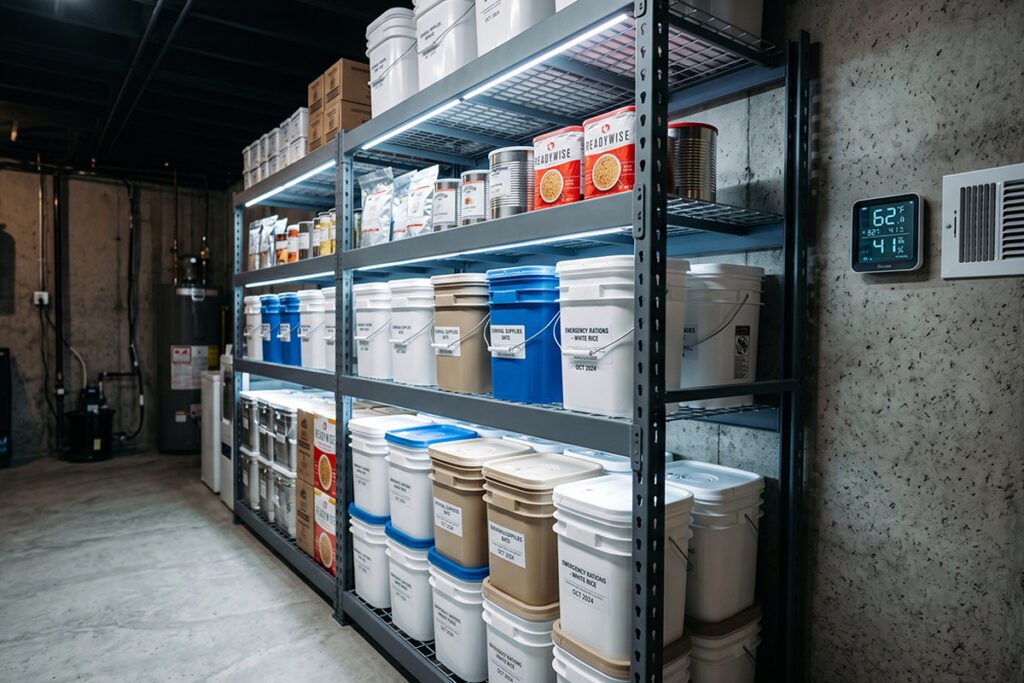
Maintaining stable environmental conditions maximizes container seal life and protects your food investments from heat-induced nutrient decay. Proper placement completes your long-range survival strategy.
Tired of Cluttered Cabinets and Wasted Food?
Discover smart container hacks that instantly double your cabinet space and keep ingredients fresh longer.
Frequently Asked Questions About Food Storage
Many home preppers wonder if daily plastic containers can handle emergency stockpiling if placed inside dark closets. Standard kitchen plastics lack the thick molecular gas barrier required to stop slow oxidation over multi-year periods.
Another common question focuses on whether oxygen packets should be added to daily kitchen canisters. Adding absorbers to frequently opened containers is ineffective because fresh air enters every single time the lid opens.
Understanding these basic operational limits prevents wasted resources and ensures your preservation methods function exactly as intended. Clear knowledge leads to smarter pantry choices.
Top Recommended Food Storage Products to Buy
- Gamma Seal Lids for 5-Gallon Buckets – Transforms standard heavy-duty buckets into easy-access, air-tight storage vessels featuring durable rubber gaskets for superior moisture seals.
- 7 Mil Heavy-Duty Mylar Bags with Oxygen Absorbers – High-density metallic foil pouches engineered to block light, gas, and ambient moisture for multi-decade ingredient preservation.
- BPA-Free Airtight Kitchen Canister Sets – Modular clear containers featuring quick-release locking clamps designed for maximum pantry organization and daily ingredient access.
- 5-Gallon Food Grade White Buckets – Rugged HDPE plastic buckets built to protect sealed Mylar pouches from physical impacts, pest invasion, and exterior moisture damage.
- Impulse Heat Sealer for Long-Term Pouches – Professional-grade thermal sealer designed to create permanent, air-tight seals across thick metallic foil bags effortlessly.
Conclusion
Understanding the distinct roles of everyday use vs long term food storage containers is the secret to building an efficient kitchen and a resilient emergency stockpile. Daily containers keep your active cooking space organized and convenient, while high-density Mylar pouches and food-grade pails protect vital nutrition over decades.
By selecting the proper container materials, adding oxygen absorbers correctly, and maintaining ideal room environments, you ensure your dry goods stay safe and fresh on any timeline. Start evaluating your home pantry today to build a balanced, secure food storage plan for your family.
Leave a Reply